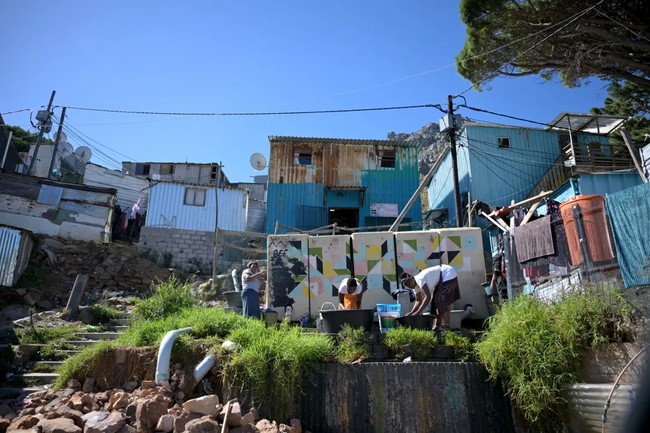
Well before the sun rises, Yonelisa Mali rises to face each day in Imizamo Yethu, a community grappling with severe water, sanitation, and housing challenges. At 39, with three young children to care for, her routine is both arduous and heart-wrenching, highlighting the stark realities exposed in the latest Municipal Public Accounts Committee (MPAC) report on the City of Cape Town.
Mali wakes her children in their one-room shack, applying Vaseline to their skin to combat the early morning chill that seeps through their fragile walls. Without running water in her home, she undertakes a perilous barefoot trek through flooded streets, often dodging open sewage, to fill two 20-litre containers at communal taps over 450 metres away.
Following this daily pilgrimage, she prepares a meagre breakfast of mieliemeal porridge for her children before they all venture into a world where basic sanitation and hygiene are luxuries. The children may wash up later in the day, but for now, survival takes precedence. As she scrubs laundry by hand in a communal basin with other women, Mali’s determination against these unfathomable odds shines through.
This grim routine is a testament to a broader failure by the Cape Town authorities, who have, according to the MPAC report, neglected adequate provision and maintenance of essential services like toilets, taps, and refuse removal in Imizamo Yethu. “The city did not provide or maintain adequate toilets, taps, or solid-waste services in Imizamo Yethu, and illegal connections were not removed,” the report stated, flagging serious concerns over public health and environmental safety.
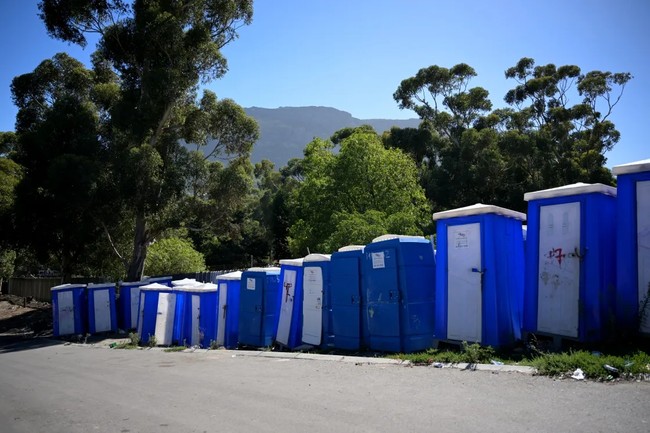
SHARED BURDEN:Rows of portable toilets line the road in Imizamo Yethu — the only sanitation available to residents. Each unit is locked and allocated to families by community leaders. There are no toilets at home.
During our visit, the appalling conditions became immediately apparent—hanging power cables tangled above, garbage littered the ground, and the unmistakable scent of sewage filled the air. Nearby, one could see open manholes spewing waste, creating health hazards for residents, especially children.
A local fruit vendor, expressing frustration with the city’s response times, indicated that while city officials occasionally address the situation, their solutions are temporary at best, allowing the crisis to recur. “They do come out, but it is the same thing again after a few days. Children don’t know and they touch things they shouldn’t,” she lamented, fearing repercussions if she identified herself.
As we moved toward Gugulethu, the situation did not improve. The Gugulethu Infill Housing project promised new homes to families who have waited for years, yet the MPAC report revealed dire inefficiencies: of the planned developments, only 23 houses had been constructed by the conclusion of a 2018 agreement. The city’s attempts to streamline construction have not rectified foundational issues, including buildings erected without proper oversight or safety assessments.
All around, unfinished houses stand as grim reminders of broken promises, with rising grass and waste encroaching upon their crumbling exteriors. “Some houses were built without approved building plans,” noted the report, echoing a cry for accountability that has long reverberated through these communities.
Just outside Table View, the Vissershok Landfill Site presents an alarming environmental threat. Here, a leachate pond—deep pink and untreated—accumulates toxic liquid from decomposing waste, amid reports that the treatment plant has been non-operational since June 2022. Such negligence results in enormous costs for taxpayers and presents a clear risk to surrounding ecosystems, as heavy rainfall threatens to overflow the containment pond.
Emeritus Professor Kevin Winter explained that without proper leachate management, these hazardous substances risk poisoning groundwater and nearby water sources, underscoring the stakes of mismanagement in city planning.
In response to these serious allegations, the City of Cape Town acknowledged shortcomings and stated its commitment to improving service delivery. Yet, for the people of Imizamo Yethu and Gugulethu, this assurances ring hollow against the backdrop of their daily struggles.
Loyiso Skoti, chair of the Imizamo Yethu Development Forum, highlighted that the community is also plagued by significant delays in emergency rebuilding efforts following fires and inadequate job opportunities. For him and his fellow residents, the resolve for better governance and essential services remains paramount.
“Access to basic services is non-negotiable,” Skoti stated, with an acknowledgment that sustainable housing solutions are long overdue for his community. “People need decent houses. But there is hope that houses will be built.”
Kaizer Chiefs co-coach Cedric Kaze has urged his side to remain grounded despite reaching a significant milestone in their campaign, warning that their recent progress will count for little without sustained focus.Amakhosi’s victory over TS Galaxy extended their winning streak to four matches — the first time they have achieved that feat this season — and further strengthened their grip on a CAF Confederation Cup spot. It is a run […]