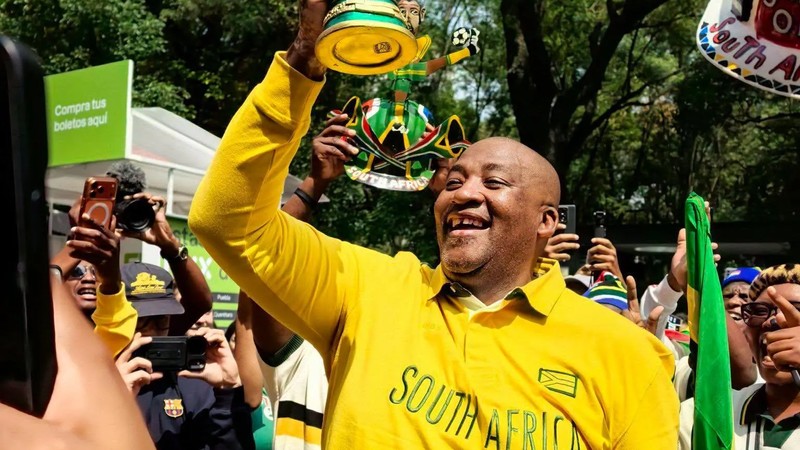
The Democratic Alliance (DA) and ActionSA have intensified calls for Sport, Arts and Culture (DSAC) Minister Gayton McKenzie to provide a full breakdown of an estimated R31 million spent on South Africa’s delegation and related programmes at the 2026 FIFA World Cup.
The figure was disclosed by McKenzie in a parliamentary reply, which both parties say leaves several questions unanswered about the expenditure and the composition of the delegation.
According to the DA, it has repeatedly requested detailed information over the past two months on the delegation’s costs, members and budget. The party said the Minister had initially provided only a broad overview before later revealing that the delegation included 20 artists and 18 departmental officials.
The officials reportedly comprised the Minister, two support staff, the Director-General and a 14-member project team, at an estimated cost of just under R8m.
However, the DA said the exact number and names of delegation members remain undisclosed, while the department has yet to provide a final audited cost of the trip.
The party also questioned what it described as inconsistencies in the expenditure figures provided and said it remained unclear how the department financed the delegation.
The DA said it would submit further parliamentary questions requesting the outstanding details and seek a date by which the full information would be made available. It also intends to request that McKenzie appear before Parliament’s Portfolio Committee on Sport, Arts and Culture to account for the expenditure.
ActionSA said the nearly R31 million spent covered international travel, accommodation, hospitality suites, match tickets, an exhibition match and other nation-branding initiatives linked to the tournament.
While acknowledging the importance of promoting South Africa internationally, the party questioned whether the expenditure represented value for money at a time when many communities lack basic sporting facilities and national teams continue to face funding constraints.
ActionSA also raised concerns over McKenzie’s admission that his personal expenditure had not yet been separated from the delegation’s overall costs, meaning he could not disclose what he individually cost taxpayers.
The party argued that ministers should be fully transparent about taxpayer-funded travel, accommodation, hospitality and other benefits. It said the issue highlighted the need for greater oversight, referencing its Enhanced Cabinet Perks Cut Bill, which seeks to strengthen transparency around ministerial expenditure.
In DSAC’s response, it clarified that “the delegation” was made up of officials, artists, cultural participants, legends, media partners, sponsored fans, and implementation support teams.
“Some people travelled on DSAC funds, some through sponsorships, and some through implementing partners. It would be misleading to collapse all of them into one list and call them ‘the delegation’.
“The department’s approved programme was a scaled-down FIFA World Cup support programme focused on Aldea Global, Atlanta, Monterrey, fan engagement, cultural promotion and the 2010 Legends-related activities,” it said.
Breakdown
According to DSAC, the previously submitted response recorded total programme-related expenditure of R30 945 370.15, made up of official travel, the Legends Exhibition Match, suites, spectator tickets and programme activations.
It said the official trip and travel-related expenditure for the Minister, two support staff, Director-General and project team was estimated at R7 865 134.97. This included international travel, accommodation, local transport, subsistence and operational support costs.
“This figure has not yet been disaggregated to isolate the Ministerial individual cost from that of the rest of the delegation, as elements such as security, protocol and logistics were procured as a single unit,” the department said.
DSAC explained that it is finalising a detailed reconciliation per person, which will include, where applicable: full name, title, role, city, programme linked to, duration of stay, flight cost, accommodation, transport, S&T, visa, insurance, accreditation, match tickets, hospitality and funding source.
“The department is taking care not to guess figures where invoices are still being reconciled. In a project of this nature, one person may appear under travel, accommodation, accreditation and programme costs, while another may have been fully sponsored. The final response must therefore separate State-funded travellers from sponsor-funded participants and implementation partner personnel. That is the only fair way to present the information accurately,” it said.
seanne.rall@iol.co.za
IOL


