What do K-pop and amapiano have in common, and how can there be any commonality between rugby and Japanese cuisine?
They all seem worlds apart, don’t they?
All of these are tied to one straightforward idea: Soft Power. This refers to the subtle influence a nation’s traditions, culture, arts and cuisine can wield in shaping its global identity.
World leaders from 20 countries will descend on South Africa for the G20 Summit in Johannesburg later this year, but how does our country fare when it comes to soft power?
And the topic comes into sharp focus as South Africa prepares to host the G20 Johannesburg Summit, the twentieth meeting of the Group of Twenty, a meeting of heads of state and government to be held from November 22 to 25, the first to be held on the African continent.
When American political scientist Joseph Nye first coined the term soft power in the late 1980s, he offered a framework for understanding how countries influence the world without coercion.
In contrast to military might or economic pressure (hard power), soft power is about attraction and persuasion – drawing others in through values, culture, education and policy legitimacy.
As the global order continues to shift in 2025, soft power has become a central tool in shaping international relations, especially among G20 nations as they prepare to gather for the G20 Summit.
Whether through K-pop and Korean dramas, French art and fashion, American film and tech, or South African music and activism, culture is increasingly a vehicle of diplomacy.
What is soft power in practice?
Soft power plays out in multiple ways – through entertainment, education exchanges, language promotion, sports and even culinary diplomacy. Nations that harness their cultural assets effectively are often better able to influence global narratives and policy agendas.
According to the 2024 Soft Power Index compiled by Brand Finance, the top-ranking countries – the United States, United Kingdom, France, Germany, Japan and South Korea – scored highly on factors such as cultural reach, media influence and education reputation.
But soft power is not limited to traditional Western powers. Middle powers and emerging economies are finding creative ways to project their identity, tell their stories and shape global debate.
As the only African member of the G20, South Africa plays a unique role in bridging the Global North and South. While not typically top-ranked in soft power indexes, its influence is growing, especially in the areas of cultural exports such as amapiano star Tyla, celebrated visual artist William Kentridge and fashion icon Thebe Magugu.
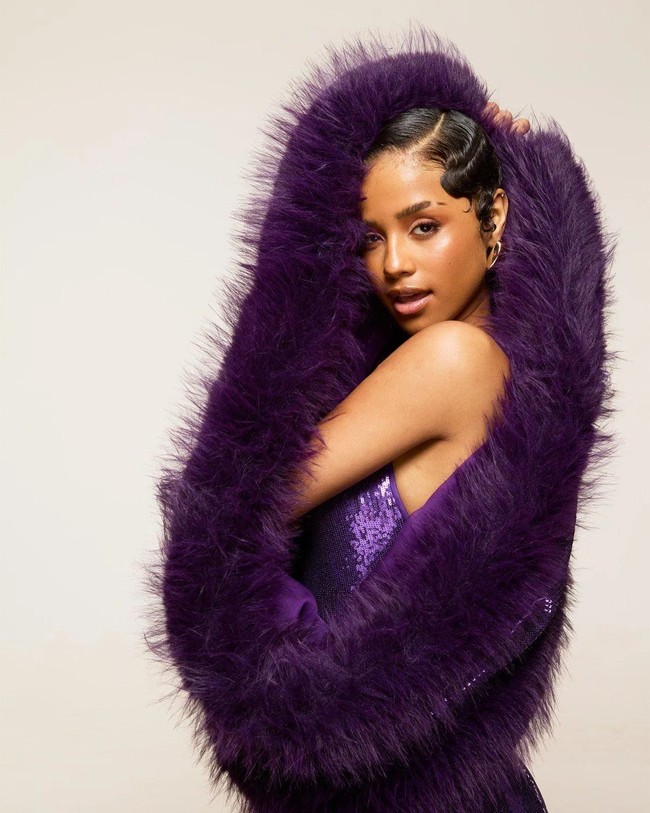
South African singing sensation Tyla has cemented herself on the global stage.
Song and dance
In a sense, the digital era has also played a major role in democratising soft power. A viral dance from Soweto can influence as much as a policy speech in Davos. A local artist can go global through platforms like TikTok, Spotify or Instagram.
Take, for example, what South Korea will be hosting this coming Saturday to celebrate the upcoming summit.
The “Ubuntu with Korean Culture Festival” taking place at SunBet Arena, Times Square, Pretoria, brings together a dynamic programme led by K-pop star Ailee, Ndlovu Youth Choir, and Korean martial arts performance team K-Tigers, alongside a Hanbok (traditional Korean clothes) fashion show incorporating SA’s heritage and a K-pop and amapiano collaboration.
Former South African president Nelson Mandela presents the Rugby World Cup trophy to Springbok captain Francois Pienaar after they beat the All Blacks in the 1995 final at Ellis Park in Johannesburg.
Rucks and mauls
On the sportfield, soft power played out for the entire world to see when the Springboks beat the All Blacks to win the 1995 Rugby World Cup, with then President Nelson Mandela attending the match wearing a team jersey bearing Bok captain François Pienaar’s number six on the back.
Who will ever forget Pienaar and Mandela holding up the cup in triumph, with the crowd at Ellis Park going crazy?
The moment in rugby history was turned into a Hollywood blockbuster, “Invictus”, starring Morgan Freeman as Mandela and Matt Damon as Pienaar.
Pienaar later told “The Guardian”: “I’ve always maintained that Hollywood could not have imagined a better story than what happened in South Africa in 1995.”
Jaeil Lee, press officer at the Korean Cultural Centre in Pretoria, said his government, particularly the Ministry of Culture, Sports and Tourism, played a major role in using soft power to deepen understanding of her people and foster collaborations with other nations.
“I believe that so-called ‘soft power’ can be most effectively advanced through the expansion of reciprocal cultural understanding and exchange. A genuine appreciation and deep respect for other cultures form the essential foundation for meaningful international engagement.
“At the Korean Cultural Centre, we place strong emphasis not only on introducing Korean culture to global audiences but also on facilitating collaborative programmes that bring together artists, educators, and communities from both sides.
“By fostering two-way dialogue and creative partnerships, soft power becomes a shared experience rather than a one-sided projection of culture,” Lee said.
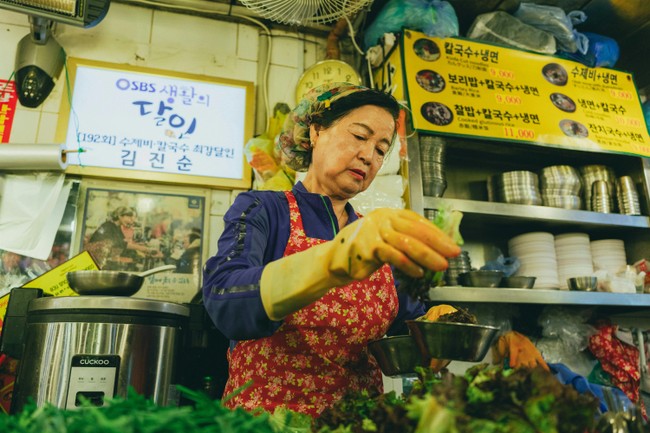
Korean cuisine has always been a winner when it comes to tantalising tastebugs – the best type of soft power.
Grub’s up!
South Africa and Japan enjoy strong business and diplomatic ties, but it is at the dinner table that Japan’s soft power tickles our taste buds and fosters conversation and understanding of its culture and cuisine.
From sushi and sashimi, through to ramen and tapas, Japanese food has become a powerful tool to influence how South Africans appreciate and consume what that nation has to offer.
As hosts to heads of state of 20 countries, South Africa is in an ideal position to use its traditional dishes to whet the appetite of world leaders who want to get a greater understanding of what makes Mzansi tick.
From Mogodu (tripe) and Mopani worms, through to bunny chow and bobotie, chakalaka and the South African all-time favourite – the South African braai – our cuisine is a melting pot of flavours, shaped by influences from Dutch, Malay, Indian, British and indigenous Khoisan traditions.
Politics at play
But there is always the potential of a disaster at the braai stand, where soft power can be turned into burnt ashes, warns Professor Janis van der Westhuizen of Stellenbosch University.
“The movie ‘Invictus’ constituted a near-perfect execution of the kind of soft power South Africa would never fully regain under the Mbeki and Zuma presidencies: transmitting the story of the resilience of the human spirit through some of the most powerful and enduring images in popular culture: celebrities, sport and Hollywood.”
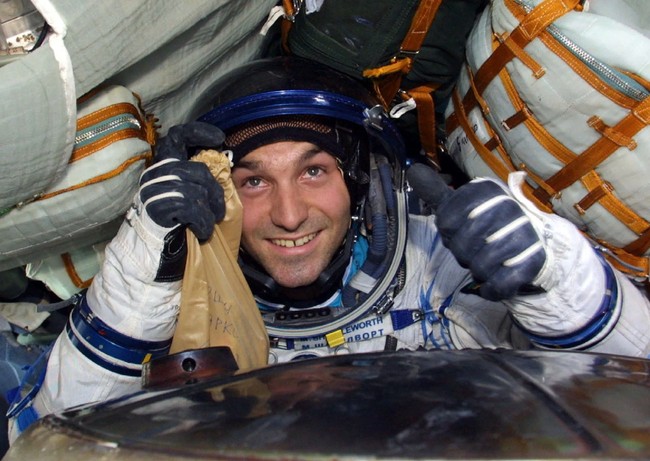
South African space tourist Mark Shuttleworth was hailed as the first “Afronaut” by then President Thabo Mbeki, a textbook example of the use of soft power.
Van der Westhuizen raises past issues were Mbeki succeeded in capitalising on Mark Shuttleworth’s 2003 journey to the International Space Station, hailing the internet security encryption entrepreneur as the world’s first “Afronaut” as the country marked the ninth anniversary of our first democratic elections on April 27, 1994.
A similar success didn’t quite work out when South African motivational speaker and adventurer, Sibusiso Vilane, became the first black man to summit Mount Everest on May 26, 2003, one day after the continent celebrated Africa Day.
That’s because the feat was mired in controversy over the nationality of his parents, Van der Westhuizen notes.
“South Africa’s soft power capacity is often constrained by tensions emerging between regional commitments on the one hand and more international, liberal democratic norms on the other.
“In its attempts to consolidate the three central features of its identity – as an African state, as a wedge against Western imperialism and supporter of human rights – the former two features have invariably meant diluting the latter feature.
“Since norms of liberal society continue to dominate global media discourses, rising non-OECD (Organisation for Economic Co-operation and Development) powers simply have to either support or at least defer to such norms if they want to amplify their soft power.
“Although one could argue that whatever potential soft power SA could get from it has been diminished by the Trumpgovernment not wanting to fully engage. However, the bigger soft power story for South Africa is, of course, its involvement in the Gaza issue,” concludes Van der Westhuizen.
Navigating these regional tensions and divisive global alliances, which are at times tinderboxes in the world of politics, remains a challenge for the Government of National Unity (GNU) as it prepares to welcome world leaders for the G20 Summit.
The Seshego Regional Court in Limpopo has sentenced a 32-year-old man to life imprisonment for attempted rape and an additional 10 years imprisonment for assault with intent to cause grievous bodily harm (GBH) on his mother.Provincial police spokesperson, Colonel Malesela Ledwaba, said the horrific incidents occurred in Seshego.The court heard that on February 5, 2024, at about 9 pm, the 32-year-old man was staying with his mother at their residence […]