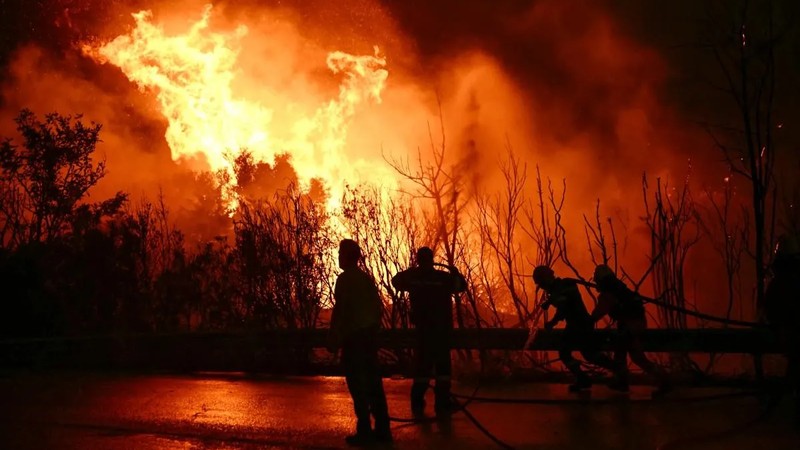
As record-breaking wildfires continue to wreak havoc in regions across the globe, South Africa’s integrated wildfire management system is receiving renewed attention for its international contributions.
The Working on Fire–Kishugu JV has deployed over 1,558 firefighters to Canada since 2015, providing support in combating the climate-induced blazes. This extensive assistance has earned the organisation recognition, with Canadian Prime Minister Mark Carney specifically acknowledging their “critical support”.
Trevor Abrahams, Managing Director of Working on Fire–Kishugu JV, emphasised the evolving nature of the crisis, stating, “This fire season shows that wildfires are no longer a regional hazard – they are a global, climate-driven emergency that requires coordinated action”.
The global wildfire crisis
According to Canadian media reports, the current scale and speed of the fire season signal a shift in the planet’s climate crisis, with devastating consequences worldwide.
The record-breaking wildfires are causing fatalities, forcing mass evacuations and destroying heritage sites.
Southern Europe is ablaze, with residents experiencing extreme heat, drought, and high winds. Notable examples include Turkey’s record 50.5°C heat and “apocalyptic” blazes, alongside mass evacuations in Spain, Portugal, France, Italy, Albania, and Greece.
In North America, Canada is battling over 5,000 active fires, with more than 6 million hectares already burned and smoke reaching as far as Europe. In the United States, wildfires are rampant in Northern Los Angeles, with the Canyon Fire in California being the largest this year, causing extensive damage and evacuations.
It is believed that this year’s wildfire season is already the second-worst on record in Canada. More than 7.3 million hectares have burned so far, which is more than double the 10-year average for this period. The last three fire seasons are among the ten worst on record, with 2023 taking the top spot.
Scientists attribute the increasing intensity and spread of forest fires to climate change, driven by the burning of fossil fuels, which has resulted in longer fire seasons and drier landscapes.
Its consequences are dire as regeneration failure is a concern, where forests become so damaged that trees cannot regrow for years or even decades. When fire activity exceeds the “natural variability of the system,” the forest can lose its resilience. Fewer trees lead to less carbon storage, exacerbating the problem of increased carbon emissions from widespread forest fires.
In addition to environmental impacts, wildfire smoke has been linked to myriad health complications, including a higher risk of dementia.
IOL


