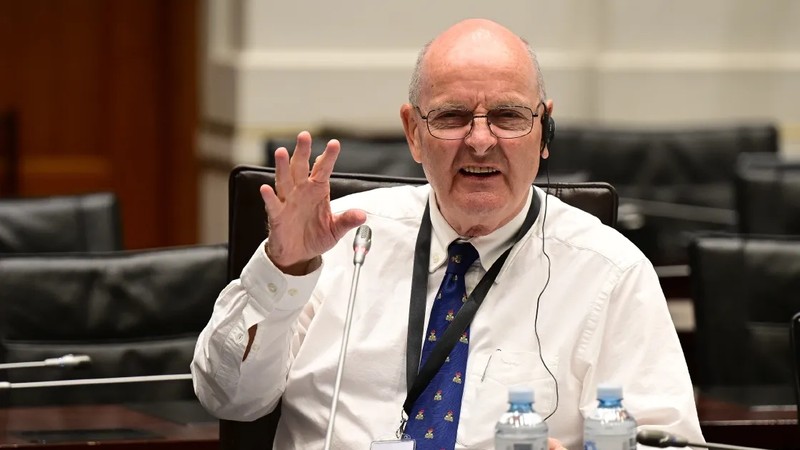
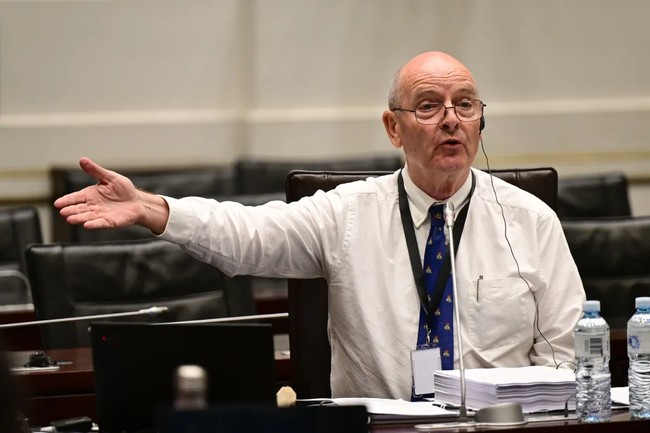
O’Sullivan, who earlier told the inquiry that he had survived multiple attempts on his life and had previously been shot, said he was experiencing severe pain linked to the reconstruction of his spinal cord.
Following consultations among Members of Parliament, committee chairperson, Soviet Lekganyane, adjourned the sitting.
“We have established a very good relationship with the witness over the two days he has been with us, and that relationship has been cemented. I am confident that the engagements we have had with you will continue, and that we will find a suitable date that is comfortable for all of us,” Lekganyane said.
A new date will be arranged in consultation with O’Sullivan’s legal team. O’Sullivan indicated he would be travelling overseas for business commitments.
Explosive first day
O’Sullivan began his testimony on Tuesday, where he made sweeping allegations against senior police leadership.
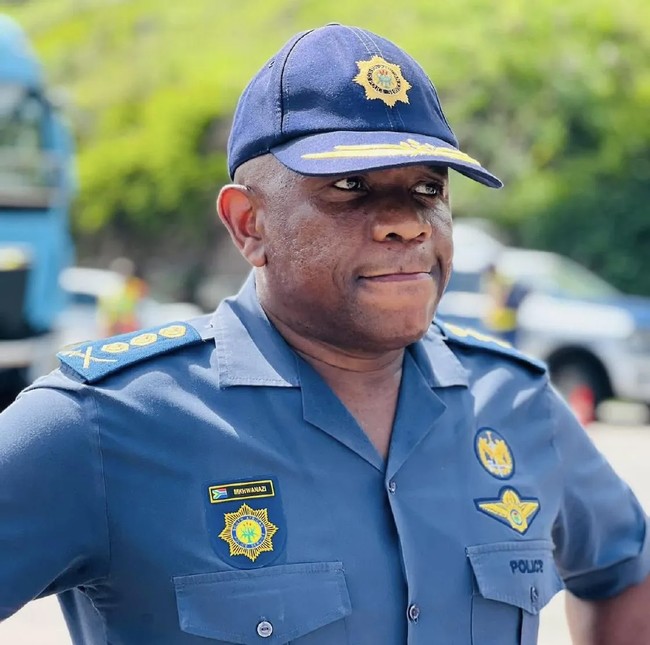
He described KwaZulu-Natal police commissioner Lieutenant-General Nhlanhla Mkhwanazi, national police commissioner General Fannie Masemola and Crime Intelligence head Lieutenant-General Dumisani Khumalo as “rogue”, accusing them of conduct warranting imprisonment.
He also revisited his long-running campaign against former national commissioner Jackie Selebi, outlining how his investigations contributed to Selebi’s arrest and eventual 15-year prison sentence in 2010.
He also denied allegations that he acted as a foreign agent, telling the committee that despite holding Irish, British and South African citizenship, his loyalty was to South Africa.
Second day: AfriForum and commissioner appointment claims
On Wednesday, MPs intensified their questioning.
O’Sullivan confirmed that he is a member of AfriForum when pressed about his affiliations. He also addressed his 2017 arrest, maintaining he had been visiting his attorney at the time and not meeting with AfriForum.
Under questioning from ANC MP Khusela Diko, O’Sullivan disclosed that then presidential adviser Bejani Chauke had approached him for informal input during the process of appointing a permanent national police commissioner following the removal of General Khehla Sitole in 2022.
He said Chauke provided him with a shortlist of about eight names and that his organisation, Forensics for Justice, conducted lifestyle audits on the candidates.
“My recommendation was that there were six names on the list that would have been unsuitable for appointment because of their lifestyles,” O’Sullivan told the committee.
Sitole’s tenure ended in early 2022 following a legal dispute with President Cyril Ramaphosa over his suspension and fitness to hold office. He was replaced on 31 March 2022 by General Fannie Masemola.
11 February 2026. Cape Town. Private investigator Paul O’Sullivan testifies befo
O’Sullivan also claimed that a statement presented by Lieutenant-General Mkhwanazi on 6 July last year had been prepared on a computer in Pretoria, raising further questions about internal dynamics within SAPS.
The ad hoc committee is probing allegations of interference, corruption and misconduct within the South African Police Service and the broader law enforcement apparatus. O’Sullivan’s testimony is expected to resume at a later date.
jonisayi.maromo@iol.co.za
IOL News
Get your news on the go. Download the latest IOL App forAndroidandIOSnow.
As all eyes will be on President Cyril Ramaphosa when he delivers the 2026 State of the Nation Address (SONA), the citizens will be eager to know whether he has fulfilled the dozens of promises he made when Parliament was opened last year.In 2025, Ramaphosa promised, among other things, the preparations for a National Dialogue in which South Africans were to chart a new path for the country.He had said […]