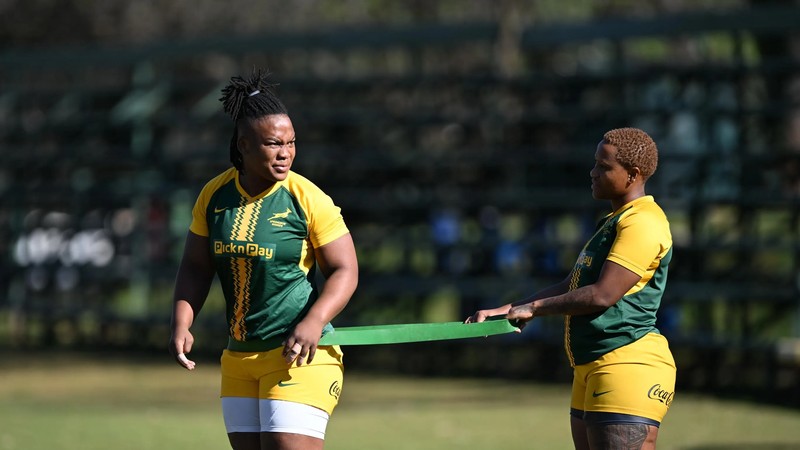
Babalwa Latsha insists her appointment as Springbok Women’s captain is not about ushering in a new era, but ensuring the momentum created over recent seasons continues as South Africa embarks on the next Women’s Rugby World Cup cycle.
The experienced tighthead prop has officially succeeded long-serving skipper Nolusindiso Booi, whose retirement at the end of last season brought to a close one of the most influential leadership spells in the history of the Springbok Women.
Having previously captained South Africa on 15 occasions, Latsha will now take on the role permanently, leading the team into Saturday’s historic Test against the US at Ellis Park. It will also be a landmark occasion personally as she wins her 41st Test cap, extending her record as the Springbok Women’s most-capped tighthead prop.
For head coach Swys de Bruin, who took charge after last year’s Rugby World Cup, the decision required little deliberation. Having worked closely with Latsha over the past season, he believes she has already established herself as the squad’s natural leader.
“Babalwa is a natural leader and one of the best in the world in her position,” said De Bruin. “She has a lot of captaincy experience and often stood in for Nolusindiso in the past.
“She’s really taken over from Booi as the official leader of the group. If you listen to her rugby IQ and the way she sees the game, she’s a leader of women.”
Latsha’s influence extends beyond her performances in the front-row. One of the most respected figures in South African women’s rugby, she has become a leading voice within the squad as the Springbok Women have steadily closed the gap on the world’s leading nations. Yet, the 32-year-old says her leadership has been shaped by the woman she now replaces.
“I’m blessed to have worked with our former captain Booi, who’s a stalwart of our game,” she said. “She’s imparted some really good wisdom and also influenced my leadership style.”
Rather than stamping her own authority on the side, Latsha believes her responsibility is to preserve the culture that helped South Africa reach the World Cup quarter-finals for the first time last year.
“This time around it is exceptionally special because we are building over the momentum of the previous World Cup,” she said. “It’s a continuation of a legacy, it’s a continuation of a beautiful story that we hope will reverberate for generations to come.
“We’re always looking towards the bigger picture, but always keen to take the first step first.”
That bigger picture is the 2029 Rugby World Cup, with Saturday’s meeting against the higher-ranked US marking the first significant test of the new cycle.
While the captaincy has changed hands, the ambitions remain the same. South Africa have retained the experienced core that underpinned their breakthrough World Cup campaign, and De Bruin sees Latsha as the ideal figure to guide the squad through the next phase of their development.
For Latsha, wearing the captain’s armband is both an honour and a responsibility. Her task is not to rewrite the Springbok Women’s story, but to ensure the standards established under Booi continue to drive the team forward as they chase even greater success over the next four years.
If the previous chapter was about proving South Africa belong among the world’s leading teams, Latsha’s challenge is to make sure they stay there.


