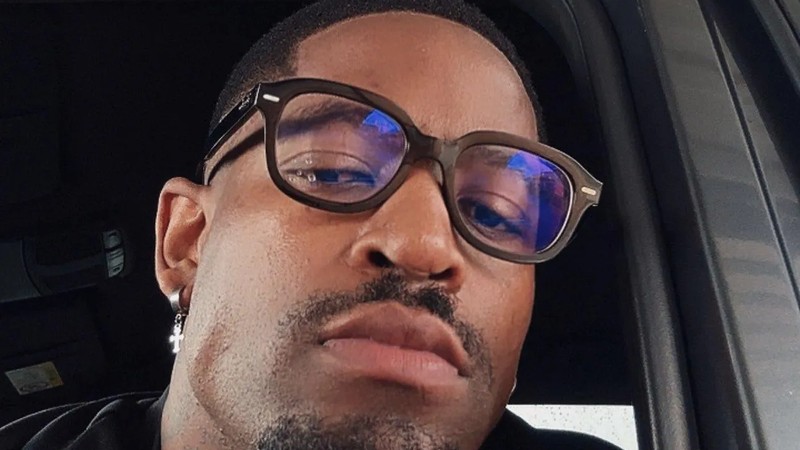
Prince Kaybee, one of South Africa’s most celebrated DJs, has always been known for his chart-topping hits, including “Club Controller”, “Fetch Your Life” and “Charlotte”.
But recently, he has shared a deeply personal journey that has sparked discussion beyond the realm of music. Through candid posts on X (formerly Twitter), he has revealed ongoing struggles with grief, trauma and intimacy.
His openness provides insight into the complexities of healing and self-awareness, inviting others to reflect on their own experiences.
Grief is messy. It’s unpredictable. It doesn’t respect your calendar, and it certainly won’t wait for “a better time.” This is a truth Prince Kaybee laid bare in one of his recent posts, where he pushed back against the notion that grief can be neatly controlled.
“The idea that you will be able to control grief is absurd,” he wrote. Later, when asked how he copes, he shared, “I broke down during a business meeting yesterday, so yeah.”
He summed up what many people find hard to say: grief doesn’t follow a straight path. It can show up at any time, even when you least expect it.
Research supports this. According to the American Psychological Association, grief impacts everyone differently, and there’s no “normal” timeline. Whether it’s losing a loved one, a relationship, or even a version of yourself, the process defies rules.
While his reflections on grief were already stirring, it was a separate post on X that truly shook the internet.
The conversation began when a user, PulengMo, casually mentioned on X: “Why osa hevi?” (Why don’t you have sex anymore?)
It could have ended there with a joke, a laugh, a deflection. But instead, Kaybee peeled himself open: “I think sex is whack.”
What followed was a deeply personal account of how his relationship with intimacy has evolved, shaped by childhood trauma, fame and therapy.
“From being molested as a child to now being an adult with numerous therapy visits, I can tell you that I might have been having it for the wrong reasons,” he wrote.
Kaybee went on to describe how his rise to fame gave him unchecked access to sex, which he now views as part of a “monsoon of a life”. But instead of fulfilment, it left him feeling empty and more disconnected from himself and others.
“With all the internal issues I had growing up, I became rich and famous, suddenly I had access to sex with anyone I wished, that was the beginning of a monsoon of a life.”
It’s a reality that many celebrities won’t admit that fame magnifies their wounds.
Access doesn’t heal you. The house, the cars, the status … none of it repairs the little child inside who never learned what safe love feels like.
His words are a stark reminder of how trauma, especially childhood trauma, can shape our adult relationships with intimacy. Studies show that survivors of childhood abuse often struggle with intimacy, trust, and emotional connection well into adulthood.
“I sit here today writing this with more understanding of how I view sex, it’s not something I really do a lot, as it requires a lot of compromise, you should be able to do it with the other person, even if you didn’t initiate it, and I do not like that.”
Another striking revelation from Kaybee’s post is his discomfort with love as it’s “commonly defined”.
“My relationship with sex is also defined by how I get uncomfortable when shown compassion, I repel any form of love because I am fine without, and in most cases, when people have sex, they say they make love, love being something that makes me uncomfortable with how it’s defined in modern times,” he admitted.
Adding, “I am a psychopath, I feel less❤️, what you see out there is a distorted understanding of who I really am, but I am not going to fight it, your truth, your rules❤️.
Kaybee’s openness has sparked a wave of conversations online, with many praising his courage in speaking about topics that are often taboo. His reflections touch on themes that feel especially urgent in today’s world: mental health, masculinity, trauma, and self-awareness.
Being able to narrate it to this much, man, you are doing fine psychologically, I think. As time progresses, you will be able to have a different view of it. But so far seems like you have made remarkable progress since you can talk about it openly.
@b_phumi wrote, “Absolutely! I think just coming into such a realisation and acceptance of it is such a brave step. Kudos to him.”
Nhlanhla also wrote, “The Tweeps don’t deserve your vulnerability, but it must have taken a lot for you to say this.
@Dee-Amu commented, “So that leaked sex tape was a childhood trauma response? Damn, bro!”
For South Africans grappling with their own experiences of grief or intimacy, reaching out and speaking about these feelings can be transformative.
As the South African Depression and Anxiety Group (SADAG) highlights, opening up is crucial for mental health. SADAG can be contacted at 0800 567 567.


