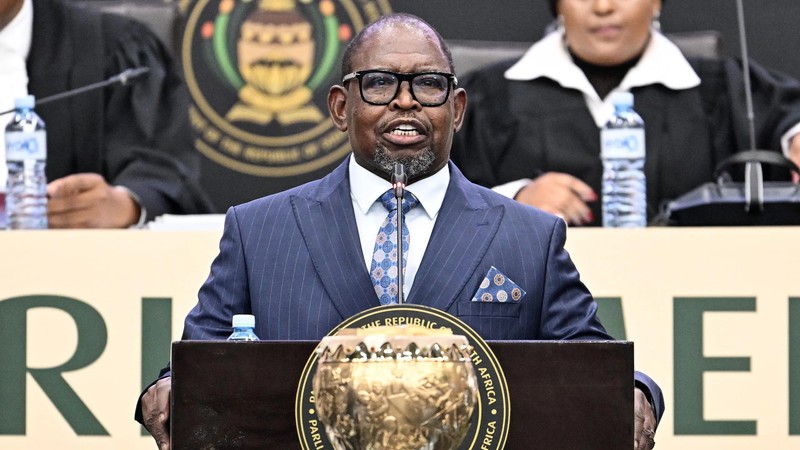
Finance Minister Enoch Godongwana has defended last year’s increase in the price threshold for official vehicles for members of the executive from R800,000 to R1.1 million, amid growing calls to reverse the decision.
Godongwana said the annual adjustments had not been conducted since 2020 due to fiscal consolidations.
“The last adjustment was during the 2019 Medium-Term Budget Policy Statement,” he said.
He was responding to Build One South Africa (BOSA) MP Nobuntu Hlazo-Webster when she asked in a parliamentary question the fiscal considerations that informed the decision to increase the price thresholds in the context of current budget constraints.
Godongwana said he had received numerous submissions and complaints that the R800,000 was no longer a suitable price, and departments found it hard to procure vehicles that fitted within the price in the transversal contract.
He further said the National Treasury’s industry analysis confirmed that inflationary adjustment over the five years had eroded the value of the threshold, and prices had breached the set price limit for most vehicles.
“It was therefore increasingly difficult for departments to locate vehicles that are fit and proper for official duties within the R800,000 price threshold. Accordingly, the price threshold was revised to R1.1 million.”
He clarified that the price threshold was not a target price.
“Departments are allowed and encouraged to use their own discretion to procure vehicles for official use that cost less than the price threshold (inclusive of VAT, security upgrades, and maintenance plans) if such vehicles are available,” Godongwana.
However, the minister could not say what the total annual cost of official vehicle benefits and related benefits is.
Godongwana stated that the purchase of vehicles is a decentralised function at the national and provincial spheres of government.
Departments are required to record details of all acquisitions and disposals of vehicles, as well as the costs of vehicles for official use by members of the executive, in the annual reports.
“A reporting template was developed for this purpose to allow National Treasury and other relevant stakeholders to quantify the cost for oversight and reporting. Other related perks provided in the guide for members of the executive fall outside the purview of the Minister of Finance,” he said.
BOSA spokesperson Roger Solomons said the decision to increase the vehicle price limit is offensive to millions of South Africans, who face a cost-of-living bind and reel from a R3 per litre fuel price increase.
Solomons also said there was a blank cheque for political elites to be driven around in the lap of luxury while citizens count every kilometre and every rand just to get by.
“South Africans are being told to tighten their belts as they pay more at the petrol pump and absorb rising food prices. Yet the government’s response is to make it easier for politicians to access more expensive vehicles, insulated from the very pressures citizens face every day.”
Solomons lashed out at Godongwana for not providing a consolidated figure for the total annual cost of official vehicles and related benefits when he stated there was a “decentralised procurement” across departments.
“This is deeply concerning as the government can calculate the rising cost of luxury vehicles for politicians but cannot quantify the total burden these perks place on public money,” he said.
Cosatu described the National Treasury’s decision as “tone deaf”.
Cosatu Parliamentary Coordinator Matthew Parks said the decision was an unbelievable affront to the working class and society, who have been told by the very National Treasury to tighten their belts.
“It is beyond shocking that this reckless decision comes from the same Treasury that has cried poverty, attempted to increase VAT, and refused to adjust tax brackets for low- and middle-income workers for inflation for two years,” Parks said.
Both BOSA and Cosatu have called for a review and reduction of the price limit for ministerial vehicles.
Solomons said apart from publishing a consolidated account of all executive benefits, Godongwana must review and reduce the benefits in line with current fiscal constraints and prioritise meaningful relief for South Africans over the comfort of politicians.
“In a time of deep economic strain, leadership should be defined by restraint and a clear alignment with the realities facing people,” he said.
Parks called on President Cyril Ramaphosa to intervene and reverse the National Treasury’s “ill-considered decision”.
“Government cannot continue to impose brutal austerity budget cuts crippling frontline public services and yet find millions to indulge the appetites of out-of-touch public representatives.”
mayibongwe.maqhina@inl.co.za


