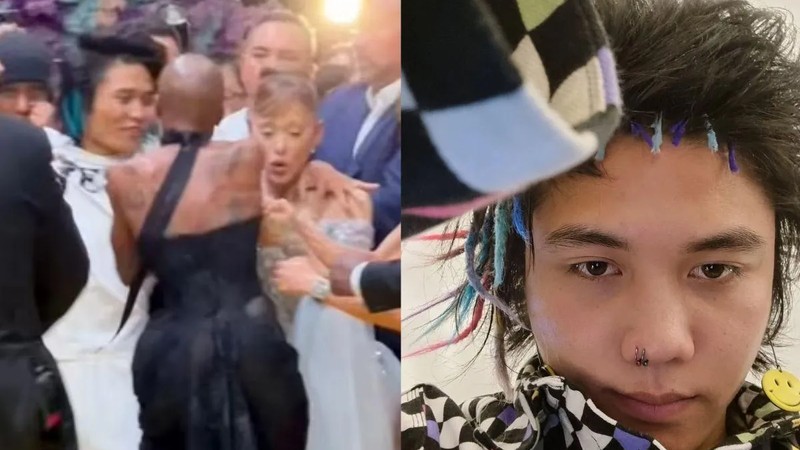
Just when you thought Johnson Wen (aka Pyjama Man) had done enough celebrity-hopping, he popped up at a Lady Gaga concert in Brisbane and, surprise, surprise, he got kicked out.
The 26-year-old Australian, who already made headlines for grabbing Ariana Grande at the Singapore premiere of “Wicked: For Good”, didn’t even make it to Gaga’s stage before security had him in tow.
Wen didn’t disrupt the performance itself – he hadn’t even arrived at the action yet – but with a history of crashing concerts and events, venues weren’t taking chances. Videos from the stadium show him being led out by security while fans mixed cheers with boos.
In his own Instagram post, he shrugged it off: “Got kicked out of Lady Gaga concert! The show doesn’t start till 8 pm! The early fans were booing me.”
Let’s recap why this guy’s so infamous (and weird). Last month, Wen spent nine days (nine days too little) in a Singapore jail for the Grande incident and was banned from re-entering the country.
Singaporean Judge Christopher Goh said the following, according to reports: “You seem to be attention-seeking, thinking only of yourself and not the safety of others when committing these acts.” In other words, yes, he’s the worst kind of fame-chaser.
And it’s not just Grande. Wen’s social media is basically a highlight reel of him jumping on stages and disrupting acts from Katy Perry to The Weeknd. The man is relentless.
So why isn’t he facing heavier legal consequences? Partly because laws often only escalate when someone is physically harmed, threatened, or clearly crosses a legal boundary. In Singapore, grabbing Grande earned him a conviction for “public nuisance” and a jail term.
In Australia, trying to enter a concert without causing harm is often treated as a warning rather than a serious crime. Fans and venues see him as a threat, but legally, he’s still on the edge – a rule-breaker more than a criminal mastermind.
That’s why he keeps showing up, and authorities keep warning him.
Psychologists and research on celebrity-stalking behaviour offer some insight into why people do things like this. Experts say repeated intrusion can stem from obsession, a desire for attention or validation, thrill-seeking, or even a distorted sense of personal connection with the celebrity.
Social media amplifies it: documenting stunts online gives instant feedback, likes, and attention, which can reinforce the behaviour.
While repeated boundary-breaking can hint at impulsive or compulsive tendencies, it doesn’t automatically mean a mental-health disorder, but one thing’s clear: this kind of behaviour puts both performers and fans at risk.


