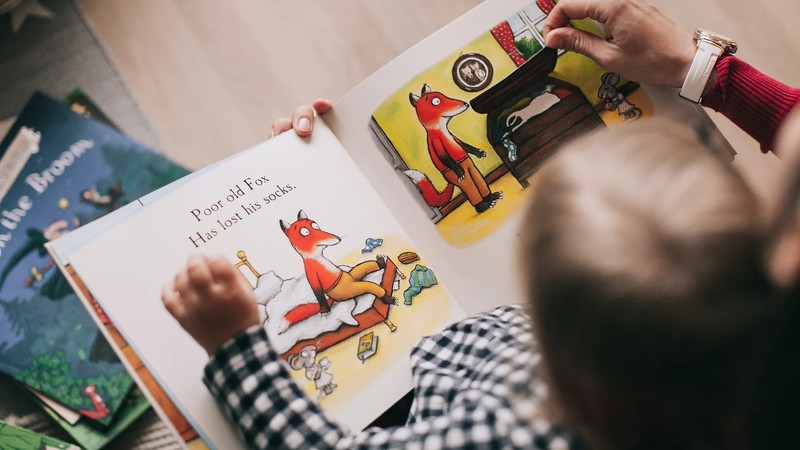
South Africa is facing a severe literacy crisis, with new data revealing that 70% of Grade 1 to 3 learners cannot read at grade level in their home language.
As public concern grows over the country’s plummeting literacy rates, questions are being raised about whether foundational reading methods, such as phonics, are still being actively taught in South African classrooms.
Earlier this year, Basic Education Minister Siviwe Gwarube addressed the annual 2030 Reading Panel at the release of their latest report in Johannesburg.
The panel released its latest report based on the Department of Basic Education’s (DBE) Funda Uphumelele National Survey (FUNS), which was developed by the DBE over seven years through multistakeholder collaboration, to create reading fluency benchmarks in all 11 languages as Home Languages as well as English First Additional Language.
The survey measured the percentages of children reaching those critical reading benchmarks by the end of Grades 1, 2, and 3. A total of 27,800 learners were assessed across 710 schools nationally.
The report found that only 30% of learners in Grades 1 to 3 are reading at grade level in their home language. In some languages, up to 25% of Grade 3 learners cannot read a single word, while 15% scored zero in reading assessments.
Chairperson of the panel, Dr Phumzile Mlambo-Ngcuka of the UMLAMBO Foundation said the findings indicated a clear picture of where urgent support is needed.
“We can now see the full picture of where South African children stand in the most critical years of learning. The data shows both the scale of the challenge and where progress is being made,” Dr Mlambo-Ngcuka said.
Global tracking highlights the depth of the crisis; in 2023, the Progress in International Reading Literacy Study (PIRLS) revealed that 81% of South African 10-year-olds could not read for meaning in any language, up from 78% in 2016.
However, Minister Gwarube told the panel that reading has not be deprioritised but is but is being embedded at the core of how the entire education system functions from Early Childhood Development to Mother Tongue-based Bilingual Education, to curriculum design, teacher preparation, learning materials, assessment and classroom support within the early primary grades.
“We are busy defining and preparing to introduce a minimum integrated package of support to improve literacy and numeracy outcomes in the Foundation Phase. We are also preparing to introduce a new National Catalogue of Learning and Teaching Support Materials in Grades 1 to 3, to ensure every classroom has access to high-quality graded readers, big books, teacher guides and learning materials in all official languages, whilst also strengthening curriculum delivery through structured phonics programmes tailored to African languages, providing teachers with clear guidance on decoding, blending, and reading instruction among other initiatives,” Minister Gwarube said.
But, the question remains, is this enough? South African children are struggling with reading.
The older generation grew up being taught phonics at school. It was a fun and easy way to teach children how to read. Have we lost this within our curriculum?
Phonics is a method of teaching reading and writing that focuses on the relationship between spoken sounds (phonemes) and written letters/letter combinations (graphemes). Rather than memorising whole words, learners use phonics to “decode” and sound out unfamiliar words using the alphabetic code.
The Curriculum and Assessment Policy Statement (CAPS) is the single, comprehensive educational policy document for South African schools from Grade R to Grade 12. It outlines exactly what topics to teach, time allocations, and how to assess learners across all subjects nationwide.
We therefore ask the question, is phonics still being taught?
IOL reached out to the DBE, however, we have not received any comment.
So, we took a dive into the CAPS curriculum and found phonics should still be taught within the foundation phase, Grade R – 3.
According to the DBE reports, reading and phonics is supposed to be taught 15 minutes per day for five days. However, the CAPS curriculum gives teachers flexibility in when and how you should teach different phonics sounds.
A concerned Durban mother, Se-Anne Rall, said she has had to teach her daughter phonics as it was not being done at school.
“Teaching phonics is absolutely imperative and I cannot understand why some schools choose to leave it out. It is the basics of learning to spell. My eldest daughter is now in high school but that’s how I taught her to learn for spelling tests. To take big words and break them up. So for example, learning carbohydrates by breaking it up to car-bo-hy-dr-ates. I still break up words in my head when I have to spell words. It’s the foundation of literacy. It’s no use shouting about children unable to read for understanding when they aren’t being taught the basics,” Rall said.
So how do we solve this problem?
According to Twinkl South Africa, a website designed by South African teachers which offers South African CAPS-aligned teaching materials, phonics teaching doesn’t properly start until Grade 1 but during Grade R there are several milestones that should be met.
Twinkl resource collection offers a core range of teaching materials, including activity sheets, PowerPoint presentations, display posters, challenge cards, differentiated tasks, complete lesson plans, games, and more. These resources provide a solid foundation for teaching across preschool, foundation phase, intermediate phase, and senior phase.
The resources provided can be used by teachers for lesson plans, parents who are homeschooling their children, or for those assisting their children.
Reading is a foundational, lifelong skill that fuels personal and professional growth and our future generations cannot lose out on the opportunity of being great.
robin.francke@iol.co.za
IOL


