De Vos (2013) argues that in 1994 South Africa emerged from a racially divided and oppressive past which disrespected human rights and the most basic tenets of the rule of law. In 1994 the new democratically elected government, headed by the African National Congress (ANC), inherited a State which was “farcically bureaucratic, secretive, and unresponsive to the basic needs of its citizens”. Most State institutions had little or no credibility, were profoundly distrusted by most people, and were not accountable in any credible manner, either to the courts or to one another.
President Cyril Ramaphosa delivered The State of the Nation Address (SONA) on Thursday, 12 February 2026, at 19h00. This is a foremost constitutional and political gathering where the head of state reports on the country’s position, assesses government achievements, and sets out the policy agenda for the year ahead. The gathering is the unification the three arms of state, legislative, executive, and judiciary and outline actions to drive economic growth, job creation, and address societal challenges. This is the reflection of strength of South Africa’s democracy, as it marshals all sectors of society towards common goals for a safer, more equal, and flourishing country.
The Minister of Finance on February 25, 2026, tabled the national budget, and tabling is one of the best important annual occasions in the country’s governance cycle. This is the schematic way Finance Minister presents the government’s revenue, spending plans, and fiscal framework to National Assembly for the upcoming financial year. Its significance rests in its role in ensuring accountability, transparency, and the alignment of economic policy with national priorities.
On the April 8, 2026 the Premier of the Eastern Cape missed a momentous occasion in the calendar of any university, the investiture of Dr. Grace Mandisa Naledi Pandor, and the reason for him skipping that important occasion is because he had to answer questions for oral reply in the provincial legislature, a key accountability tool for political oversight. The heads of governments be it the President or Premiers seem to appreciate the need to appear before parliament and account, probably its because they want to stay true to their commitments made during SONA and SOPAs, but you can’t say the same regarding Ministers and MECs.
The non-appearance of Ministers and MECs in the National Parliament and Provincial Legislatures, predominantly during portfolio committee meetings is a persistent issue that has been criticised by parliamentary committees and opposition parties. The executive’s absence has frequently been described as undermining oversight and accountability.
Accountability and Transparency, provides parliament and the citizens with an prospect to review, debate, and hold government departments accountable for their spending. It guarantees that money reaches provinces and municipalities to fund essential services like health and education.
On the other hand, there is an assumption that Parliament will conduct effective oversight over government departments and the executive arm of the State. This even goes as far as thinking that there will be consequences for those who have been identified by forensic reports commissioned by executive authorities in their respective departments (Duba & Lehohla 2025).
Duba and Lehohla further contend, the assumption is centred around the fact that, as a democratic country with Chapter 9 institutions and a constitution that entrenches the role of Parliament on oversight, things will fall into place and there will be a happy ending in our story as a democracy that has a past mired by a system of brutality and inequality.
The strengthening of the role of oversight in Parliament, and the provincial legislatures, as stipulated in the Constitution, enjoins members of Parliament, as instruments of oversight, to carry their duties with dynamism and without fear, favour and prejudice, and to hold the Executive authority and departmental officials accountable in the case of malfeasance and other crimes committed.
The decline in Parliamentary oversight and political accountability is highlighted in the NDP, as numerous accountability flaws are some of the many challenges facing the South African public service and its developmental State objectives. Three vital areas of accountability were flagged: (a) the failure of Parliament to accomplish its oversight obligation; (b) a lack of accountability in State-owned enterprises; and (c) an increasing number of service delivery protests facing local governments. These three significant challenges hamper the country’s progression, as do the triple challenges of unemployment, high levels of poverty, and inequalities (Khambule & Kariuke, 2024).
The struggle between DA leader John Steenhuisen and former Minister Dion George, led to George’s resignation from the Democratic Alliance, following his removal as Minister of Enviroment by Steenhuisen in November 2025, their public fight intensified with accusations of misconduct, and financial impropriety, brutally damaging DA, illustrate the issue of political seniority in the ruling party that also compromises oversight and accountability, as members of Parliament do not want to be seen questioning their seniors who are equally responsible for their deployment. This is attributed to many things, among them the juniorisation of the legislative arm of the state, with the senior leadership of the ruling party occupying positions in the Executive arm of the state.
We are not going to win the fight against inequality, poverty and lawlessness with Ministers and Members of the Executive Council who don’t appreciate the primary role of parliament, committees every so often express disappointment and anger when Ministers and MECs fail to appear, as their presence is required for crucial, high-level policy questions, and the reporting of department performance in line with SONA, SOPA and their policy speeches.
The Constitution is very clear, Section 92(2) mandates that cabinet members are accountable collectively and individually to Parliament, making attendance to The House (Parliament) and committee meetings a constitutional responsibility.
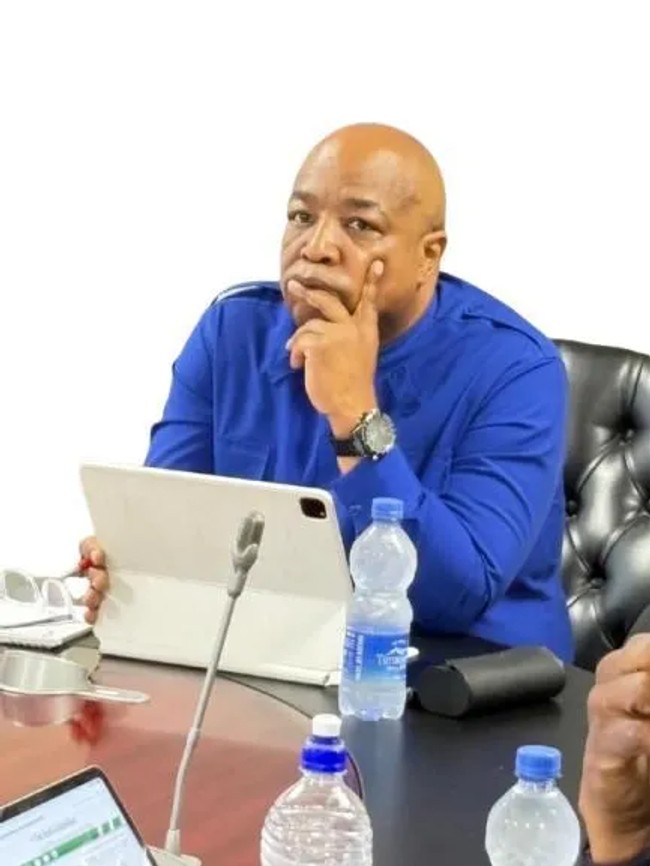
Dr Tony Duba (Ph.D, MPL), Chairperson of Committees, ECPL and writing in his personal capacity.
* Dr Tony Duba (Ph.D, MPL), Chairperson of Committees, ECPL and writing in his personal capacity.
** The views expressed do not necessarily reflect the views of IOL or Independent Media.
President Cyril Ramaphosa says an explosive Independent Police Investigative Directorate (IPID) report alleging a cover-up in relation to the robbery at his Phala Phala farm has nothing to do with him.Ramaphosa said this on the sidelines of his visit at Kusile Power Station on Friday.Ramaphosa visited the plant to assess the progress Eskom has made in restoring energy security following years of uncertainty that resulted in heavy loadshedding.Asked about the […]