KwaZulu-Natal Police Commissioner Lieutenant-General Nhlanhla Mkhwanazi is correct in singling out the rural uMzinyathi District Municipality as a breeding ground for young people who turn out to be dangerous criminals, including hitmen.
This was according to the uMzinyathi Community Policing Forum (UCPF) chairperson, Lloyd Kgotshane, who has had first-hand experience living with a hardened criminal brother in his family.
Kgotshane supported Mkhwanazi’s assertion regarding uMzinyathi.
“He is quite correct because in Endumeni, there was an incident where a family was attacked and four or three members were killed, and after that, there were two guys who were shot randomly.
“In Glencoe, there was a guy who was shot randomly, and if you go to Umsinga, there are many firearms,” said Kgotshane.
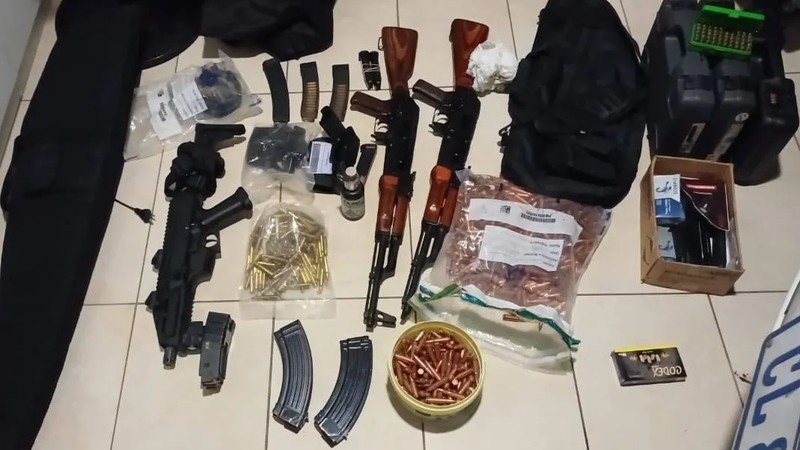
He mentioned that the most common illegal firearms in uMzinyathi include shotguns, AK-47s, and 9mm pistols, typically used by hitmen to ensure successful executions.
After his brother, Gift Kgotshane, was killed in a hail of bullets at the age of 42 in January 2009, Kgotshane joined the CPF in his area to assist the police in fighting crime, which he said leaves devastation in the families of the victims and perpetrators.
Kgotshane, who was elected UCPF chairperson on August 28, described his brother’s criminal lifestyle as common in the district. He said that while there are local hitmen, others are brought from Johannesburg to eliminate targets in the district.
In terms of the police demarcation, the district comprises Umvoti in Greytown, Msinga, Dundee, Nquthu, and Endumeni municipalities.
Kgotshane said he and his brother grew up in a “very” secure, warm family environment with a father who was a prison warder and a mother who was a teacher.
He said their parents enrolled Gift at the Durban University of Technology to study speech and drama as he had a passion for acting and music.
“My brother dropped out of his studies, and he returned home as a wanted man because he was involved in hijackings and armed robberies.
“This happened at my home, which is why I have a passion for fighting crime because it took away my brother, who was shot 18 times,” said Kgotshane.
He could not dismiss the possibility that his brother might have been a hitman.
“He would be caught with AK-47 rifles and many other small and large firearms. You could not guarantee that he was not a hitman.”
He said before becoming a criminal, Gift was a community activist and participated in non-government organisations, and he involved local young people in his sports, music, and drama activities.
“He did not achieve his dream because instead of completing his studies, he became a criminal.”
Kgotshane said on his return home after abandoning his studies, Gift started hanging around with friends who were also criminals.
He said the fact that during raids, which he often participates in, police would confiscate many firearms.
“I say not in my name and not in my district. Our role as the CPF and SAPS in uMzinyathi is to flush them out,” said Kgotshane.
He said uMzinyathi District Commissioner Major-General Francis Slambert has assembled a crime-fighting task team.
“They have retrieved a lot of illegal guns and ammunition,” added Kgotshane.
uMzinyathi, which is made up of Greytown, Kranskop, Dundee, Glencoe, and Nquthu rural towns, has a bad history of senior police officers and traditional leaders being shot dead execution style.
Kranskop Police Station Commander Superintendent Zethembe Chonco, who was known for being hard on fighting crime, was fatally shot while transporting suspects implicated in taxi violence to the Stanger Magistrate’s Court in 2008.
Inkosi Mbongeleni Zondi was also killed with an AK-47 in January 2009.
Umvoti senior traffic officer, Thobani Ndaba, was fatally sprayed with AK-47 bullets inside his municipality office on November 7, 2018.
Former police detective Captain Roshanlal Banawo was sentenced to 10 years in prison by the Newcastle Regional Court in May 2025 for conspiring to kill Slambert.
Kgotshane said the two failed attempts on the commissioner’s life happened while she was busy leading a successful fight against crime.
Kgotshane attributed the hiring of hitmen to drug dealings, where dealers would fight over customers or double-cross each other during distributions.
He could not rule out that the upcoming local government elections might see more people being assassinated. “We have a plan, we are working on it,” he said.
Provincial police Spokesperson Colonel Robert Netshiunda called on family members to protect their young men from being recruited into crime.
“Hitmen are children from homes with parents, siblings, and relatives. Crime is a societal problem, and all stakeholders must come together to discourage young children from involving themselves in criminality,” said Netshiunda.
Police profiling of arrested suspects revealed connections between hitmen operating nationwide to uMzinyathi, according to Netshiunda.
“Every arrested suspect is profiled. That’s how police get to know where they come from.”
When asked to list some of the murder cases in uMzinyathi that are linked to hitmen, Netshiunda said: “There are too many cases to mention.”
bongani.hans@inl.co.za