After back-to-back Africa Cup of Nations (AFCON) qualification and a first FIFA World Cup appearance in 16 years, the general consensus among South African football followers is that Bafana Bafana have to target nothing less than gold in the 2027 AFCON, although some legends might hold a different view.
Brian Baloyi is one of the most respected former footballers in Mzansi, and he believes it would be too much of an ask to mandate the incoming Bafana coach to win AFCON 2027.
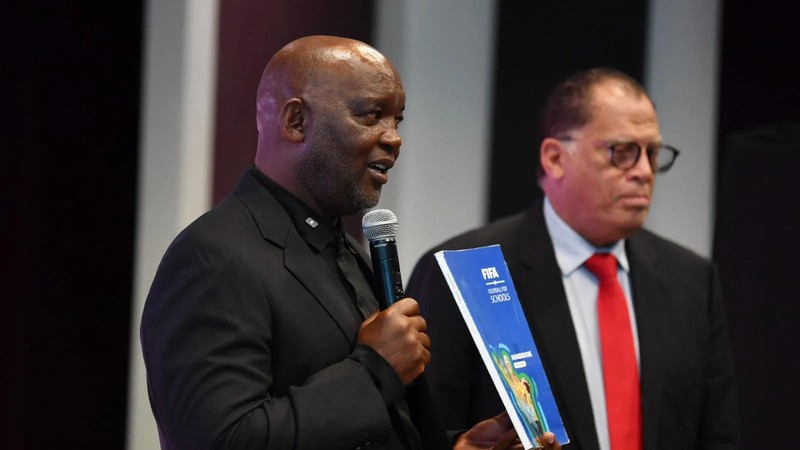
Pitso Mosimane is expected to be officially announced this week as the new Bafana coach to take over from Hugo Broos, whose five-year coaching reign ended on July 31.
“Winning the 2027 AFCON would be too much to ask for. For me, I’d say there is no way that the new coach will be able to build on what coach Hugo Broos has left. The question is, what has he left? What did he build? Yes, he was winning, but what system would you say he built and left behind?” asked Baloyi, a Hollywoodbets ambassador, in an exclusive interview with IOL Sports.
“When we talk about building, we must be talking about building the system in a way that whoever comes in will have that to work with. From my understanding at this stage, whoever comes in will have to start from scratch.”
This comes even though, besides qualifying for two AFCONs and reaching the World Cup knockout stage, Broos leaves a squad full of young players who look set for more than a decade of professional football in their legs.
However, “Spydaman” feels:
“So we will be demanding that the new coach builds on his (Broos’s) success, but there is no system or even playing style that they are building upon. They are going to start from scratch building their own philosophy, and that is one of the greatest problems we have in South Africa.
“We can see it even from the clubs — there is no trusted playing philosophy. Every coach that comes in has to introduce their own. For me, the main thing is that whoever comes in as the national coach must be someone who is going to leave a legacy. Not only concentrate on the national team, but also build coaches from grassroots to assist in building a national playing philosophy.”
The discussion around a national playing philosophy is not a new one. The debate has received enough traction that there have even been policies such as Vision 2022, which saw attempts at coaching cohesion:
A Bafana coach would be assisted by an Under-23 coach, who in turn would be assisted by an Under-20 mentor, who in turn would be assisted by an Under-17 coach.
However, that did little to heal what Baloyi identifies as the main issue.
“Right now in South Africa, it is a free-for-all. We have hundreds and hundreds of academies. Someone will come and say, ‘I love English football, I’m going to form my academy and teach English football.’ Someone else comes and says, ‘Eish, I love German football,’ and they teach German football and so on — hence the free-for-all,” said Baloyi.
“Our kids are playing all these different styles, but we need a technical director who is going to come in and say, ‘You are not allowed to come in and teach your own thing. This is how children are taught to play football in this country. This is how kids get developed,’ so that everyone who comes through and gets to the national team, and when they leave, the new coach will build from that.”
At the weekend, the SAFA National Executive Committee announced their backing of Mosimane. However, a disagreement over his salary package caused a standoff, as he was reportedly offered R5 million a year, prompting his team to argue for an annual package closer to the R16.8 million paid to Broos.
Mosimane has to prepare for AFCON qualifiers starting in September, with Bafana playing Guinea and Eritrea.
The expanded international window between September and October also allows national teams to add at least one or two international friendly matches.


