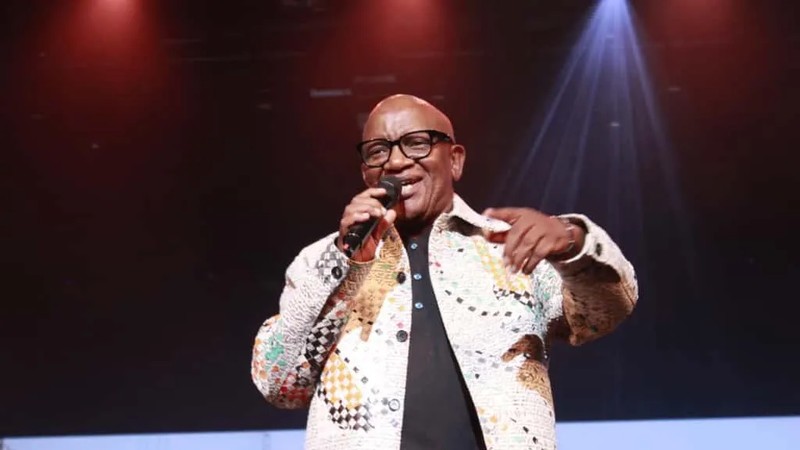
South African composer and performer Lebohang “Lebo M” Morake has been ordered by a United States federal court to pay $39,560 (about R640,000) in attorneys’ fees to Zimbabwean comedian Learnmore Mwanyenyeka, following their highly publicised legal battle over “The Lion King’s” iconic opening chant.
The order was issued on August 28, 2026, by US District Judge Josephine L. Staton in the Central District of California in the case Lebohang Morake v. Learnmore Mwanyenyeka.
The ruling does not determine whether Mwanyenyeka’s comedic interpretation of the chant was an accurate translation. Instead, it deals specifically with the legal fees arising from the comedian’s successful anti-SLAPP (Strategic Lawsuit Against Public Participation) proceedings.
Anti-SLAPP protections allow defendants to challenge lawsuits that arise from protected speech, with fee recovery potentially available to a successful defendant.
From a comedy joke to a multimillion-dollar lawsuit
The dispute began after Mwanyenyeka, also known professionally as Learnmore Jonasi, joked about the meaning of “Nants’ingonyama bagithi Baba”, the famous opening chant from “The Lion King”.
Morake, who is credited as the creator and original performer of the chant, took issue with the comedian’s interpretation.
According to court documents, Mwanyenyeka said the phrase meant: “Look, there’s a lion. Oh my god” in Zulu, and subsequently repeated the joke during comedy performances.
Morake maintained that the translation was false and that the comments damaged the cultural and artistic significance of his work.
He subsequently filed a lawsuit against Mwanyenyeka in March, seeking $27 million in damages. The case attracted international attention because of the extraordinary amount involved and because it centred on comments made in a comedic context.
Court sides with comedian on legal fees
Mwanyenyeka responded with an anti-SLAPP motion, arguing that the claims against him involved protected speech.
The court ultimately found that the comedian had prevailed for purposes of the anti-SLAPP proceedings and was therefore entitled to recover attorneys’ fees.
The judge’s August 28 order states that the defendant’s lawyers had incurred $39,560 (R638,834.26) in reasonable fees after the court reviewed their billing records and adjusted certain calculations.
The lawyers had initially submitted a higher figure of $45,935 (R741,819.93), but the court reduced the amount after finding that some of the work performed by attorney Zachary Hansen had mistakenly been calculated using his colleague Bryan Sullivan’s higher hourly rate.
The court found Sullivan’s hourly rate of $850 (R13 726,92) and Hansen’s rate of $475 (R7 671,40) reasonable based on their experience and expertise.
Jonasi’s lawyers had charged him $5,350
One of the more striking aspects of the ruling is that Mwanyenyeka’s legal team had actually charged him only $5,350 (R86,401.91) for their work.
The court noted that his attorneys had taken the matter at significantly reduced rates because of the importance they placed on his First Amendment rights.
However, that did not prevent the court from calculating the statutory fee award based on the reasonable value of the legal services.
The judge also rejected Mwanyenyeka’s request for an additional fee enhancement of at least three times the calculated amount, finding that such an enhancement was not warranted.
The ruling does not settle the translation dispute
The latest court order does not establish which interpretation of the famous chant is linguistically correct.
Rather, it addresses whether Mwanyenyeka was entitled to recover his legal expenses after successfully invoking California’s anti-SLAPP protections.
The original dispute centred on the meaning and cultural significance of the chant, which has become synonymous with “The Lion King and Morake’s musical legacy.
The case was filed in the US District Court for the Central District of California in March 2026.
Morake in a statement shared with TshisaLIVE said that despite the ruling has maintained that he wants to explore his rights to protect his cultural contribution.
”Lebo M and his legal team are therefore studying the implications of the latest determination and evaluating the options available to them. We will not litigate this matter through social media, nor will we allow online commentary to define the significance of the principles at stake.”


