NO economy in Southern Africa will grow to its full potential while it continues, in practice if not in law, to sideline women from decision-making.
This is not a moral aside to the region’s growth agenda; it is the growth agenda. Where women participate fully in labour markets, in enterprise, and in leadership, economies diversify faster, households absorb shocks better, and the next generation is better educated, and better fed.
Of the Southern African Development Community (SADC) recognises this. The evidence across the continent bears it out. And yet the conversation in too many of our countries still treats women’s advancement as a matter of fairness to be weighed against growth, rather than as one of the clearest levers available for achieving it.
History has proven that the involvement of women in economic development is not a charity case, their intellect is the necessary catalyst in economic development, and their inclusion is a must.
Men and women who hold positions of decision-making, in cabinets, in courts, in boardrooms, at the head of homesteads and chiefdoms, are the ones who determine whether capable women reach the tables where a region’s economic future is actually decided.
Supporting the advancement of women into leadership is not a favour extended downward; it is the exercise of good judgement by those already in a position to shape outcomes, in service of economies that function better when they draw on the full range of talent available to them.
Where that judgement has been exercised, as this piece will show, the results are measurable.
Eswatini offers a case worth examining closely, because the usual habit in public conversation about women and the economy is to speak as though the law has yet to arrive, as though advocates must still call for reform and commentators must still list what is missing.
Quietly, and largely unremarked upon, opportunity in Eswatini rests on legislation that has already been written, tested, and, in some instances, confirmed by our own courts, legislation that, measured against our neighbours across SADC, places this kingdom among the region’s genuine leaders on women’s economic standing.
This argument sits at the intersection of two systems of authority that are rarely asked to speak in the same breath: The Constitution and the statutes that give it effect, and the custom of siSwati life as it is lived in homesteads and in the council of elders.
The two are often assumed to pull in different directions on the question of women and economic life. They do not. They agree, and they have agreed for some time.
Where Eswatini leads the region — The legal context
The comparison is worth making plainly, because it is rarely made at all. On the World Economic Forum’s (WEF’s) measure of economic participation and opportunity — labour-force participation, professional representation, income parity — Eswatini ranks third in the world, behind only Botswana and Liberia.
Eswatini’s economy has closed more of the gender gap in this category than every other SADC member state, including economies many times its size.
This is not an accident of measurement. It rests on a specific, identifiable legal architecture.
In Eswatini the 2005 constitution serves as the supreme law and provides for gender equality, recognises women’s rights and places a duty on the state to reverse any historical marginalisation of women.
Section 14 of Chapter 3 of the Eswatini Constitution, 2005, on the promotion of fundamental rights and freedom guarantees basic human rights to all individuals regardless of gender.
Section 20 of the Constitution, being the equality clause, explicitly prohibits discrimination based on gender. In Eswatini the constitution grants women the rights to equal treatment with men, including equal opportunities in political, economic and social activities.
The said section further obligates the government to provide facilities and opportunities to enhance the welfare of women. Worth noting is that section 28(3) provides that a women shall not be compelled to undergo and uphold any custom to which she is “in” conscience opposed.
Section 59(5) on economic objectives obligates the state to take all necessary steps to ensure the full integration of women into the mainstream of economic development — an operative constitutional command, not inspirational language.
With the advent of the constitution and other statutory enactments and case law, the status of women has fundamentally shifted upwards. The national gender policy (2023–2033) is the comprehensive 10-year policy guiding government ministries to be gender-responsible in budgeting and mainstreaming women into leadership.
In Section 86 of the constitution it is provided that when, in the first meeting of the House after any general election, it appears that female members of Parliament will not constitute at least 30% of the total membership of Parliament, only then shall the House form itself into an electoral college and elect not more than four women on a regional basis to the House. This section is intended to improve the political participation of women in Parliament.
As matters currently stand, the female representation in Parliament is almost 30%. The number of women cabinet ministers has also increased to 25%, and the deputy prime minister, Honourable Senator Thulisile Dladla, is a woman.
Land in Eswatini can be categorised into two: one being title deed land and the other being Eswatini national land. The Eswatini national land is held by the king in trust for Emaswati and is allocated by the chiefs. Historically it was only granted to male heads of households.
Currently women can be legally allocated land in Eswatini National Land on their own, and many women acquired land on their own under the system of kukhonta. Women are free to purchase title deed land in Eswatini.
The case of Attorney-General vs Mary-Joyce Doo Aphane 2010, the Supreme Court declared that it was unconstitutional to deny women married in the community of property the right of registering their property in their own names.
In the case of Sacolo vs Sacolo (2019), the High Court struck down the common law doctrine of marital power and held that it violates women’s constitutional rights and dignity and that both spouses have equal capacity to administer matrimonial property. Eswatini today holds, as a matter of settled law, women holding the same legal standing to contract, register businesses, and hold and administer property as a man.
None of this settles the matter entirely. Real gaps remain, particularly in having women access capital and formal business infrastructure, and this piece will return to that. But a regional business, and his kind matters, because a nation cannot close a gap it does not accurately measure against its peers — and Eswatini’s starting point, relative to the rest of Southern Africa, is stronger than the conversation around it usually admits.
A king and queen mother for the people — especially women
None of this has emerged against the wishes of those who lead this nation. Addressing Ghana’s National House of Chiefs in Kumasi during a working visit in June 2025, His Majesty King Mswati III spoke directly to the developmental role women have long played in African communities, urging that they be given recognition and, in his words, “the proper support to deliver for us always”.
He held up Eswatini specifically as a case in which women are recognised and given the respect due to them as key players in national development and argued that traditional authority and modern governance are not in conflict but can complement one another in advancing this agenda.
At the 2023 Buganu Festival at Buhleni Royal Residence, King Mswati raised the question directly of why more women were not yet being elected to Parliament, making the point that women are fully capable of contributing to the building of the nation — a challenge aimed as much at the electorate and political structures as at women themselves.
Her Majesty the Indlovukazi, the nation’s foremost maternal figure, has spoken to this point directly. Addressing the Lutsango regiment at the 2023 Buganu Festival at Buhleni Royal Residence, Queen Mother told the nation’s women plainly, in siSwati, “anisasibo belikhishi nemabhodo” (you do not belong in the kitchen) and urged them to recognise their own power and take up whatever position matched their capacity, rather than carry the household’s domestic burden alone while also building their own economic independence.
These words are not incidental to this argument; they are its foundation. When the two heads of state speak of women’s capability and standing, they are not introducing a new idea into Swati life.
They are affirming what this kingdom’s leadership has practised for decades and what now shows up, measurably, in Eswatini’s standing relative to the rest of the region.
Women have already led at the highest level — for years
Eswatini need not imagine a future in which women hold the nation’s highest offices. It has lived it.
The Honourable Thulisile Dladla, the current Deputy Prime Minister, is the second woman to hold that office in the Kingdom’s history, following Constance Simelane before her.
Her tenure has been marked by the kind of leadership this country most needs: a steady hand on social protection, gender mainstreaming, child welfare, and the wellbeing of persons with disabilities — leadership that embodies the spirit of Ubuntu, whose preamble calls on all of us to protect and support the most vulnerable among us.
A woman sitting second-in-command of this government’s executive is not an exception to how Eswatini governs. It is, increasingly, how Eswatini governs.
Women’s representation in public leadership extends beyond a single office. Current parliamentary data show that women hold approximately 20.3% of seats in the House of Assembly and 46.7% of seats in the Senate, making Eswatini’s upper chamber one of the most gender-balanced legislative bodies in the region.
The Senate is presided over by a woman, Senator Lindiwe Dlamini, demonstrating that women are not merely participating in public life but occupying positions of institutional leadership. Constitutional mechanisms further safeguard women’s representation by requiring minimum levels of female participation in both chambers where electoral outcomes alone do not achieve adequate inclusion.
Representation is also evident within the executive branch. Women hold about 26% of ministerial positions, including responsibility for key portfolios such as foreign affairs, home affairs, information and communications technology, tourism and environmental affairs, as well as the Office of the Deputy Prime Minister.
Leadership is increasingly visible beyond elected office and Cabinet. Women today occupy senior positions across government ministries, public institutions and national agencies, reflecting their growing role in policy-making and public administration.
Nor is women’s influence confined to public institutions. Across the private sector, women increasingly occupy executive and board-level positions in sectors ranging from banking and communications to mining and entrepreneurship.
This leadership presence is reflected in the broader economy, where women own about 60% of Eswatini’s small, medium, and micro-sized enterprises, making them central to business formation, employment creation and household livelihoods across the kingdom.
These developments point to an important conclusion. The question facing Eswatini is no longer whether women can lead at the highest levels of national life. Women are already doing so. The challenge now is ensuring that more women are able to enter and advance through leadership pipelines across every sector of the economy.
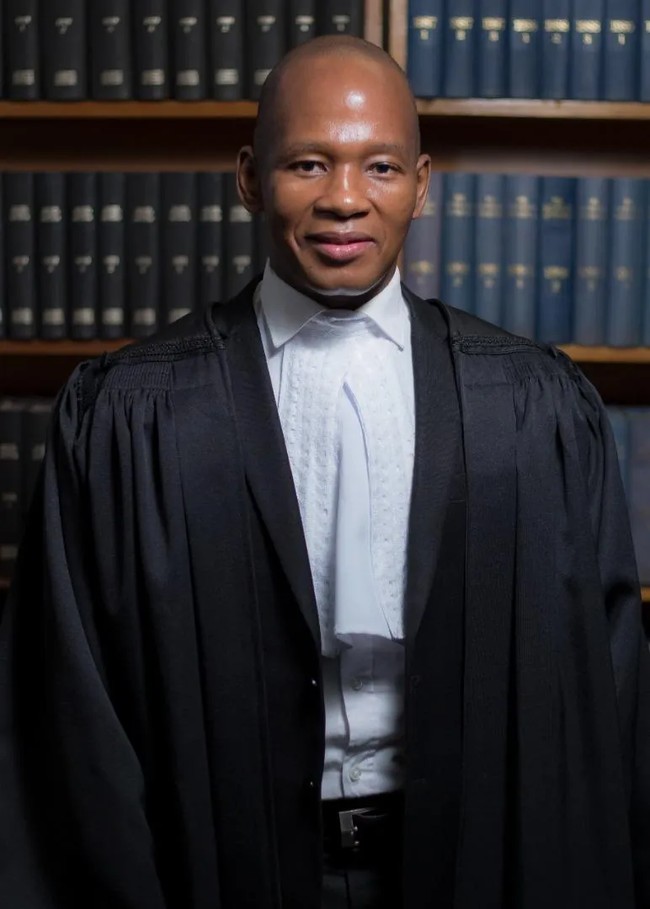
Sifiso MM Khumalo, Eswatini’s Attorney-General.
What custom actually asks of us
There is a claim worth confronting directly: That tradition asks women to defer, in commerce as in the home, to a male relative’s judgement before their own. That is not what custom, properly understood, requires.
SiSwati tradition has always recognised women as builders of the homestead’s wealth: as cultivators, traders, keepers of livestock, custodians of household provision. The deference sometimes described as custom is, more often, habit inherited from a different era, mistaken for obligation.
A tradition that prizes the wellbeing of the homestead has never been served by leaving half its builders on the margin of decision-making.
When the Constitution affirms a woman’s equal economic standing, it is not asking Emaswati to set custom aside. It is asking that the custom be practised as it was meant to be — with the full participation of those who have always carried its weight.
Culture and tradition in this Kingdom respect women. They always have. Where women’s growth has been stifled, it has too often been at the hands of a misreading of the law or a convenient misreading of custom mistaken for the genuine article and left unchallenged.
Society cannot continue to hide behind misinterpreted laws, or behind a version of tradition invented to suit that misreading, to justify holding women back from the economic role the Constitution, the courts, and this kingdom’s own leadership have already affirmed belongs to them.
Where the real work lies
The honest gap, region-wide as much as here at home, is not statutory. It is implementation.
This is particularly striking given the extent to which women have already embraced entrepreneurship. Recent studies indicate that women own about 60% of Eswatini’s SMMEs, placing them at the centre of employment creation, household income generation and economic resilience. Yet many women-led enterprises remain informal, undercapitalised and concentrated in lower-growth segments of the economy.
Nearly 90% of SMMEs rely primarily on personal savings rather than formal financing, while 74% of firms led by women identify access to finance as a major constraint to growth.
The problem, therefore, is not a lack of entrepreneurial ambition. It is a lack of access to the financial tools that allow successful enterprises to expand, employ more people and compete at scale.
Equally important is the absence of comprehensive public data. Eswatini would benefit from regularly updated national datasets tracking women-owned businesses, women in senior civil service positions, and women serving on public enterprise boards and executive teams. Better measurement would allow policymakers to design interventions based on evidence rather than assumption.
Closing these gaps should be a national economic priority. The next phase of women’s economic empowerment in Eswatini is not about proving women’s capacity to succeed in business or leadership; the evidence of that already exists. It is about ensuring that women entrepreneurs and leaders have the same access to capital, institutions, networks and opportunities as their male counterparts.
Eswatini does not stand at the beginning of this journey. It stands some distance along it.
The Constitution has spoken. The courts have spoken. Custom, properly understood, has spoken. Their Majesties have spoken. The question before us is not whether women belong in the mainstream of economic life, but whether we are prepared to unlock the full measure of their contribution to our nation’s future.
The countries that prosper in the decades ahead will be those that recognise talent wherever it is found, remove barriers wherever they remain, and draw strength from the abilities of all their people.
Eswatini has already laid much of that foundation. Our task now is to build upon it — to ensure that every woman with the ambition to farm, to trade, to innovate, to lead, or to build an enterprise can do so on equal terms.
The question is no longer whether Eswatini can afford to empower women. The question is whether it can afford not to.
The Attorney General was one of the speakers at the inaugural Women’s Month thought leadership event held under the theme The Role of Women in Growing Southern Africa’s Economies held last August.
* Sifiso MM Khumalo is the Attorney General of the Kingdom of Eswatini.
** The views expressed here do not reflect those of the Sunday Independent, Independent Media, or IOL.
Italian defender Franco Baresi, the captain of AC Milan in the 1980s and 1990s when they won three European Cups and six Italian league titles, has died at the age of 66, the club announced on Friday."Milan is in tears following the passing of Franco Baresi. His example and integrity will be forever etched into the Club's DNA, just as his iconic number 6 shirt is," AC Milan, of which […]