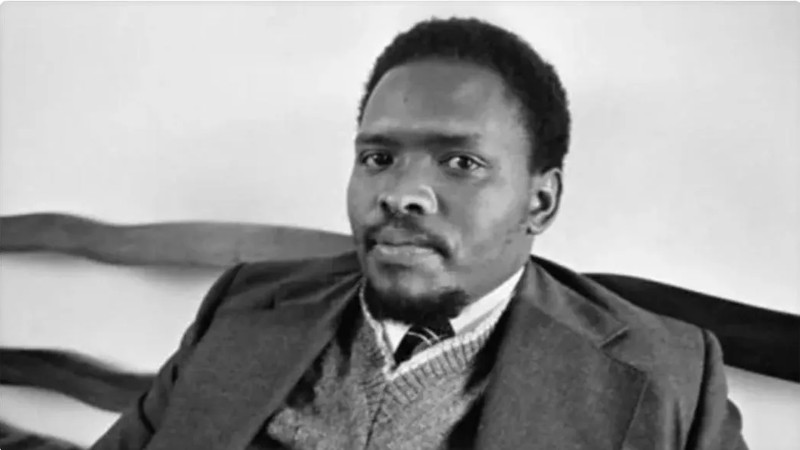
The re-opened inquest into the death of Black Consciousness Movement leader Steve Biko is expected to hear the testimony of Daniel Petrus Siebert at the Gqeberha High Court on Monday.
Siebert, 80, a former apartheid security policeman, told the court of his role during the interrogation of Biko in 1977. It was reported that he said Biko was struck with a hose pipe. He is expected to be cross-examined on Monday.
The case has been closely followed by his former research assistant, Sumboornam Moodley, 78. She said Biko will be remembered for his formidable stature and breadth of vision. Moodley said Biko will continue to remain in the hearts of those who knew him and worked with him, for the warmth he exuded, his brilliant mind and strong leadership.
The National Prosecuting Authority (NPA) reopened the inquest in September 2025 to allow the court to determine whether Biko’s death was caused by an act or omission amounting to a crime. Hearings began in August.
Witnesses
In the past weeks, activist Monde Mditshwa took the stand as the second witness, detailing the interrogation and torture he personally experienced in Room 619 at Walmer police station at the hands of Security Branch officers in 1977. The Directorate for Priority Crime Investigation (DPCI) Sergeant Fundiswa Dingiswayo testified on the difficulties she experienced with missing documents and incomplete records around Biko’s death.
Arrest
Police stopped Biko and Peter Jones at a roadblock near Makhanda, formerly Grahamstown, on August 18, 1977, and arrested Biko for allegedly breaching banning orders that confined him to Qonce, formerly King William’s Town. He was taken to Walmer police station, where he was allegedly held naked and shackled in leg irons and tortured. Medical assistance was called for only after Biko had spent 24 days in custody, when foam was seen coming from his mouth.
On September 11, 1977, Biko was loaded unconscious into the back of a police vehicle, still naked and shackled, and driven 1,200km to a prison hospital in Pretoria. He died the following day. He was 30.
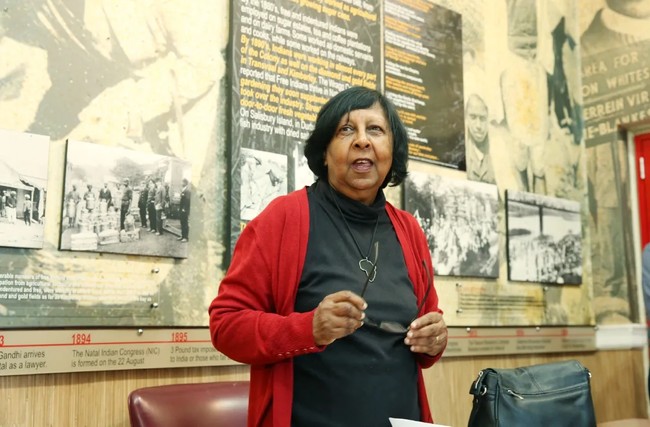
Sumboornam Moodley, author, struggle veteran and Black Consciousness leader is following the re-opened inquest into the death of Steve Biko that is being heard at the Gqeberha High Court in the Eastern Cape.
Steve Biko legacy
The retired Moodley, who lives in Durban, said Biko’s legacy cannot be confined to the student politics of the 1970s or to the political and community organisations of the BCM.
“To this day the movement continues to uphold what he fought for: to hold truth to power, fight against racism and all forms of oppression and injustice, build solidarity by preventing divisive tactics that break communities, and continue with the pillars of black consciousness where integrity, respect, and self-reliance are the foundation of a strong society to build on,” Moodley said.
She added that memories of Biko as a friend to every person in the streets, villages, and towns, reaching out to the poor, the unemployed, the sick, and those needing care will remain for time immemorial. Moodley said Biko valued life, making the way his life was taken from him abhorrent and unacceptable.
“His stature is not merely carved in statues and concrete busts, but deeply etched in the minds of nations across the world as a revolutionary visionary. He will live on in the minds of all people for all times,” Moodley added.
Truth and Reconciliation Commission
Documents from the 1977 inquest into Biko’s death and the subsequent Truth and Reconciliation Commission (TRC) hearings are missing. Two former police officers named as persons of interest are also due to testify. Both are alive and in their 80s.
The first inquest into Biko’s death, held two months after his death, heard the Special Branch’s version that Biko had injured himself by banging his head against a wall.
The presiding officer accepted that account and cleared the doctors who had treated Biko in custody. On February 2, 1978, the then Eastern Cape attorney-general decided not to prosecute anyone. In 1997, Harold Snyman, Daniel Siebert, Jacobus Beneche, Rubin Marx and Gideon Nieuwoudt went to the Truth and Reconciliation Commission seeking amnesty.
They claimed Biko had swung a chair at one of them and hit his head as they wrestled him to the ground. They admitted they had agreed on a version of events and submitted false affidavits during the original investigation. The TRC rejected all five amnesty applications, finding that their accounts were inconsistent.
For the past 581 days, Samantha van der Vyver has started each morning by posting a photograph of her son on her WhatsApp status.The photographs are all she has left of the son she loved and lost far too soon.Tiaan Minnie was shot dead alongside his father, Heinrich Minnie, 47, while the two were offloading rubbish at the Arlington Waste Facility in Nelson Mandela Bay on February 3 last year."I […]