In September 2007, a dog carried a woman’s head into Shayamoya township in Umzinto, on the KwaZulu-Natal South Coast, leading residents to the first of 13 women murdered by Thozamile Taki.
Taki had lured the women with the promise of jobs before robbing and strangling them and leaving their bodies in sugar cane fields and tea plantations.
Nearly two decades later, another string of women’s bodies has been found in Ekurhuleni, bringing back memories of Taki’s killing spree.
But police said on Tuesday it was too early to say whether the latest deaths were the work of one killer.
Acting police minister Firoz Cachalia said on Tuesday night that the number of women found dead in Ekurhuleni since July had risen to eight, with the latest body found in Olifantsfontein.
Speaking at a media briefing in Parktown, Cachalia said the murders were unacceptable.
He said a high-level team had been formed to investigate the cases, bringing together detectives and other specialists from different police units.
Cachalia said police would “leave no stone unturned to bring the culprits to book”.
He said the deaths reminded the country that women were not safe, and that the thought of a woman going out for a run and never coming home was “too unbearable to think about”.
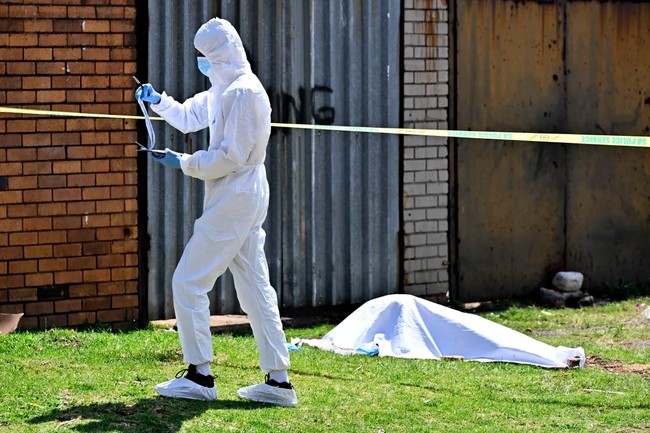
Police are investigating a crime scene where a woman’s body was discovered in Kwa-Thema, Springs on Tuesday
National police spokesperson Brigadier Athlenda Mathe said men and women in blue were still establishing whether they were dealing with one perpetrator or a group, and had not ruled out copycat killings.
Acting Gauteng police commissioner Major General Fred Kekana said earlier on Tuesday that the body of a woman in her late twenties, found in a river near Tembisa Mall on September 7, had been added to the investigation after police checked records at surrounding stations.
Kekana said a pathologist’s preliminary assessment showed that the woman found beside a road in KwaThema, Springs, on Tuesday morning appeared to have been strangled, and that a post-mortem was expected on Wednesday.
He said only two of the first seven women had been identified, and a suspect arrested in July in connection with the death of the first woman remained in custody.
Deputy national police commissioner Lieutenant General Tebello Mosikili said on Monday night that four of the five women found around Kempton Park had shown signs of sexual assault.
President Cyril Ramaphosa said he had directed that the cases be prioritised.
Where the eight women were foundBodies found in Ekurhuleni between July and September 2026OR Tambo airportR21N12N17R24N3Kempton ParkRhodesfieldThembisaOlifantsfonteinMidrandEdenvaleGermistonBoksburgBenoniBrakpanSpringsKwaThemaDaveytonJohannesburg10 kmN123456781July 15Woman, 37, found naked and bound nearthe R21, Rhodesfield. Suspect arrested2August 24Woman, 32, found partially clothed andbruised near the R21, Kempton Park3September 7Woman in her late twenties found in ariver near Tembisa Mall4September 10Unidentified woman found decomposed andpartially clothed near Rhodesfield5September 12Runner Elizabeth Moselakgomo, 38, foundbehind a hotel in Rhodesfield6September 14Woman found partially clothed beside theR21 near Olifantsfontein7September 15Woman in her thirties found naked besidea road in KwaThema, Springs8September 15Police minister Firoz Cachalia said aneighth body was found in OlifantsfonteinBody foundSuspect arrestedR21Source SAPS. Locations approximate
Professor Gerard Labuschagne, the former head of the SAPS Investigative Psychology Section, said that though he had not been involved in the investigation, the deaths bore the hallmarks of serial murder and should be treated as a serial case until evidence showed otherwise.
“Behaviourally the close geographic proximity and time frame of the murders and the similar victimology are enough to activate the SAPS policy on serial murder investigation,” Labuschagne said.
“Even if the cases prove to be the work of separate offenders, they will get far more attention as part of a dedicated task team focusing on them.”
Labuschagne said the police no longer had a single criminal profiler after the last one retired in March, but detectives with training and experience in serial murder cases should be brought into the investigation.
Under the police policy on serial rape and serial murder, approved by then police minister Nathi Nhleko in June 2016, SA is described as having historically had a high rate of serial murder and is sometimes ranked with the US and Russia among the top three countries for such offenders.
In terms of the policy, the Investigative Psychology Section must become involved automatically once a murder series comes to its attention, and the task team must tell the public, through police communication officials, when a serial murderer is active in an area.
The policy also describes serial offenders as typically luring victims to a secluded place with a false story, often a job offer.
Moses Sithole, Sipho Thwala and Taki all lured their victims with the promise of work.
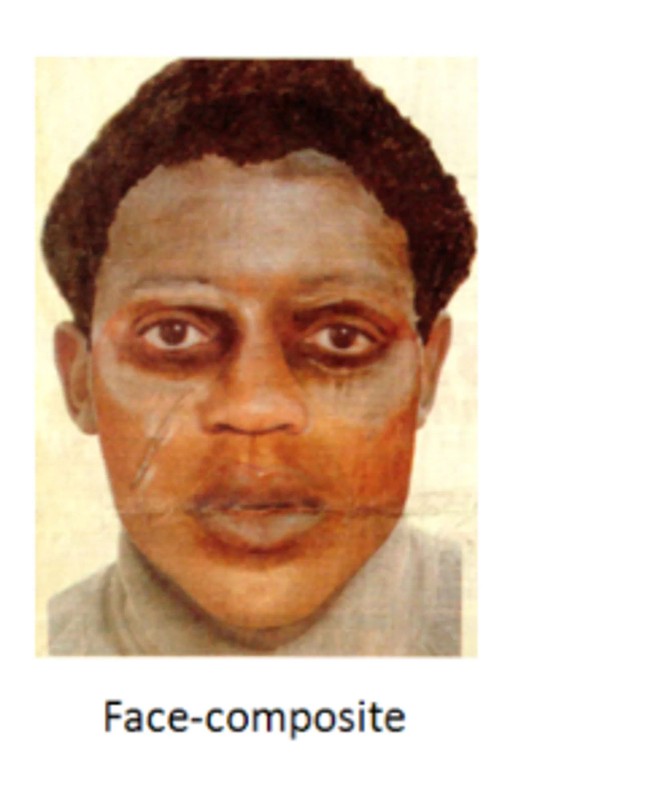
One of the various identikits of the Station Strangler in 1994
The Station Strangler
Between 1986 and 1994, the bodies of at least 22 boys were found in shallow graves on the Cape Flats, most of them around Mitchells Plain.
The boys had been sexually assaulted and strangled.
Norman Afzal Simons, a former teacher from Mitchells Plain, was arrested in April 1994.
He was convicted in 1995 of kidnapping and murdering 10-year-old Elroy van Rooyen, and he was never charged with any of the other murders.
No one else has been arrested for the killings, and when police reopened the cold cases in 2010, none of the DNA from the crime scenes matched Simons.
Simons has maintained his innocence, and he was released on parole in July 2023 after 28 years in prison.
The ABC Killer
Moses Sithole remains the most prolific serial killer convicted in SA.
Between 1994 and 1995, bodies were found in Atteridgeville, Boksburg and Cleveland, which gave the killer his nickname.
Sithole, who had previously served a prison term for rape, posed as a businessman and offered unemployed women jobs before leading them to isolated fields, where he raped and strangled them, often with their own clothing.
Police called in retired FBI profiler Robert Ressler to help draw up a profile of the killer, and Sithole was arrested in late 1995.
In December 1997, Judge David Carstairs sentenced Sithole to 2,410 years in prison for 38 murders, 40 rapes and six robberies.
The judge ordered that he serve at least 930 years before he could be considered for parole.
Boetie Boer
Stewart Wilken, who called himself Boetie Boer, killed street children and sex workers in Gqeberha, formerly Port Elizabeth, between 1990 and 1997.
Wilken was arrested in January 1997 for the murders of his own daughter and a 12-year-old boy, Henry Bakers, and later admitted to 10 murders and pointed out evidence to police.
He was also charged with cannibalism and necrophilia.
Wilken was convicted in February 1998 of seven murders and two counts of sodomy, and Judge Chris Jansen sentenced him to seven life terms.
The judge said he would have sentenced Wilken to death had the death penalty still been available.
Phoenix Strangler
Thwala, of KwaMashu, raped and murdered women in the sugar cane fields of Mount Edgecombe, near Phoenix, north of Durban, in 1996 and 1997.
Thwala promised the women jobs, led them deep into the cane fields, tied them up with their own underwear and raped and strangled them.
He was arrested in August 1997 after police matched DNA found on the victims to a sample taken from him in 1994, when he had been arrested and acquitted of rape.
In March 1999, Judge Vivienne Niles-Duner found Thwala guilty in the Durban High Court of 16 murders and 10 rapes and sentenced him to 506 years in prison.
Serial killer Thozamile Taki
Sugarcane Killer
In September 2007, residents of Shayamoya township in Umzinto, on the KwaZulu-Natal South Coast, found the headless body of a woman in the sugar cane fields after a dog carried her head into the township.
The bodies of 11 women were found in the fields in the weeks that followed, and the bodies of two more women were found in tea plantations near Port St Johns in the Eastern Cape.
Thozamile Taki promised the women jobs and asked each of them to bring between R300 and R3,000 for rent or a bribe to secure the work.
He then robbed them of their money, cellphones and clothing and strangled them.
Taki tried to escape from Westville prison with eight other prisoners during his trial in 2010, but he fell from the ceiling on the fourth floor and was badly injured.
In December 2010, Judge King Ndlovu convicted Taki of 13 murders and 13 robberies, and acquitted his former girlfriend Hlengiwe Nene, who had been charged with him.
Taki was sentenced to 13 life terms and 208 years in prison in January 2011.
Ndlovu said Taki was a danger to society and could not be rehabilitated.
The artist Finneas and three other supporting acts announced they had quit British superstar Ed Sheeran's tour on Tuesday, after rapper Macklemore was dropped for making pro-Palestinian comments while performing.Sheeran has denied being behind the decision to remove Macklemore, saying his tour's promoter was responsible.But Finneas, a performer also famous for work with his superstar sister Billie Eilish, Irish acts Aaron Rowe and Beoga, and Lukas Graham of Denmark all […]