As South Africa celebrates Heritage Day, there is no shortage of ways to honour the stories, languages, people and experiences that make the country unique.
One of them is through film.
Over the years, South African filmmakers, actors and storytellers have taken local stories to audiences around the world, while creating films that remain deeply rooted in the country’s history and culture.
From township dramas and political musicals to comedies, coming-of-age stories and ambitious science fiction, these films have captured different sides of the South African experience.
Here are some proudly South African films worth revisiting this Heritage Day.
“Tsotsi” (2005)
Directed by Gavin Hood, the crime drama follows Tsotsi, a young gang leader living in the townships of Johannesburg whose life takes an unexpected turn after he steals a car and discovers a baby inside.
Starring Presley Chweneyagae in the title role, the film explores poverty, violence, redemption, and the possibility of change.
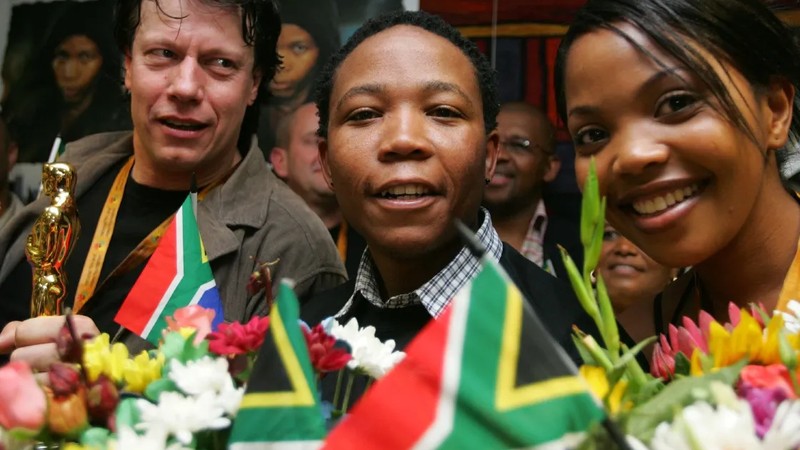
Its international success cemented its place in South African film history when it won the Academy Award for Best Foreign Language Film in 2006.
Beyond the accolade, “Tsotsi” remains significant for the way it placed South African township life and storytelling on a global stage.
“Yesterday” (2004)
Leleti Khumalo delivered a powerful performance in “Yesterday”, a Zulu-language drama directed by Darrell Roodt.
Set in a rural KwaZulu-Natal village, the film follows Yesterday, a mother who is diagnosed with HIV while trying to secure a better future for her young daughter.
The film tackles HIV/AIDS, poverty, motherhood, and resilience against the backdrop of rural South Africa.
“Yesterday” became the first South African film to be nominated for the Academy Award for Best Foreign Language Film, bringing a deeply local story to an international audience.
“Sarafina!” (1992)
For an entire generation, “Sarafina!” remains one of the defining South African films.
The musical drama stars Leleti Khumalo as Sarafina, a young student caught up in the 1976 Soweto uprising. Whoopi Goldberg also stars as her teacher, Mary Masombuka.
Featuring music and performances inspired by the resistance movement, the film brings together entertainment and history while exploring the experiences of young people during one of the most significant periods in South Africa’s history.
It also introduced international audiences to South African talent and stories at a time when the country’s political struggle was receiving global attention.
“White Wedding” (2009)
Sometimes celebrating South African heritage means celebrating the humour and chaos of everyday life.
“White Wedding”, starring Kenneth Nkosi and Rapulana Seiphemo, follows two friends on a road trip to a wedding.
What should be a straightforward journey quickly turns into a hilarious adventure across the country.
The film offers a colourful snapshot of South Africa, bringing together different places, personalities and cultures while leaning into the country’s unmistakable sense of humour.
“Spud” (2010)
Based on John van de Ruit’s bestselling novel, “Spud” takes viewers back to the mid-1990s and the world of boarding-school life.
The film stars Troye Sivan as John “Spud” Milton alongside John Cleese, capturing the awkwardness, friendships and absurdity of adolescence.
Set during a transitional period in South Africa’s history, “Spud” offers a lighter coming-of-age perspective on the country while reflecting the social changes of the era.
Celebrating the stories that are ours
These films span languages, generations, genres and experiences – from the townships of Johannesburg and the streets of Soweto to rural KwaZulu-Natal and fictionalised versions of the country’s future.