Veteran police diver Johan “Pottie” Potgieter, who made headlines after being lowered from a helicopter into the crocodile-infested Komati River in Mpumalanga, has no plans to hang up his diving gear, saying public recognition has inspired him to keep working until he is 70.
He said the appreciation he receives from communities means more to him than money.
The 55-year-old South African Police Service (SAPS) officer has spent 38 years in the police, facing life-threatening situations while searching for missing people and recovering bodies from rivers and dams.
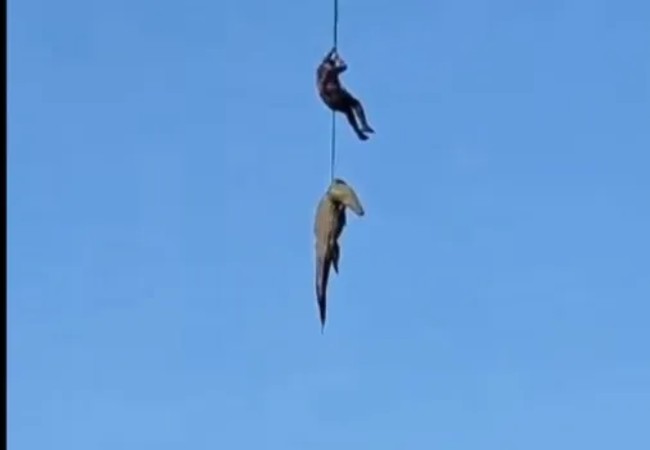
His work attracted national attention in May when he was lowered from a helicopter into the crocodile-infested Komati River in Mpumalanga to secure a euthanised crocodile during the search for a missing man.
The police officer who has been recently promoted from Captain to Lieutenant Colonel, says the recognition he has received has motivated him to keep going.
“I will keep on working until I am 70,” he told IOL in an exclusive interview following his promotion.
He said the greatest reward is not a higher salary but knowing that his work makes a difference to families and communities.
“If someone told me to choose R10 million or the recognition I am getting, I would choose the recognition. You can keep your money,” he said.
‘I thought I was going to die’
Potgieter made headlines in May during the search for Gabriel Batista, 59, who went missing after his Ford Ranger was found partially swept off a low-water bridge in the Komati River area.
Batista was reportedly the owner of the Border Country Inn near the Lebombo Border Post.
During the search for Batista, Potgieter was lowered from a helicopter on a rope into crocodile-infested waters to secure a euthanised crocodile.
Human remains were subsequently found in the crocodile’s intestines and sent for DNA analysis.
The remains were later identified as those of Batista.
Recalling the dangerous operation, Potgieter said he feared he might not survive.
The SiSwati sentence translates to: “My brother-in-law, when I was lowered from the helicopter into the river with a rope, I thought I was going to die that day.”
“Sbali”, a familiar term of respect for a brother-in-law, has become closely associated with him among members of the public.
Potgieter said the operation required careful planning and coordination, but two things worried him most: the possibility of equipment failure and whether the crocodile was dead.
“I have been working with helicopters and things like that for a long time, and those things can break without warning,” he said.
He was also concerned because the crocodile had moved after being shot.
“I was not even sure that the crocodile was dead. So now you have to go and touch it and work on it,” he said.
However, he said, the operation went well, allowing police and forensic experts to recover the remains.
Former Captain, now Lieutenant-Colonel Johan ‘Pottie’ Potgieter, with the crocodile containing human remains.
When crocodiles and hippos came too close
The Komati River operation was not Potgieter’s first encounter with dangerous animals.
During a dive in a farm dam near White River, he accidentally touched a crocodile while swimming underwater.
He said visibility was poor, and he could not see clearly what was around him.
“As I was swimming underwater, I touched the side of the crocodile. My heart nearly stopped,” he recalled.
Fortunately, the crocodile moved away without attacking him.
Another frightening incident happened while he was searching for a child who had drowned in the Crocodile River.
Potgieter said he saw hippos in the distance and decided to enter the water. His colleagues were monitoring him through diving signals.
When they alerted him to the danger and he surfaced, he saw a hippo about 10 metres away.
“It had come towards me. Luckily, they managed to pull me out before the hippo got me,” he said.
Potgieter said he had also been shot at, threatened with knives and pelted with stones during his policing career.
“Your life is in danger nearly every day,” he said.
The police officer said despite the risks, he remains committed to his work because he understands the pain families experience when loved ones go missing.
A promotion worth more than money
Potgieter said he was surprised and grateful when he learnt he had been selected for promotion.
He had applied for the position and gone through an interview process alongside five other candidates.
“The members selected for the interviews were all very good. I knew there were six people being interviewed, so I knew I had a one-in-six chance,” he said.
He said the promotion was not about earning more money but about feeling valued by the organisation.
“For me, to finally get the next level of promotion shows that the organisation values me and recognises the contribution I am making,” he said.
Born in 1971, Potgieter started school at the age of four in what was then Swaziland, now Eswatini.
He joined the police at age of 16, approaching 17, with Grade 12 behind his name.
Becoming a police officer was a childhood dream.
“I would always play cops and robbers. I was always the cop,” he said.
Over the years, he worked in several areas of the police service, including as a station commander, detective commander, crime prevention officer and in management.
He began diving around 2008 and has since focused on search and recovery operations.
After completing Grade 12, he also obtained a national diploma in police administration from Technikon RSA, now known as the University of South Africa (UNISA).
He regrets not continuing his studies further and encourages younger officers to obtain qualifications.
“I always tell the young guys to study. Get a diploma or a degree behind your name, because the police do acknowledge your education,” he said.
A team behind every operation
Despite the attention he has received, Potgieter did not hesitate to credit his colleagues for their role in his work.
“I am a team player. Everything I have done, I have never done on my own,” he said.
He also praised his wife, Joey Potgieter, a police Captain and fellow diver who has supported him during numerous operations.
During the Komati River operation, she helped remove the remains from the crocodile.
“She is also a diver and assists me a lot. During the crocodile scene, she was the one cutting open the crocodile to remove the remains,” he said.
He described her as brave and dedicated, saying she has completed many dives and recovered numerous bodies.
Potgieter also praised other police officers who work under difficult conditions, often without sufficient equipment and resources.
He said the support of his colleagues and the training he received had been essential throughout his career.
“There are a lot of good and dedicated policemen out there. Without them, we would have come to a standstill a long time ago,” he said.
The pain of not finding the missing
Potgieter said one of the hardest parts of his job is being unable to find someone who has gone missing.
He explained that a lack of equipment and resources can make searches difficult, leaving families without answers.
“I always feel bad when I tell someone I will come and help, but I cannot,” he said.
He said he still remembers children and other missing people his team has been unable to find.
“They bother me even today because I could not do everything possible to find those children simply because I did not have the resources,” he said.
His team sometimes sleeps beside their vehicles near rivers and dams to continue searching early the following morning.
“If I do not find the body that day, we stay there,” he said.
Potgieter said recovering a missing person is about more than completing an operation. It is about helping a family find closure.
“That person has a family. He has brothers, sisters, a mother and a father. It is very important to give them the closure they need,” he said.
He said he could not simply leave a search for several days when a family was waiting for a loved one to be found.
A father who knows the risks
Away from dangerous operations, Potgieter is a father of five, with four daughters and one son.
He said three of his children have finished school, while one is in Grade 12 and another is in Grade 11.
On a normal day, he wakes up at about 5am, takes his children to school and goes to the office.
But when an emergency call comes in, his routine changes immediately.
Before leaving home for a dangerous operation, he makes sure his children know how much he loves them.
“I never know if I am coming back. So I always tell the kids when I leave in the morning, ‘Remember, I love you. Look after yourself and pray that nothing goes wrong and that everything goes well,’” he said.
Once an operation is over, he calls to let them know he is safe and on his way home.
Potgieter sometimes takes his two school-going children along to observe aspects of his work so they can better understand the realities of life.
He said his work had also influenced his children’s career ambitions.
“The one in Grade 12 is thinking of joining the police service. But, funny enough, the one in Grade 11 wants to be a child advocate because, as we work, she sees these children. Some are abandoned, some are being abused. She sees that and wants to look after the children,” he said.
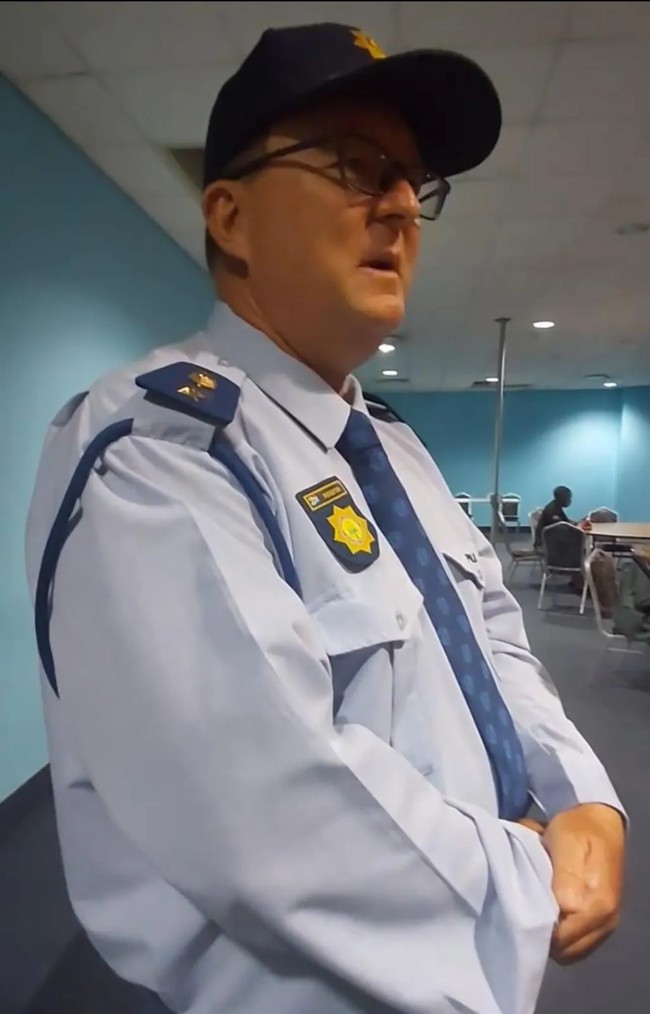
Newly promoted Lieutenant-Colonel Johan “Pottie” Potgieter, who made headlines after being lowered from a helicopter into the crocodile-infested Komati River, says community appreciation keeps him motivated.
Advice to young officers
Potgieter said the appreciation he receives from communities remains his greatest motivation.
“When community members come to me at a scene and say, ‘Sbali, siyabonga’ [thank you], that is what keeps me going,” he said.
For younger officers, his advice is to avoid corruption, work hard and continue studying.
“If you are corrupt, stop it… You will never receive gratitude and recognition if you are corrupt,” he said.
He encouraged officers to give their best in every task, no matter how small.
“When you do your job, do it 110%,” he said.
Potgieter, who is now based at the SAPS provincial head office in Nelspruit, says he intends to continue serving for as long as he can.
Manchester City emerged unscathed from a hostile reception at Anfield in their first match since a guilty verdict on widespread financial impropriety, but a 3-0 win over Liverpool highlighted the uncertainty that now surrounds the Premier League season.Enzo Maresca's men are sitting pretty at the top of the table with six consecutive wins, including statement away victories at their two biggest rivals after also beating Manchester United last month.Yet those […]