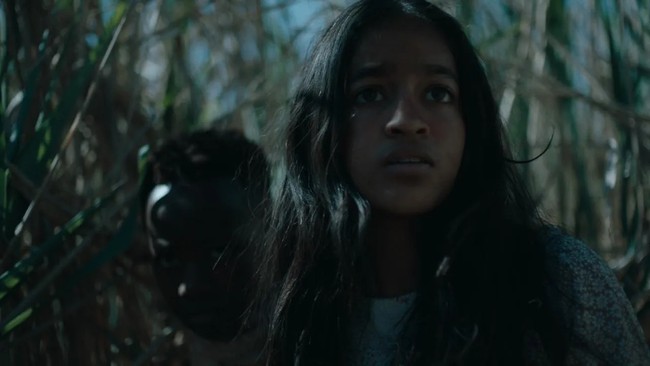
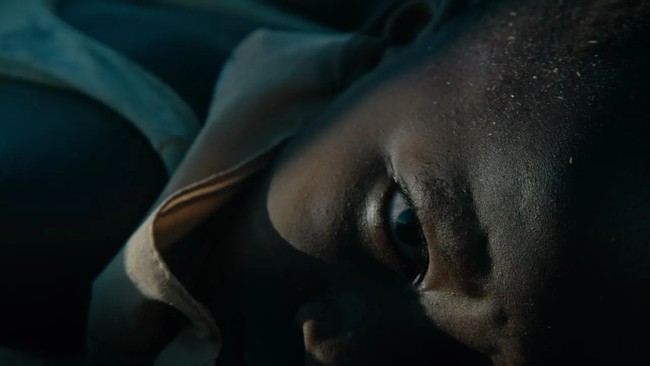
In an exclusive interview with IOL, executive producer and poet Les Makotoko, and director Hallie Haller of the film It’s Lit reflect on the film’s themes, structure, and focus for young South African audiences.
It’s Lit premiered on Freedom Day in Johannesburg, positioning itself as a portrait of South Africa’s youth caught between education, expectation, and economic uncertainty.
Set entirely in Johannesburg, the short film turns away from spectacle and instead focuses on the everyday conditions shaping young South African lives: unemployment after graduation, rising household pressure, and the widening gap between qualifications and opportunity.
At the centre of the film is a generation caught between expectation and outcome. The story explores not only unemployment but also the emotional weight that comes with stalled progress and uncertainty about the future.
“The idea of being let down by the people who were supposed to give us security and opportunities is a big aspect behind the idea for It’s Lit,” he said.
Makotoko said the film addresses inequality, but shifts focus from visible crises to internal emotional conditions, including passion, pain, and psychological struggle.
The emotional core of It’s Lit originated from a poem that shaped the film’s structure. The poem reflects Makotoko’s observations of how young South Africans navigate education, expectation, and economic reality within systems that fail to deliver on their promises.
Makotoko addresses a sense of disillusionment that resonates with many young South Africans, as graduates often remain unemployed despite their qualifications.
“When I wrote the poem and when we began shooting the film, I kept thinking of the same people,” he recalls, “the ones sitting at home in a one-room flat, unemployed and depressed, even though they have a master’s.”
What does our future look like?
Director Hallie Haller explains that the film’s form was inspired by a concern that audiences are often overwhelmed by current screenings of crisis and inequality in South Africa. For Haller, they addressed wanting the film’s language to speak from the heart.”
Their intention influenced how Johannesburg was depicted, not as a stylised backdrop but as a lived environment shaped by pressures and uneven access to stability.
Haller emphasises that this approach avoids explicit explanations, relying instead on real observation and emotional proximity.
The film also focuses on the mental health challenges faced by young South Africans, particularly the rising prevalence of anxiety, burnout, and depression linked to economic insecurity and uncertainty about the future.
“There is this feeling of constant movement but no progress,” Haller notes. “There are not enough jobs for young people to sustain themselves.”
They highlight the mental health pressures faced by young men navigating emotional stability in a city with limited opportunities.
Haller said these pressures are especially pronounced among young South African men. “When you’re overwhelmed by personal struggle, there is limited capacity to reflect on the failure of public support.”
Boys to Men to Death
While grounded in personal experience, the film also situates itself within a broader political and institutional context. Haller references South Africa’s current public climate and ongoing discussions surrounding governance, accountability, and institutional trust.
Director Hallie Haller notes that the film aims “to speak in feeling,” refusing to treat contemporary conditions as mere background detail and instead placing emotional and psychological experiences at the forefront of its language, tone, and expressions.
Rather than seeking resolution, the film returns the viewer to the conditions it depicts and the discomfort they evoke, mirroring a reality in which uncertainty is constant, where a generation struggles to make sense of a present that continues to outpace the promises made about its future.
The film is set to screen in Cape Town in June, with the dates yet to be confirmed.
Acting Minister of Police Firoz Cachalia on Tuesday unveiled a sweeping “police reset agenda”, promising to rebuild the credibility of the South African Police Service (SAPS) through intensified anti-corruption measures, stronger crime intelligence, modernised policing systems and a renewed crackdown on organised crime.Presenting the 2026/27 Police Budget Vote in Parliament in Cape Town, Cachalia said SAPS had been allocated R127.072 billion for the current financial year, rising to R135.8 billion […]