1,500 people.
That is the staggering number of lives lost to drowning each year in South Africa, according to the National Sea Rescue Institute (NSRI), Swimming South Africa, and eThekwini Municipality.
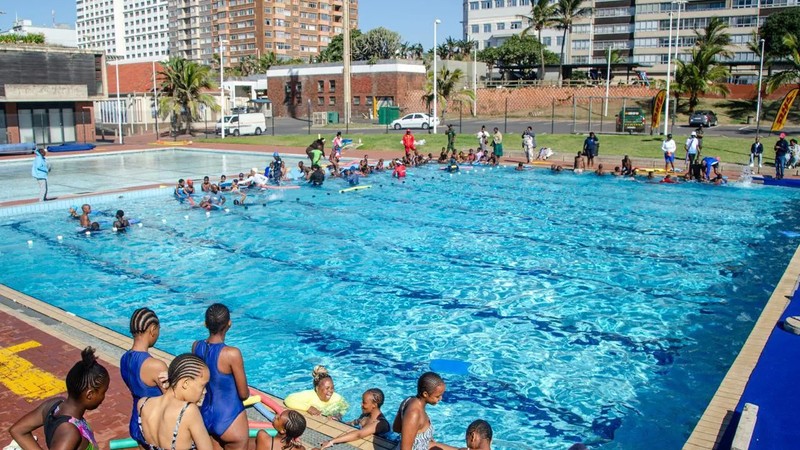
In a bid to mark World Drowning Prevention Day on Saturday, the municipality partnered with lifesaving organisations to host an interactive water safety programme at the Rachel Finlayson Swimming Pool in Durban, where learners, community members, emergency services personnel and lifeguards took part in rescue demonstrations and water safety education.
What are the drowning hotspots?
As South Africa marks the awareness day on Saturday, water safety experts and municipalities are renewing calls for greater awareness, warning that the country’s deadliest drowning hotspots are not its beaches, but its rivers and other inland waterways.
Rivers account for great danger
While beaches receive the most public attention in terms of drowning, water safety organisations around the world, including the NSRI, have repeatedly warned that despite their calm outlook, rivers are responsible for a huge number of drowning fatalities.
The NSRI says inland waterways pose unique risks because they are generally unpatrolled and can contain hidden hazards such as strong currents, submerged debris, sudden changes in depth and slippery riverbanks. Unlike many popular beaches, rivers and dams rarely have lifeguards or designated swimming areas.
Flooded rivers also become particularly dangerous after heavy rainfall, with emergency responders frequently warning motorists and pedestrians not to attempt crossings.
Dams pose hidden risks
Dams are another major location for fatal drownings.
According to the NSRI, many people mistakenly believe dams are safer because the water appears calm. However, inland dams often have steep embankments, cold water, thick mud, underwater obstacles and sudden drop-offs that can quickly overwhelm even experienced swimmers.
Alcohol consumption and a lack of life jackets during recreational activities such as fishing and boating also contribute to drowning incidents.
Beaches remain high-risk but have safety measures
Although drownings continue to occur at South African beaches, experts argue that many popular coastal swimming areas are comparatively safer because of the presence of trained lifeguards, clearly demarcated swimming zones and established rescue services.
The NSRI advises beachgoers to swim only between red-and-yellow flags where lifeguards are on duty and to avoid entering the ocean during rough sea conditions or after lifeguards have gone off duty.
Rip currents remain one of the leading causes of beach rescues and drownings.
Children among the most vulnerable
The World Health Organization (WHO) identifies drowning as one of the leading causes of death among children and young people globally.
In South Africa, many child drownings occur in rivers, dams, swimming pools and other bodies of water close to home.
To address this, the eThekwini Municipality said learners from disadvantaged communities participated in its Learn to Swim Programme as part of Friday’s World Drowning Prevention Day activities.
The programme teaches children essential swimming and water safety skills to reduce drowning risk and improve confidence in the water.
Prevention is everyone’s responsibility
Speaking during the municipality’s awareness event, eThekwini Municipality Director of Recreation and Parks Dr Simphiwe Ndlovu said preventing drownings requires a collective effort.
“Water safety is a shared responsibility. Through programmes such as Learn to Swim, the deployment of highly trained lifeguards at our beaches and swimming pools, and ongoing public education campaigns, we are empowering residents, particularly young people, with the skills and knowledge needed to stay safe around water. Every life lost to drowning is one too many, and we remain committed to reducing these incidents through prevention and education,” said Ndlovu.
The municipality said it would continue working with lifesaving organisations to strengthen water safety awareness and urged residents to swim only where lifeguards are on duty, obey warning signs, supervise children at all times and follow all water safety regulations.
How to stay safe around water
The NSRI similarly encourages South Africans to avoid swimming alone, wear life jackets when boating or fishing, stay out of flooded rivers, and learn basic CPR and rescue techniques, stressing that simple precautions can prevent many drowning deaths.
Authorities are also urging residents to swim only where lifeguards are present; supervise children around water at all times; never enter the water after drinking alcohol; obey warning signs and safety instructions; use life jackets when boating or fishing and avoid flooded rivers and fast-moving water.
IOL