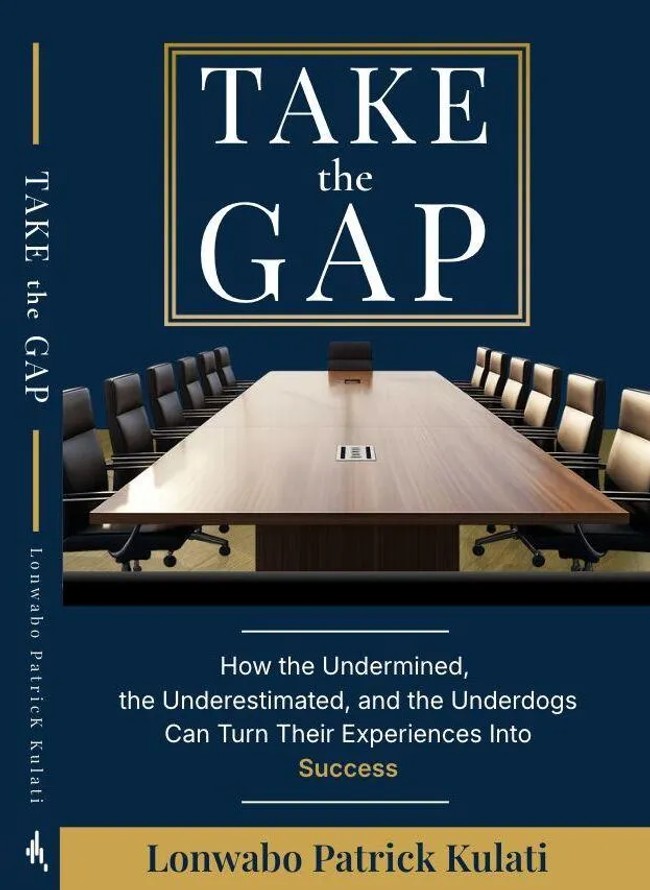
Lonwabo Patrick Kulati believes too many talented people are stuck waiting for recognition instead of stepping into their potential.
In his new book, “Take the Gap”, he encourages professionals who have been overlooked to claim opportunities for themselves, insisting that: “Your disadvantage is not your destiny. It is your distinction.”
The leadership coach and chief executive officer of Good Governance Africa said that the book was inspired by a simple phrase that stayed with him long after the launch of his first book, “A Gap in the Cloud”.
During the event, speaker Beauty Kotela challenged the audience by saying: “Don’t just see the gap. Take the gap.”
“I wrote it down and then life moved on. But that phrase kept returning to me,” Kulati said.
The words took on new meaning through his executive coaching work, where he met accomplished professionals who had impressive qualifications and years of experience but still felt invisible in their workplaces.
“I realised this was not just a coaching anecdote but a pattern. And patterns demand a response.”
Kulati believes South Africa cannot afford to overlook capable people, especially at a time when unemployment remains high and workplace stress continues to affect employees across the country.
He argues that organisations often reward visibility instead of genuine value, leaving hardworking professionals feeling ignored while others climb the ladder through networking and office politics.
According to Kulati, there are two main reasons many talented employees struggle to receive recognition.
“The first is internal,” he explained. “Many high performers carry what I call a sense of smallness, a quiet psychological voice that whispers, ‘You don’t belong here.'”
He said that this feeling is often shaped by childhood experiences, social circumstances and South Africa’s history, where race and gender continue to influence perceptions of leadership.
The second challenge comes from workplace systems themselves.
“Being seen matters more than what you actually deliver,” he said.
Kulati believes that promotions frequently go to people who know how to stay visible, dominate conversations and build relationships with powerful decision makers, while quieter employees who consistently produce results are left behind.
“The tragedy is that when they leave, we do not just lose a person. We lose years of institutional knowledge, innovation and moral courage.”
Throughout “Take the Gap”, Kulati encourages readers to rethink rejection and disappointment.
“Stop asking, ‘Why did this happen to me?’ and start asking, ‘What is this preparing me for?'”
His own career reflects that lesson.
More than two decades ago, he left a secure position at the City of Cape Town while he and his wife were expecting their first child. He accepted a lower-paying role at a non-governmental organisation because he realised that his future growth was limited where he was.
“That felt like failure at the time. It was actually a redirection of my life.”
Looking back, he said every setback became either a lesson or a launch pad.
He also reminds readers that rejection does not always reflect a lack of ability.
“It is often evidence that you are in the wrong room and that there are better rooms waiting for you.”
One of the book’s memorable examples compares overlooked professionals to mosquitoes.
Although small and often dismissed, mosquitoes have the power to influence creatures many times their size.
Kulati said that is the mindset he wants readers to adopt.
“Not arrogance but precision, persistence and the refusal to be defined by someone else’s limited assessment of your potential.”
Much of the book draws directly from his own life.
Growing up during apartheid and later working in professional environments where he often felt tolerated rather than welcomed gave him firsthand insight into the struggles many professionals continue to experience.
“I wrote this book not from a distance but from the inside.”
“Take the Gap” is a practical guide that encourages readers to stop waiting for opportunities and start creating them.
His work through Kulati Coaching and Consulting also exposed him to hundreds of executives who shared painful stories about being praised privately while repeatedly being overlooked for promotions.
“Their stories are in this book, anonymised, respected and honoured.”
For young professionals who feel invisible despite consistently delivering results, Kulati offers practical guidance.
He encourages them to stop waiting for permission to take up space, communicate their achievements clearly and actively seek sponsors who can advocate for them in decision-making rooms.
He also warns against compromising personal values simply to fit into unhealthy workplace cultures.
“The price they pay in integrity, mental wellness and self-respect is always higher than the short-term gain.”
If a workplace becomes impossible to grow in, Kulati believes leaving can sometimes be the strongest decision.
“Not in anger, not impulsively, but with a plan.”
At its heart, “Take the Gap” is a reminder that being underestimated does not have to define anyone’s future.
“The world does not need more people who fit in,” Kulati said.
“It needs more people with the courage to take the gap, to step into the space between where they are and where they were made to be, and to do it on their own terms with their values intact and their brilliance unapologetic.”
Manchester City on Monday hired former Chelsea boss Enzo Maresca to lead the club into a new era after Pep Guardiola stepped down at the end of last season. Maresca agreed a three-year contract with City after being forced to wait several weeks to seal his move to the Etihad Stadium."Manchester City are a club I know very well and to have the chance to manage this team is a […]