Macklemore’s removal from Ed Sheeran’s US tour has reignited a wider debate over how far artists can go when using major commercial stages to speak about political and humanitarian issues.
The rapper was due to perform at eight of the remaining 10 US dates on Sheeran’s Loop Tour, but will no longer appear on the tour after publicly voicing his support for Palestinians during his performances at New Jersey’s MetLife Stadium earlier this month.
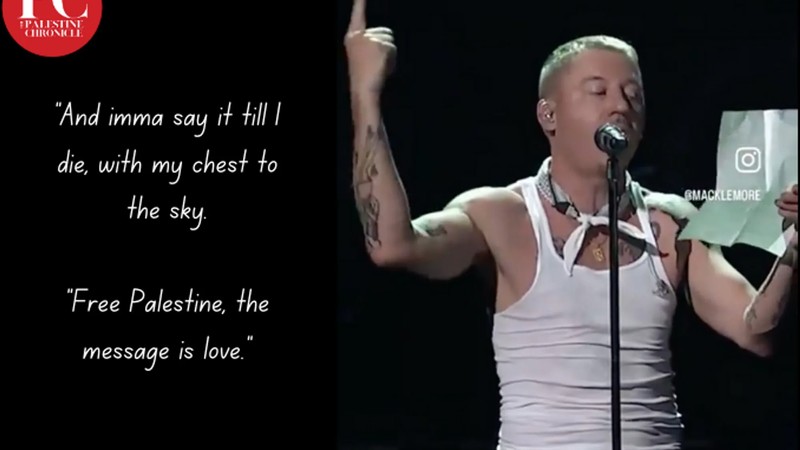
Rather than keeping his political views separate from his music, Macklemore deliberately used the enormous stadium audience to make his position known.
During his September 4 performance, he told the crowd that a major reason he wanted to join the tour was to have the opportunity to say “Free Palestine” in front of large audiences.
He also performed his protest song “Hind’s Hall”, which was released in 2024 in support of Palestinians and drew attention to the war in Gaza.
His decision to use a mainstream pop tour as a platform for the message quickly became controversial.
The Israeli-American Council launched a petition calling for Macklemore to be removed from the tour, while critics accused the rapper of using a concert platform to promote a political agenda.
Singer Pink also entered the debate after criticising aspects of Macklemore’s performance, although she later clarified that she was not calling for him to be silenced or removed from the tour.
For Macklemore, however, the controversy appears to have reinforced rather than weakened his decision to speak publicly about Palestine.
In announcing his removal, he said he and Sheeran had several difficult conversations and ultimately reached a fundamental disagreement.
The tour promoter, Messina Touring Group, gave a different explanation for the decision. It said venues hosting upcoming dates had informed the promoter that they would not allow concerts to go ahead with Macklemore on the lineup.
According to the promoter, keeping him on the tour could have resulted in shows being cancelled and affected hundreds of thousands of fans.
Macklemore, however, has alleged that pressure from venue owners played a role in his removal.
He specifically named New England Patriots owner Robert Kraft, who owns the Kraft Group, which operates Gillette Stadium. Kraft later confirmed his involvement and said he believed Macklemore had crossed a line because of what he described as recent actions, material shown during the New Jersey performances and what he considers a broader history of antisemitic rhetoric and imagery.
Kraft said the decision was not about denying the suffering of Palestinians or their right to advocate for Palestinian rights. He argued that such advocacy should not come at the expense of the Jewish community.
Macklemore has rejected accusations of antisemitism and has maintained that criticism of Israel and support for Palestinians should not automatically be treated as hatred towards Jewish people.
The dispute therefore goes beyond one rapper losing his place on a tour.
It raises a difficult question for the entertainment industry: when an artist is invited onto a commercial stage, do they also have the right to use that platform to speak about causes that may divide their audience?
Concerts have long provided artists with opportunities to comment on politics, war, racism and human rights. But Macklemore’s situation highlights the limits artists can encounter when their message clashes with the interests of promoters, venues, sponsors or other stakeholders.
There is also a question of whether removing an artist because venues object to their political message amounts to censorship, or whether private organisers have the right to decide what kind of content is appropriate for their events.
For Macklemore, the professional consequences have already arrived.
For Sheeran, the controversy has placed his tour in the middle of a politically charged debate despite the British singer himself not publicly taking a position on the issue.
And for the wider music industry, the incident is another reminder that an artist’s microphone can carry influence far beyond the music itself.
Macklemore’s removal may have ended his role on Sheeran’s US tour, but it has also amplified the question at the heart of the controversy: what happens when an artist decides that staying silent is no longer an option?
IOL
Get your news on the go. Download the latest IOL App for Android and IOS now.