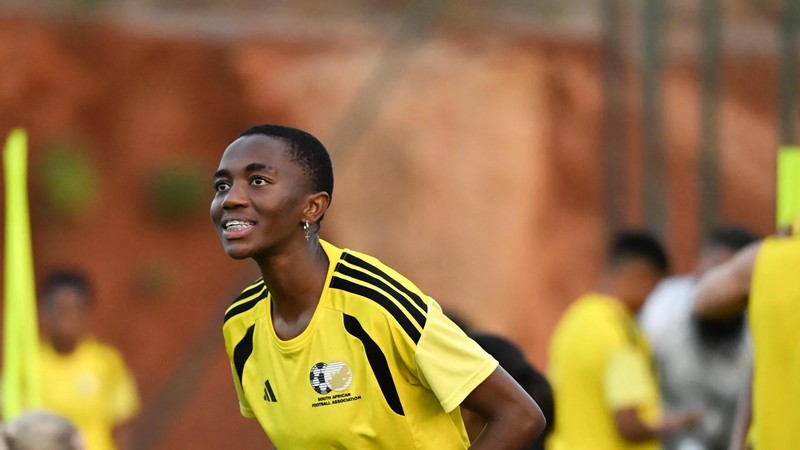
Banyana Banyana’s quest to qualify for the 2027 World Cup in Brazil is not yet over. Despite the recent complications, there is ample belief within the camp that they can still reach the promised land.
Banyana crashed out of the Wafcon quarter-finals on Saturday after a 2-1 loss to hosts Morocco in Rabat. This result means they have failed to qualify directly for the global showpiece for the third consecutive time.
However, all is not lost. Reaching the quarter-finals has granted the team a second opportunity to qualify via the play-offs. It will be a challenging feat, requiring them to defeat rivals Nigeria in the continental play-off here in Casablanca on Thursday night, followed by victories in the inter-continental play-offs scheduled for late November and early February.
Qualifying for the World Cup has proven fruitful for Banyana over the last two editions. Player profiles have grown significantly, with many securing moves abroad and gaining valuable international experience.
Others, meanwhile, have seen their careers come full circle at the tournament. Karabo Dhlamini is a testament to this journey. The left-back debuted on the global stage with the U17 national team, Bantwana, in 2018, before becoming the youngest player to make the Banyana World Cup squad during their 2019 debut in France at just 17 years old.
Since that breakthrough, Dhlamini has attended her second World Cup with Banyana and has become a prolific figure for Mamelodi Sundowns Ladies, winning multiple titles, including two CAF Women’s Champions League trophies.
Though notably dejected in the mixed zone following the loss to the Atlas Lionesses, Dhlamini remained positive, stating that the team owes it to themselves to satisfy their craving for World Cup qualification.
“It’s important, but we know that qualifying for the World Cup alone is motivation,” Dhlamini said. “It’s not about seniors or juniors; everyone needs to stay motivated at all times.”
Dhlamini’s emotional reaction to Banyana’s elimination from the Wafcon last eight reflected the sentiment of the entire squad, which is why she maintains that they cannot afford to slip against the Super Falcons.
“We feel disappointed because now we have to take the longer route,” Dhlamini said. “Had we won against Morocco, qualification would have been easier. We now need to play the play-offs. However, we cannot afford to drop our heads now. We need to lift our heads up and focus on the next game.”
Banyana must be at their best and execute their game plan. This includes goalkeeper Kaylin Swart securing clean sheets; the team has conceded four goals in their last two games, keeping only one clean sheet throughout the tournament.
The attacking unit also needs to provide more support for Thembi Kgatlana, creating more opportunities in the final third. The attacker has been isolated in the tournament, scoring three goals in four games.
“As a team, we should score more goals,” Dhlamini said. “We can play nice football, but if we don’t score, we won’t win matches. Goals are what win you games.”
Dhlamini, one of the team’s set-piece specialists, reiterated that they must create and convert chances, as it is the only way to succeed.
“I feel like that’s the reality of football: if we don’t take our chances, the opponents will, and then we’ll regret not scoring and conceding,” Dhlamini said. “Also, if we don’t create chances, we’ll get fewer of them.”
* Mihlali Baleka is currently covering WAFCON in Morocco for IOL, courtesy of Banyana Banyana’s premier sponsor, Sasol.


