Have you ever stopped to think about how much of your life happens online?
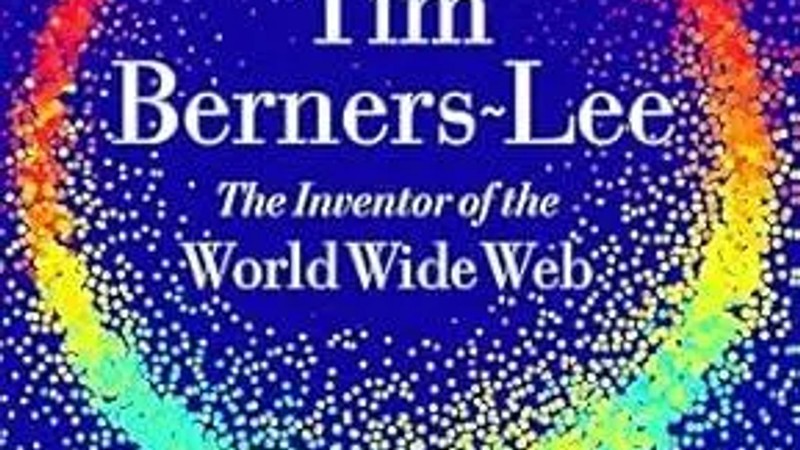
Reading Sir Tim Berners-Lee’s memoir, This is for Everyone, made me reflect deeply on this question. It takes us back to the late 1980s, when he was working at CERN in Switzerland, dreaming up the World Wide Web. What many people don’t realise is that this wasn’t just a tool for sharing physics papers; it was intended as a free and open space for everyone. The conscious decision not to patent the Web allowed it to become truly global and accessible to anyone, anywhere.
Real Talk: Why This Book Feels Like a Conversation
What’s refreshing about this memoir is its humility. He doesn’t position himself as the savior of the internet. Instead, he writes with vulnerability—sharing doubts, credit, and real stories from digital pioneers, some whose fingerprints are still on every website whether or not history remembers them by name. The style is easygoing and personal, full of moments we’ve all lived: your first hilariously bad email address, that giddy Wikipedia edit, or the wild discovery of your first viral video.
The Foundations of the Web
The first website was launched at CERN in 1990, and the World Wide Web Consortium (W3C) was founded in 1994 to oversee web standards. In addition to creating the World Wide Web, the author also developed several other crucial technologies. He invented HTML (HyperText Markup Language), the main language for constructing web pages, and HTTP (HyperText Transfer Protocol), which enables computers to communicate with one another.
Have you ever thought about who designed the URLs we use every day? More recently, projects like Solid have aimed to give users control over their personal data and have contributed to the development of the Semantic Web, which helps manage and utilize internet data more effectively.
A Community of Experimentation
As I delved into the early days of the Web, I realised they weren’t just about technology; they were about community and experimentation. Can you imagine a time when corporations like Amazon and Yahoo! didn’t dominate the landscape? Initially, the internet was a playground for scientists, students, and tinkerers—people who treated it like a curious new frontier. It was messy, open, and a bit chaotic, just the way creativity thrives. The anecdotes about the influence of Steve Jobs’s NeXT computer, which helped run the first web programs, are particularly striking. The “walked past my table” story reflects the culture of collaboration that shaped the very first browser.
Fast Forward to Today
Fast forward to today, and there’s an honest reflection on what went wrong. There’s a sense of regret about privacy invasion, data centralisation, and how companies have monetised every click. The trade-off between convenience and personal privacy is a critical concern. Are we truly connecting, or simply presenting curated versions of ourselves? Hard questions arise about social platforms, echo chambers, and whether the web serves people or simply profits.
The Challenge of Artificial Intelligence
Artificial intelligence presents new challenges. Algorithms now shape our feeds and influence our thinking, sometimes without us noticing. These systems are powerful but can turn manipulative if left unchecked. How often do we stop to consider the biases embedded in these algorithms? It’s essential for us to remain curious about how these technologies work and to demand more transparency.
Remembering Our Digital Beginnings
This narrative doesn’t put anyone on a pedestal. Instead, it acknowledges doubts and regrets while sharing credit with the many unsung heroes who made the web possible. It invites us to remember our own first moments online. Maybe it was setting up a quirky email address, editing a Wikipedia article, or falling into a YouTube rabbit hole. What were your first experiences like? These memories serve as reminders that the web’s story is also ours.
The Evolution of the Internet
The book explores how the internet grew from simple static pages to complex, dynamic experiences. It marvels at the way social media transformed the world but warns about its pitfalls. In a world where misinformation and disinformation spread like wildfire, how do we discern truth from falsehood? The dual-sided nature of these platforms can foster connection but also reinforce division.
Who Is This For?
Who is this story for? It speaks to anyone interested in how the modern digital world was built, those curious about technology’s impact, and anyone who has ever wondered where the internet is heading. You don’t need to be a computer scientist to appreciate these insights; the writing is warm and accessible, encouraging everyone to ask questions. Could we change the web for the better? What role will each of us play in shaping its future?
A Call to Action
The narrative closes with an urgent call to action. We are urged to pay attention, push for transparency, and demand ethical online practices. A future driven by collective responsibility is envisioned, where the web reflects human creativity, fairness, and openness. Projects like Solid and the Semantic Web are part of a vision for restoring user agency in an increasingly algorithm-driven world.
Reflecting on Our Digital Legacy
Think about your first time online. Did you ever imagine the internet could become this powerful, this unpredictable? The choices we make as users truly matter. This story shows that technology, at its best, is built on generosity and collaboration, not profit alone. What kind of digital legacy will we leave?
Next time you Google, shop, or share, pause and ask: Whose web is this? The answer, says Berners-Lee (and now, perhaps, you and me), is simple: This is for everyone.
* This is for Everyone by Sir Tim Berners-Lee is published by Pan MacMillan South Africa.