Naledi Pandor was looking after her one-month-old baby on the day of the 1992 referendum, hoping the newborn would never have to live life under apartheid.
And though she was happy that change finally felt possible, she said it was hard to accept that, on that day, the future she held in her arms was being decided by the white minority, while people of colour had no say.
“Someone is making a decision on your behalf, so you are thinking, will they make a decision that will advance the cause for freedom, or are we going to take a step back when we were just beginning to think we were seeing the light?” Pandor, ex-international relations and co-operation minister and long-standing ANC leader, said.
She was speaking of the day white South Africans were called to vote on whether to have negotiations to end apartheid.
“We were really at the beginning of change and were hoping that we would have a yes vote.”
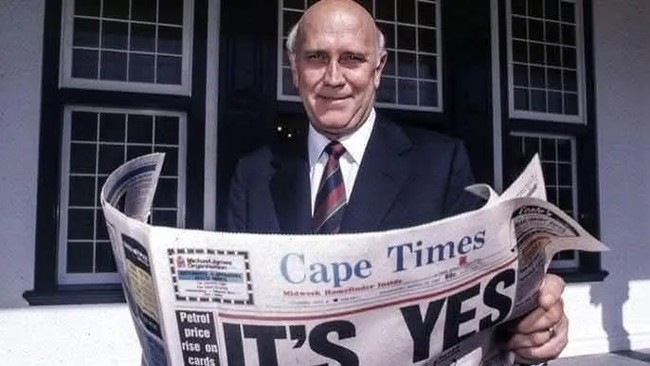
Former apartheid-era South African President FW de Klerk shows the front page of the Cape Times after the historic referendum in 1992.
On March 17, 1992, white voters were asked a single question: should the then-president FW de Klerk continue talks to end apartheid?
De Klerk called the vote to prove he had the backing of white South Africans as his government faced pressure from hardline conservatives at home and growing international and internal pressure to end apartheid.
The answer was yes, with 68.7% supporting the move, while 31.3% opposed it.
“Obviously, it was important, it was great news,” Pandor said.
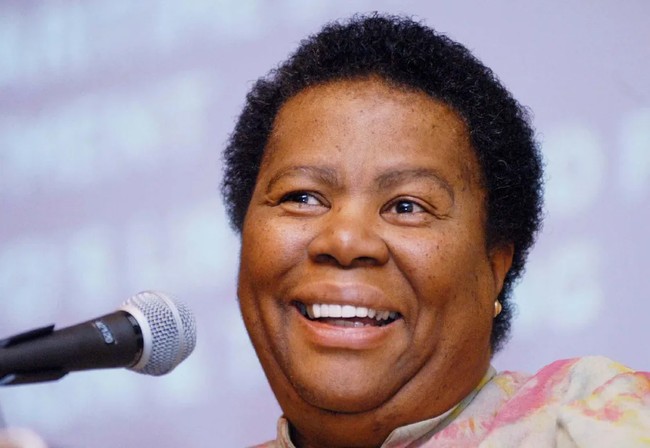
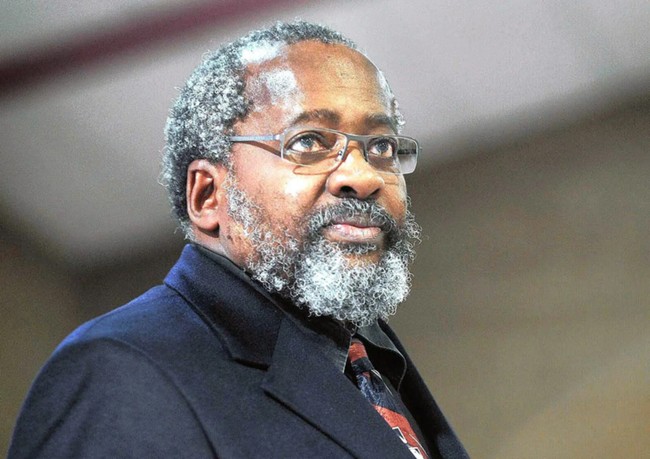
Naledi Pandor
“But the fact that we were not participating was just another confirmation of our exclusion from civil and political life in our own country.”
Pandor, who was teaching at the University of Cape Town at the time after returning from exile in 1989, is the daughter of anti-apartheid activists Joe and Fikile Matthews.
Both were active in the liberation struggle and spent years in exile.
“We were definitely certain that our children would have a different future from us,” Pandor said.
“Our parents used to talk about freedom in our lifetime.
“My mother told me that she was so happy that that happened while she was alive, but was glad that our children won’t experience what they experienced.”
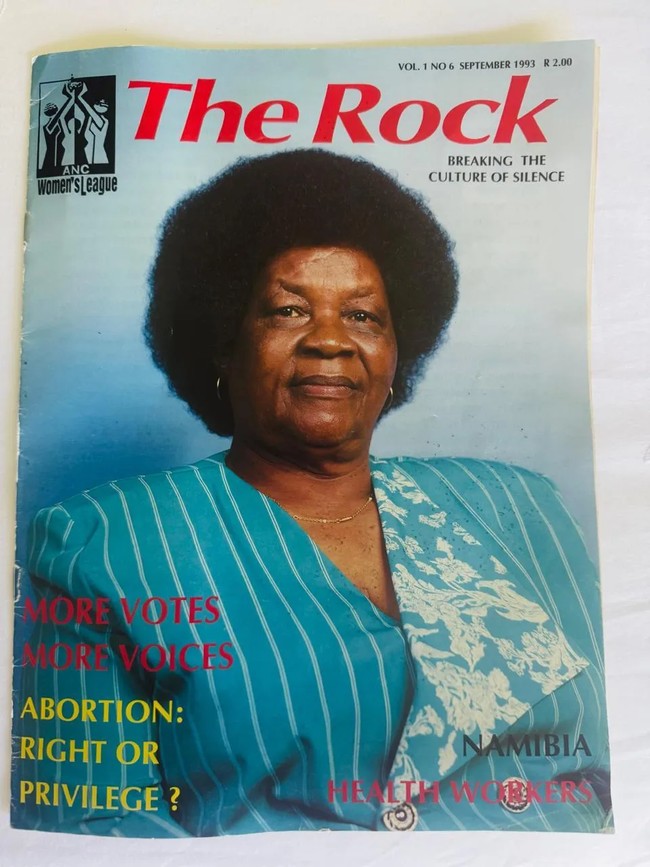
The sixth edition of The Rock
Former ANC MP and struggle stalwart Lindiwe Zulu, who at the time was involved in communications work within the ANC Women’s League and helped amplify women’s voices through structures such as the newsletter The Rock, said the moment brought both hope and pressure.
“It was a promising moment… looking forward to people sitting around the table and negotiating earnestly for an SA that would be free from apartheid, free from racial discrimination, but one that would still need us to do a whole lot of work in the negotiations,” Zulu said.
She said the period was also about ensuring women were not left out of shaping the country’s future.
“One of the things I also remember very well was talking about the involvement of women and the participation of women in all these talks… raising women’s voices, letting women speak for themselves about the kind of South Africa that they want to see in the future.”
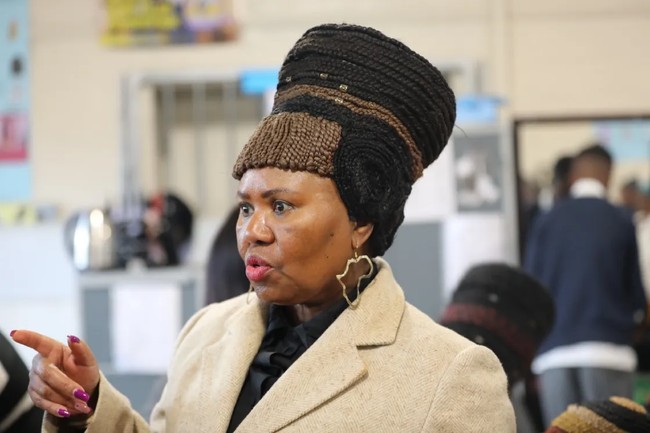
Lindiwe Zulu
Zulu said the time was challenging for liberation movements as a whole, as different political groupings had to be brought into the process.
“It was a challenging moment for the ANC, for the liberation movements… You had the ANC, the PAC, and also the IFP, all needing to be brought on board so that the negotiations could be as inclusive as possible.”
She said there was a strong push to mobilise women across political and social lines.
“The Women’s League was very strong on participation… not just for ANC women, but to bring in women from different organisations, including churches, so that women could shape the process.”
Looking back on the day itself, she said the outcome felt inevitable.
“There was no going back. The government did not have much of a choice, both from internal and external pressures.”
ANC veteran Pallo Jordan
Anti-apartheid activist and former cabinet minister Pallo Jordan said he also remembers the day clearly, spending it in his office monitoring developments as the results came in.
“Well, I would say that the referendum was not about the end of apartheid, as many people would like to say. It was whether or not the National Party would go into negotiations,” said Jordan, who in 1982 narrowly escaped the detonation of a letter bomb sent by the apartheid regime that killed Ruth First.
“That was what the issue was.
“And insofar as the National Party was negotiating principally with the ANC, and we had said that we would only enter into negotiations if the outcome would be the end of the apartheid system, so in that sense, by saying yes, the National Party went ahead and negotiated, they were saying yes, negotiate the end of apartheid.”
The National Party was the ruling white minority government at the time, which had introduced and enforced apartheid for decades before being forced into negotiations.
He said the fact that only white voters — about 12% of the population — were allowed to decide on whether negotiations should proceed spoke volumes about the system itself.
“But the fact that it was still seen as correct that it should be the whites who were 12% of the population who should determine whether there should be negotiations or not, I think said a lot about the system we were abolishing,” he said.
“Because it was a system of minority domination, and even in its last days, it couldn’t resist acting in that fashion.”
Jordan said while there had been some uncertainty over the size of the majority, the outcome itself was never really in doubt.
“We knew that insofar as the National Party had come to terms with the fact that they could no longer govern in the old way and had to negotiate, we knew that the results were going to be positive.”
Looking back, he said democracy had delivered a great deal, even if it was not perfect.
“Insofar as we have a democratic dispensation, yes, it has materialised. But democratic dispensation doesn’t mean you have perfection… It’s not perfect, but the others are worse.”
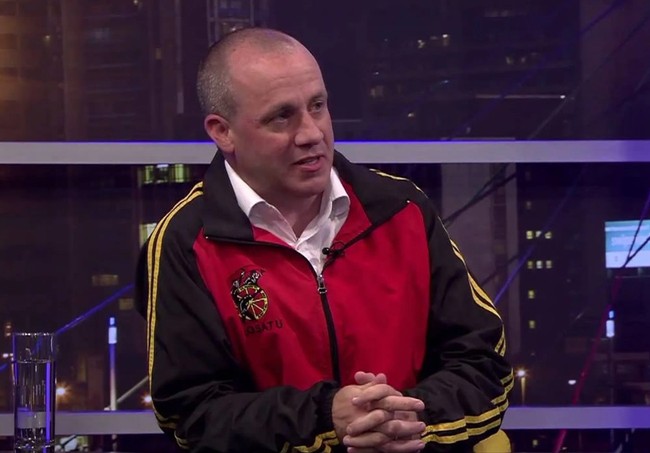
Cosatu’s Matthew Parks
Cosatu parliamentary coordinator Matthew Parks said the moment gave hope to millions who had lived under oppression.
“It gave hope to millions who had only known the most brutal forms of oppression. It was a moment many never imagined possible,” he said.
“At that time, I was completing my studies in the Soviet Union… the focus rapidly shifted to preparing to play a role in building a non-racial democracy.”
He said it remained important to reflect on that moment.
“It’s important we remember and honour such historic events and reflect on what needs to be done to ensure we live up to those expectations.”
Political analyst Prof Andre Duvenhage said the referendum was effectively about whether white South Africans would accept a path towards a new constitutional order and democratic system.
“At that point in time, it was basically the National Party against the Conservative Party,” he said.
“And even up to this day of 2026, there are still people divided about what happened there. There are those who have not forgiven white South Africans for accepting the road of fundamental reform and a democratic dispensation.”
IOL
Get your news on the go. Download the latest IOL App for Android and IOSnow
I just finished What’s Stopping You, by Tim Armoo, and I find myself feeling conflicted. The book radiates that familiar "yes, you can do it" energy, yet I can't help but wonder: is this really written for me, or is it aimed at someone else in a world that no longer exists?On paper, the story is impressive. Growing up in a South London council estate, he builds an influencer agency while […]