Swimming South Africa has been plunged into chaos after the provisional suspension of its president Alan Fritz and CEO Shaun Adriaanse over potential integrity violations including abuse of power and the provision of false information and fake documents.
The governance crisis, coupled with a legal dispute involving SA’s most decorated Olympic champion, Tatjana Smith, and a long-running breakdown with South Africa Water Polo (SAWP), has raised the alarm at the South African Sports Confederation and Olympic Committee (SASCOC).
With qualification pathways for the 2028 Los Angeles Olympics opening in March next year, the umbrella body is urgently seeking clarity on the situation at a federation that has historically delivered more Olympic medals for South Africa than any other sport.
“SASCOC did not receive any communication from World Aquatics regarding the action taken to suspend the officials from Swimming South Africa,” the organisation said.
“It is in the interest of the athletes that we serve that we ensure that we have functioning and effective national federations, especially in the case of swimming, where we had a successful campaign at the recent Commonwealth Games, with an eye on the Los Angeles Olympic and Paralympic Games in 2028, SASCOC told IOL SPORT.
SASCOC said it intended meeting SSA to understand the issues raised and would be “in a better position to respond once we are furnished with all the details by all the parties concerned”.
Leadership crisis raises Olympic concerns
The Aquatics Integrity Unit (AQIU), World Aquatics’ independent integrity body, provisionally suspended Fritz and Adriaanse on August 24.
The pair are facing potential violations of the World Aquatics Integrity Code, including abuse of power and the provision of false information and fake documents. The suspensions are provisional and do not represent findings of wrongdoing, with proceedings ongoing.
In their absence, SSA vice-president Zikie Molusi has been appointed acting president, while a three-person management committee is overseeing key operational functions.
The timing has heightened concerns given the approaching Olympic cycle, with South Africa’s swimmers needing a functioning federation as the qualification process for Los Angeles gathers momentum.
Smith dispute adds to scrutiny
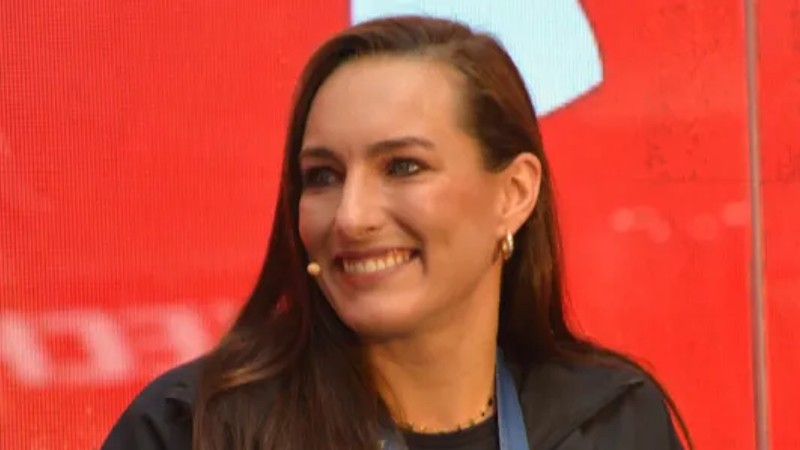
Against that backdrop, Smith has gone public with a long-running dispute over $35 000 in prize money she earned at the 2023 World Aquatics Championships in Fukuoka, Japan.
Smith won gold in the 200m breaststroke and silver in the 100m and has issued a letter of demand through her attorneys seeking interest on the money, which she says was held by SSA for more than a year before being paid in August 2024 while she was at the Paris Olympics.
Smith told BizNews that SSA operations manager Mafata Modutoane showed her husband and agent, Joel, proof of payment while she was conducting a press conference at South African House after winning her Olympic 200m breaststroke silver medal.
When Joel asked about the interest, Smith said Modutoane told him: “I took it as management fee.”
Smith said they were unsure whether the comment was intended as a joke, but the interest remains unpaid.
Modutoane told IOL Sport that SSA would release a statement after responding to Smith’s lawyers.
For Smith, the bigger concern is an environment where athletes are not expected to challenge administrators.
“I always feel like athletes, for myself, I don’t know, how do I stand up for my rights, but it’s always at the cost of my career,” Smith said.
“I just never felt safe. I don’t feel safe to say something.”
Smith said the AQIU suspensions had made her feel she could “finally just breathe”, but stressed that her campaign was not about targeting individuals.
“We’re not trying to fight any specific person,” she said. “We are trying to make the system better so that the athletes can benefit from a well-running system.”
Water polo dispute highlights deeper problems
Smith’s concerns have some parallels with the long-running dispute between SSA and SAWP.
SAWP was formed amid dissatisfaction among water polo stakeholders over the administration and development of the sport and has called for greater autonomy and accountability.
Interim CEO Robbie Taylor said the latest developments reinforced the need for broader governance reform. He said SAWP had experienced more engagement from SSA’s interim leadership in the past week than it had from the previous leadership during the preceding six months, but any future unity must involve meaningful structural change.
“Changing the people while preserving a system that has failed athletes for decades is not enough,” Taylor said. “The system itself now needs to change.”
Swimming’s governing body has also faced scrutiny over the stalled Franschhoek High Performance Centre, a project valued at more than R100m and funded partly by the National Lotteries Commission, World Aquatics and The Sports Trust. The Special Investigating Unit has been probing the allocation of NLC funding, while SSA has denied wrongdoing and disputed reports that it is under investigation.
For SASCOC, the immediate priority is ensuring the turmoil does not compromise the next Olympic cycle. Its planned engagement with SSA will seek clarity on the suspensions and the federation’s ability to operate effectively as South African swimmers begin preparing for the Los Angeles qualification process.
Smith’s dispute, the water polo breakdown and the questions surrounding the high-performance centre are separate matters, but together they have intensified scrutiny of SSA at a critical point for South African swimming.


