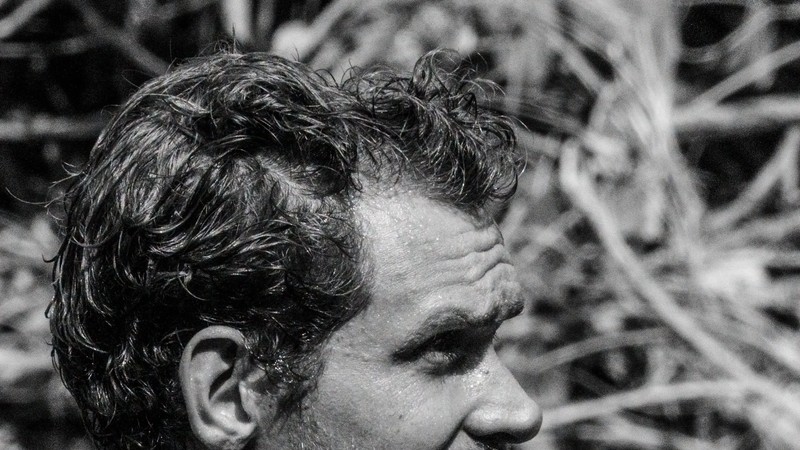
For most people, the thought of paddling more than 700km through the dense, unforgiving forests of Central Africa, with crocodiles, disease and isolation among the potential dangers, would be enough to put an expedition firmly out of the question.
For British-Welsh adventurer Ash Dykes, however, it is precisely the kind of challenge that makes life worth living.
The explorer has plunged into one of the world’s most remote wildernesses, embarking on a gruelling journey along the Sangha River as he begins an ambitious year-long mission to conquer six extreme environments across the globe.
His first challenge is as daunting as they come: navigating more than 700km by inflatable kayak from Nola in the Central African Republic (CAR) to Mossaka in the Republic of the Congo, where the Sangha River meets the mighty Congo River.
It is a journey that will test far more than his physical endurance. With unpredictable river conditions, the threat of disease, dangerous wildlife and long stretches of isolation, Dykes faces a battle against the elements in a region where help may be difficult to reach.
The expedition is the opening chapter of Project 6, his ambitious undertaking to complete six extreme expeditions in six different environments within 12 months.
If all goes according to plan, the Sangha River journey will take approximately three to four weeks, with Dykes expected to reach Mossaka in late October or early November 2026, depending on conditions along the route.
But before he could even dip his paddle into the river, the adventure had already begun throwing obstacles in his path.
Missing luggage, visa troubles and a journey to the starting line
Getting to the starting point proved to be an expedition in its own right.
Dykes and his team initially travelled to Cameroon, only to discover that essential luggage had gone missing. Among the missing items were equipment needed to inflate the kayak, along with tents, food and water — supplies that would be critical to surviving weeks in the wilderness.
The luggage was eventually recovered, but the reprieve was short-lived.
Visa complications then prevented the team from entering the Central African Republic as originally planned, forcing them to rethink their route and navigate another round of logistical challenges.
Eventually, they made their way overland to Nola, the official starting point of the expedition. The journey was far from straightforward, with bad weather, roadblocks and fallen trees adding to the difficulties.
By the time the team reached Nola, they had already experienced a taste of the uncertainty that would define the journey ahead.
Now, with the river stretching out before him and hundreds of kilometres of wilderness to navigate, Dykes has begun the challenge that will set the tone for Project 6.
The real test, however, lies ahead — in the long days on the water, the remoteness of the rainforest and the unpredictable conditions of one of Central Africa’s great river systems.
Into the heart of the Congo Basin
The Congo Basin is far more than a single forest or a single country.
It is a vast geographical region centred around the Congo River system and its tributaries. Its forests span Cameroon, the CAR, the DRC, Equatorial Guinea and Gabon.
The region contains the second-largest tropical rainforest on Earth after the Amazon, covering roughly 500 million acres.
It is also one of the planet’s great centres of biodiversity, supporting gorillas, chimpanzees, forest elephants, buffalo and hundreds of other mammal species, alongside thousands of birds, fish and plant species. The forest also plays an important role in storing carbon and regulating the climate.
For Dykes, however, this extraordinary environment is not simply a backdrop.
It is the terrain he must survive.
Crocodiles, hippos and elephants
Dykes will paddle for hundreds of kilometres through a landscape where there may be no easy escape if something goes wrong.
The Sangha region is home to Nile crocodiles, hippos, forest elephants, western lowland gorillas and chimpanzees, among other wildlife. UNESCO describes the Sangha Trinational, where the CAR, Cameroon and the DRC meet, as a largely undisturbed tropical forest ecosystem with exceptional biodiversity.
The water itself can be dangerous.
A large part of the route will be undertaken by inflatable kayak, with Dykes saying the vessel can be deflated and carried around particularly dangerous sections, such as areas where hippos are encountered.
And while dramatic encounters with wildlife may capture the imagination, Dykes has acknowledged that the animals are not necessarily his biggest concern.
Malaria, infections, extreme heat and humidity, contaminated water and the enormous distance from proper medical assistance are among the risks he is preparing for.
Days away from help
The remoteness of the expedition is perhaps its most frightening element.
A medical emergency in a major city can mean an ambulance is minutes away. Deep inside the Congo Basin, that can be a very different reality.
Dykes has prepared with medical supplies, satellite communications, food and emergency evacuation arrangements, while travelling with a small team that includes a local guide and videographer.
He also plans to spend time learning from the BaAka people, whose generations of experience living in the rainforest provide knowledge that could prove crucial during the journey.
The explorer, who has five Guinness World Records to his name, has described the Congo as one of the most hostile environments he has attempted to explore.
For all its dangers, the expedition is also intended to shine a light on a part of the world rarely seen beyond its borders.
Dykes says Project 6 is about exploration, human endurance and documenting the people, wildlife and environments he encounters. His first mission will carry him from the forests around Nola, down the Sangha and towards Mossaka.
By the time he reaches the Congo River, hundreds of kilometres of paddling, jungle nights, wildlife encounters and physical hardship will stand between him and the end of Mission 01.
And there are still five more extreme environments waiting for him.
IOL


