AmaZulu coach Arthur Zwane has delivered a passionate critique of South African football’s growing obsession with possession, insisting teams have forgotten that winning matches is ultimately about scoring goals.
Speaking ahead of Sunday’s MTN8 quarter-final against Sekhukhune United, Zwane said Usuthu’s biggest concern after last weekend’s Betway Premiership opener was their inability to convert chances.
His description of today’s game as “Facebook football” may raise eyebrows, but behind the colourful phrase lies a serious concern.
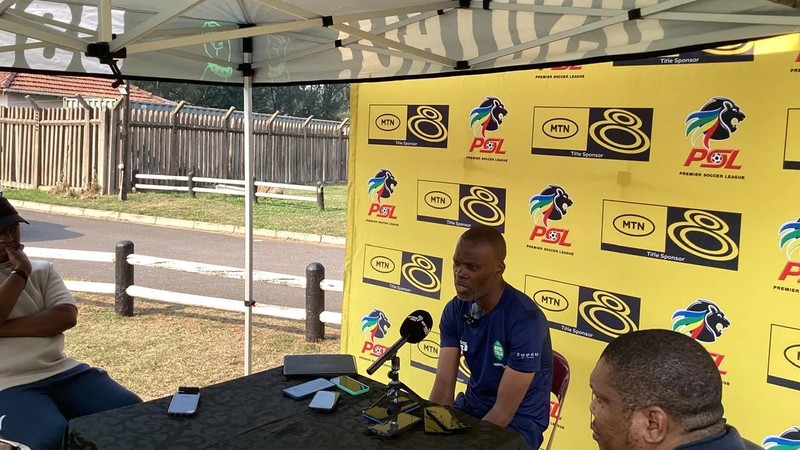
“We’re not playing Facebook football,” Zwane said during AmaZulu’s media open day at Kings Park Stadium on Wednesday.
“A lot of people are commenting about players having 250 touches, but when you look at it, there are no shots and no goals. That’s not where football should be.”
For Zwane, possession is only valuable if it leads to opportunities in the final third. He believes too many teams have become preoccupied with dominating the ball rather than hurting opponents where it matters.
“You attract the opposition, you exploit the space, you create goalscoring opportunities and you make sure you bury them,” he said. “That’s how you compete in the PSL.”
It is a philosophy that he believes has been lost in South African football, where the role of the traditional striker has evolved to the detriment of goalscoring.
“That’s why in this country today we don’t have goalscorers like we used to,” Zwane said.
He recalled an era when forwards such as Fani Madida, Phil Masinga, Shaun Bartlett, Siyabonga Nomvethe and Collins Mbesuma regularly shouldered the responsibility of finding the back of the net, rather than being judged on how involved they were in general play.
“The striker’s job is to finish. Be around the box and finish,” he said. “If I don’t score goals, that means I’m not doing my job.”
Zwane believes the expectations placed on modern attackers have changed dramatically. Instead of remaining in dangerous areas, many are expected to drop deep, drift wide and become involved in every phase of possession.
While that may earn praise, he questioned whether it is producing better footballers.
“Players are all over the field. People are giving them credit, but when you look closely, some of the passes actually put their teammates under pressure and they still get praised,” he said.
“The worst part is those are youngsters. If we continue to develop players like that in this country, we’re going to suffer in the future.”
The AmaZulu coach is not dismissing possession football altogether. In fact, he pointed to world champions Spain as the perfect example of how it should be played. Spain controlled matches through long spells of possession during the recent World Cup, but Zwane said they never lost sight of the ultimate objective.
“As much as they kept possession, they were direct. They created the most chances,” he said. “At the end of the day, if they didn’t score goals, all that possession would have counted for nothing.”
Ultimately, Zwane’s broader concern stems from a problem he believes is already reflected in the domestic game, where the league’s leading scorers seldom reach the 15-goal mark over a full season.
“We’re not feeding our strikers. We’re not making them look deadly,” he said.
Ironically, it is the same issue he is trying to address at AmaZulu.
Despite beating Stellenbosch in their league opener, Zwane felt his side should have put the contest beyond doubt after creating several clear opportunities.
“As long as we don’t score goals, I’m worried,” he admitted.
With Sunday’s MTN8 quarter-final against Sekhukhune United looming, AmaZulu have an immediate opportunity to show that their coach’s criticism of South African football is more than just a talking point.
For Zwane, the formula remains uncomplicated. Possession may control a game, but goals decide it.


