A Global Collapse, a Local Casualty
Nissan’s global situation made the outcome inevitable. The company posted a net loss of approximately ¥533 billion for fiscal year 2025 and announced the closure of seven plants worldwide under its “Re:Nissan” restructuring plan, cutting its global manufacturing footprint from 17 sites to 10 and shedding around 20,000 jobs. Rosslyn was never going to survive that rationalisation. Production volumes that once justified the investment had long since collapsed, and the plant’s capacity utilisation was at a level no parent company could defend to shareholders.
What is notable is who stepped in and why.
Chery Did Not Come to Save Anyone
Chery is not a charity picking up distressed assets out of goodwill toward South African workers. It is China’s third-largest automaker by volume, and it arrived at Rosslyn because South Africa’s automotive market is moving in its direction at speed. Chinese brands held 16.8% of the South African passenger car market in 2025, up from 11.2% a year earlier. There were 15 Chinese brands operating locally by end of 2025, up from eight in 2024. Chery’s own group brands, including Omoda, Jaecoo and Jetour, were collectively selling close to 5,000 units a month. Nissan, by contrast, saw a 32% year-on-year sales decline in 2025 and fell out of the top ten selling automakers in South Africa for the first time in decades.
The Rosslyn acquisition is therefore less a rescue than a logical expansion. Chery gets a ready-made manufacturing facility with an existing workforce, established supplier relationships, and a regulatory environment it already operates within. The majority of Nissan’s Rosslyn employees are being retained on substantially similar terms, and Chery has indicated the plant will produce SUVs, its strongest-selling category locally. Acquiring capacity is considerably cheaper and faster than building it.
The Structural Advantage Nobody Is Talking About
The parallel worth drawing is GWM’s Haval, which has used aggressive pricing and long warranty periods to build sustained volume in South Africa without a local manufacturing base. Chery at Rosslyn now has a structural advantage Haval lacks: local production opens eligibility for APDP incentives under South Africa’s Automotive Production and Development Programme, which rewards manufacturers for local content and volume thresholds. If Chery pursues those incentives deliberately, it will not just be competing on price. It will be competing with a cost structure that legacy Japanese and European brands with shallower local footprints cannot easily match.
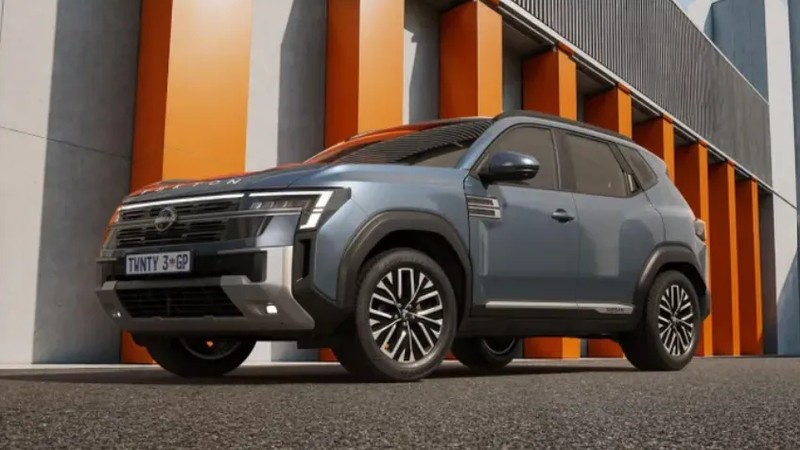
As for Nissan, the pivot to a fully import-based model in South Africa is a strategic bet with real risks. The brand is retaining its dealer network and has announced new launches including the Tekton and Patrol for fiscal 2026. But importing finished vehicles into a market where a competitor is now manufacturing locally, while your own sales volumes are in decline, is not a comfortable position. The history of automotive brands that exit local production in emerging markets and attempt to sustain relevance purely as importers is not encouraging.
A Market That Has Already Moved On
What the Rosslyn deal ultimately signals is a structural reset in South Africa’s automotive landscape. NAAMSA called the rise of Chinese brands not a short-term surge but a redefinition of how consumers in this market make purchasing decisions , away from badge loyalty and toward value. Chery with a factory is a different proposition from Chery without one.
Nissan built something at Rosslyn over six decades. Chery now gets to decide what comes next.
Written by:
*Dr Iqbal Survé
Past chairman of the BRICS Business Council and co-chairman of the BRICS Media Forum and the BRNN
*Sesona Mdlokovana
Associate at BRICS+ Consulting Group
Africa Specialist
**The Views expressed do not necessarily reflect the views of Independent Media or IOL.
** MORE ARTICLES ON OUR WEBSITE https://bricscg.com/
** Follow @brics_daily on Twitter for daily BRICS+ updates and instagram @brics_daily


