The 2026 BAFTA Film Awards were intended to be a night of cinematic celebration, but the event quickly became the centre of one of the most divisive award show controversies in recent memory.
What unfolded on stage, and the intense public debate that followed, has forced a global conversation about disability, media responsibility, and the complex friction between intent and impact.
The incident at the BAFTAs
The controversy was sparked early in the ceremony when actors Michael B. Jordan and Delroy Lindo took to the stage to present the award for Special Visual Effects.
As they announced the winner, a voice from the audience was clearly heard shouting a racial slur.
The sudden outburst left the presenters visibly stunned and echoed throughout the auditorium and the live broadcast.
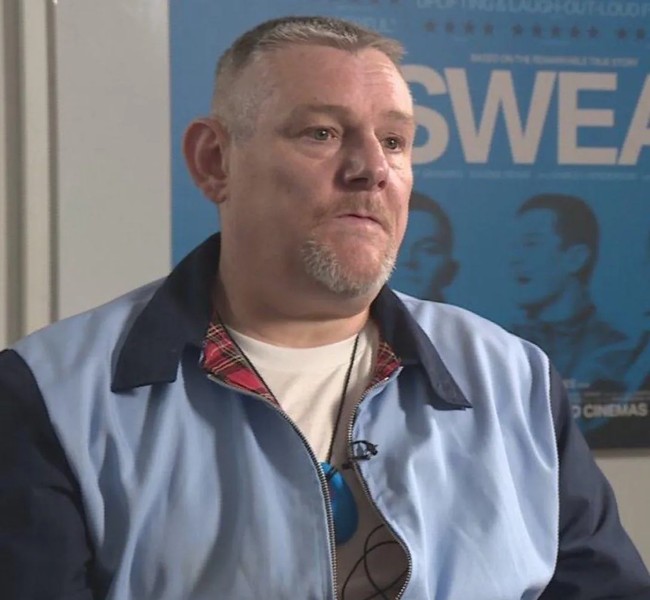
Davidson was attending the ceremony as a guest of honor because he is the real-life inspiration behind the BAFTA-nominated biopic “I Swear,” a film that explores his life and condition.
Following the outburst, presenter Alan Cumming addressed the crowd to explain that the strong language was an involuntary symptom of Davidson’s condition, but the damage was already done, and the incident quickly sparked an online firestorm.
Understanding Tourette’s and breaking misconceptions
To understand the incident, it is crucial to understand Davidson’s condition.
Tourette’s syndrome is a neurological disorder, not a mental illness or the result of bad parenting, that causes sudden, involuntary movements and sounds known as tics.
The public reaction revealed several widespread misconceptions about the condition.
One of the biggest myths is that everyone with Tourette’s swears.
John Davidson is the inspiration behind the film ‘I Swear’.
In reality, the involuntary utterance of socially inappropriate or offensive words is a specific symptom called coprolalia, which affects only a minority (around 10%) of people with the condition.
Furthermore, these tics are entirely involuntary and do not reflect a person’s true beliefs, intentions, or character.
As Davidson later explained, his tics are a “neurological misfire” and are often worsened by anxiety or external triggers.
Some critics argued online that the slur must have been in his regular vocabulary for him to say it, but Tourette’s advocates note that coprolalia essentially forces the brain to say the exact words a person least wants to say in sensitive situations, regardless of their personal vocabulary.
The fallout and broadcast controversy
The aftermath of the broadcast was swift and polarising.
Award-winning actor Jamie Foxx went viral after taking to Instagram to reject the Tourette’s explanation, stating, “Nah, he meant that sh*t,” and calling the outburst “unacceptable”.
Meanwhile, Davidson released an emotional statement expressing his deep mortification.
He revealed that he experienced a “wave of shame and embarrassment” when his coprolalia tics emerged, ultimately forcing him to leave the auditorium early in distress.
A major part of the fallout shifted blame away from Davidson and onto the BBC and BAFTA organisers.
Davidson noted there was a microphone placed uncomfortably close to his seat, and he, along with media executives, questioned why the BBC’s editing team failed to remove the slur from the delayed broadcast.
Critics argued that broadcasters failed in their duty of care, choosing to air the painful moment rather than utilising the pauses in the broadcast to edit it out.
The BBC later apologised and removed the moment from its iPlayer platform, while BAFTA issued an apology for putting its guests in a difficult situation.
The nuance of intent vs impact
On social media platforms like TikTok, the conversation evolved into a nuanced debate about harm.
TikToker Jhonelle Bean argued that people should not expect an apology from Davidson for his disability, pointing instead to the intentional failure of the BBC editing team to protect both the presenters and Davidson from public embarrassment.
@jhonelle_bean Replying to @chunlifuu My two cents as a Black woman with Tourette Syndrome. We need to be looking at who on the BAFTA team okayed that moment to be aired when they had the ability to edit that out. It doesn’t give dignity to the man with Tourette’s nor to Michael B Jordan or Delroy for the hurt they experienced. That’s the problem I feel more people need to talk about. #BAFTA#Tourettes#MichaelBJordan#Delroy#Abelism♬ original sound – Jhónelle Bean
Conversely, commentator Sasha highlighted the perspective of the Black actors on stage.
She noted that while Davidson clearly had no malicious intent and could not control his tics, “intent will never outweigh impact”.
The reality remains that Black professionals had racial slurs hurled at them in their workplace, creating undeniable harm and trauma regardless of the medical context behind it.
@thesashawhitney John Davidson’s disability gives context and understanding to him hurling racial slurs at Michael B. Jordan and Delroy Lindo but it doesn’t erase the impact of the harm that was caused and I’m confused by people doubling and tripling down on this insistence he doesn’t have to apologize. #johndavidson#delroylindo#michaelbjordan#bafta#tourettes♬ original sound – Sasha
Looking forward
Ultimately, the 2026 BAFTA incident serves as a painful but necessary learning moment.
It underscores the absolute necessity of media safeguarding and better planning for guests with neurological conditions.
Most importantly, it highlights the need for public empathy, recognising the trauma of those impacted by offensive language, while simultaneously understanding that for people living with Tourette’s, their symptoms are not their character.
IOL
Get your news on the go. Download the latest IOL App for Android and IOS now.
Banyana Banyana showcased resilience and determination, defeating Zimbabwe 4-2 on penalties after a gripping 1-1 draw in regulation time during the COSAFA Women’s Championship on Friday.After the dramatic semi-final encounter at the New Peter Mokaba Stadium in Polokwane, Desiree Ellis, the coach of the South African squad, expressed pride in her team’s performance. “After the Lesotho match in the group stages, we said we wanted a big improvement, and I […]