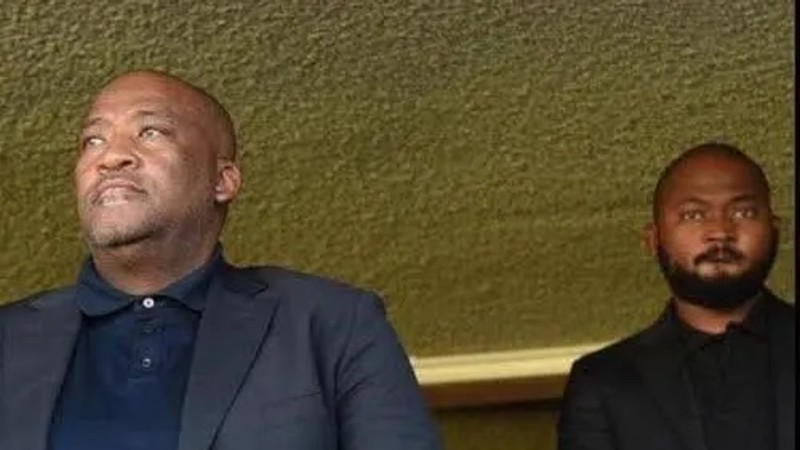
Evidence presented in the Durban High Court during the R320 million Durban Solid Waste (DSW) tender fraud case suggests that the cellphone of former eThekwini city manager Sipho Nzuza was seized by the Hawks before he arrived at the Durban Central police station for his arrest on March 10, 2020.
Advocate Griffiths Madonsela SC, representing Nzuza, highlighted on Tuesday morning that police records indicate the phone was taken 25 minutes before Nzuza’s arrival at the police station. Nzuza is among 21 defendants, including former eThekwini mayor Zandile Gumede , who face charges of corruption, fraud, money laundering, and racketeering relating to the DSW tender.
This contradicts the oral testimony of Captain Obed Lukhele, who claimed he seized the phone after 7.20am. Madonsela pointed out that police evidence documents lack the time to corroborate Lukhele’s account.
Captain Lukhele previously stated that he seized the phone on his superior’s instruction — a Lieutenant Colonel — to take it to the Digital Forensic Investigations (DFI) for downloading and mirror imaging.
While Lukhele claimed to have recorded the booking of the cellphone into evidence (SAP13) and its booking out for transport to DFI, he conceded to Madonsela that the documents before the court do not show the time of seizure or booking out to DFI.
He further agreed with Madonsela that the phone could not have been seized at 6.35am, as noted in the SAP10 (occurrence book), because Nzuza had not yet arrived for his arrest.
Lukhele denied writing the 6.35am entry. “I was present when it was written, but I don’t know who wrote it. At the time, I knew the person. It’s just that it has been too long, I cannot recall their name.”
Advocate Griffiths Madonsela SC, heads Sipho Nzuza’s legal team, which is challenging the evidence of Hawks members who took his cellphone when he was arrested in March 2020.
Madonsela also presented a DFI form, intended to establish when Lukhele delivered the cellphone to DFI. Instead, the document was dated March 11, 2020, showing when the phone was booked out from DFI.
“As a result, we are left in the dark on whether the phone was received on March 10 by DFI,” Madonsela asserted.
Lukhele responded that DFI “might give a record that there is a form that I signed on 10 March when I gave the phone”.
Lukhele ultimately agreed that the documents before the court do not show when Nzuza’s phone was seized or booked in and out at the police station for DFI. He also conceded that there is no document detailing when the cellphone was transported to DFI.
Furthermore, Lukhele disputed the claim that Nzuza’s attorney was not present during the seizure. He had previously testified that the attorney (who cannot be named) was present and did not object.
Lukhele later disagreed with the attorney’s detailed manuscript of events from March 10, when Madonsela read it out.
A new witness is expected to take the stand on Wednesday.
“Is kwaito dead?”This is the question that once again took over South African social media this week after Prince Kaybee posted a short but loaded statement online: “One of the saddest things is the death of kwaito.”Just like that, timelines turned into a virtual taxi rank debate. Everyone had an opinion. Some declared the genre gone, while others insisted it is still alive in taverns, kasi parties and at Sunday […]