Five years ago, I wrote that the City of Cape Town’s housing programme was perpetuating apartheid spatial planning.
I did not write those words from a comfortable distance. I wrote them from blood memory.
I wrote as the grandson of a family uprooted from Claremont. I wrote for my grandfather, Booya Hajji Ebrahim Jacobs, whose claim to Stadsig Farm on High Level Road remains part of our family’s unresolved history. I wrote as a son of the Cape Flats and as a representative of African and Coloured families who were removed, divided, displaced and told that they did not belong in the city of their birth.
I wrote then: We are here. We want to be seen and heard. We want well-located land. We want affordable housing. We want an end to structural spatial inequality.
The DA dismissed voices like ours as political noise.
Now the highest court in the land has confirmed the substance of what we were saying.
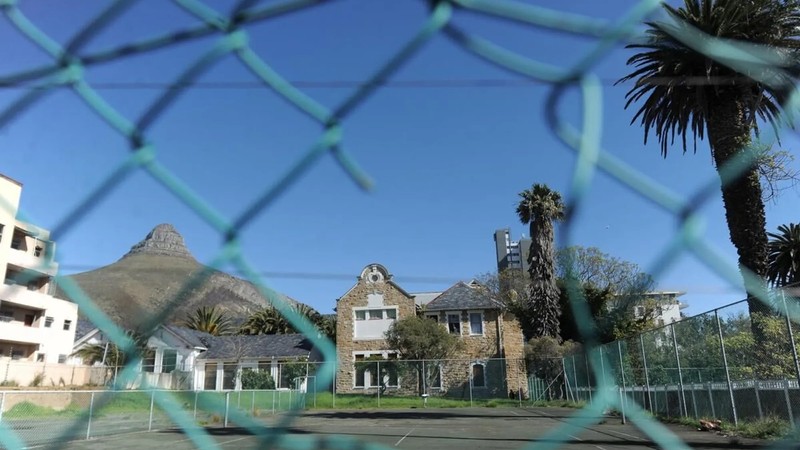
In its unanimous judgment in the Tafelberg matter, the Constitutional Court declared that the location of housing is relevant to whether housing is adequate. It held that reasonable government measures must include affordable housing in and around the CBD, including Salt River, Woodstock, Observatory and Sea Point. It found that the City of Cape Town and Western Cape Government had failed to comply with their constitutional obligations to implement and complete social and affordable housing in these areas. Let us say what this means without bureaucratic language.
The Court has found that the DA’s Cape Town has failed the constitutional test of spatial justice. This is not a technical disagreement about planning procedures. It is not an academic discussion about zoning. It is a constitutional indictment of a political project that has governed Cape Town for nearly two decades while preserving the economic and racial geography it inherited.
Mayor Geordin Hill-Lewis has occupied the mayoral office since November 2021. He cannot present himself as an innocent newly arrived reformer discovering an old problem. He inherited a powerful, well-resourced municipal machine and has had a full mayoral term to direct that machine towards spatial transformation. He showed no courage, no action, no will, just words…Instead, the housing crisis has deepened.
In 2024, Cape Town’s Housing Needs Register was reported to contain more than 375,000 applicants. By 2026, the reported figure was around 440,000. These are not numbers on a dashboard. They are pensioners who may die waiting, children growing up in overcrowded backyards, families living beside railway lines and workers travelling for hours because they cannot afford to live near their jobs. Mayor Hill-Lewis calls Cape Town a “City of Hope”.But hope without land and no political will is just a slogan and empty promises.
Hope without homes is an advertisement.
Hope without budgets, deadlines and keys in people’s hands is political theatre.
The City’s own 2026/27 budget exposes the hierarchy of its priorities. Its capital budget is approximately R13.032 billion. Water and Sanitation receives R5.387 billion, Urban Mobility R3.039 billion and Energy R1.506 billion. Human Settlements receives only R967 million. Water, electricity and transport infrastructure are essential. The issue is not that they should receive less attention. The issue is that a city confronting one of the country’s deepest housing emergencies still treats housing justice as a smaller programme rather than a historic mission.
That is the political truth Hill-Lewis avoids.
Cape Town is not an incapable city.
It is a selectively capable city.
It can plan rigorously. It can protect strategic infrastructure. It can mobilise billions when economic systems, formal suburbs, tourism routes and investor confidence are at stake.
But when backyarders, informal-settlement residents and working families ask for well-located homes, the language changes.
Then we hear about feasibility. Complexity. Processes. Pipelines. Partnerships. Future phases. An unspent housing rand is not a saving. It is a family left waiting. A project “under consideration” is not a home. Land “released” but not developed is not delivery. A ceremonial handover is not a completed apartment.
Take Salt River Market. Hill-Lewis recently celebrated the site handover for 970 units. This project was earmarked for social housing more than a decade ago. Of the 970 units, only 300 are social-housing rentals, while 670 are affordable-market units, with completion expected only in 2028. This is not evidence of speed.
It is evidence of how delay is repackaged as acceleration.
The Constitutional Court has seen through pipeline politics. It ordered the Province and City to report under oath within three months on completed projects, projects under construction, projects still being considered, budgets allocated and spent, intergovernmental co-ordination and actual implementation timelines. Under oath.Not in a mayoral newsletter.Not in a glossy video.Not through an artist’s impression.Under oath.
The Court also found that the Province failed to conduct meaningful real public participation over Tafelberg and breached co-operative-governance obligations by failing to consult national government. It rejected the insulting idea that people can be invited to participate only after the essential deal has already been concluded. Mayor Hill-Lewis must now do more than issue another carefully worded statement.
Publish every suitable parcel of public land.
Publish every housing budget and every unspent amount.
Publish every delayed project and the official responsible.
Publish every agreement with private developers.
Set annual, measurable targets for completed social-housing units, not land releases, announcements or pipeline opportunities.And place residents, housing movements and affected communities inside the decision-making process before the deals are done.
I do not write this because I hate Cape Town.
I write because I love Cape Town too much to surrender it to inequality.
Our people are not temporary guests in this city. The domestic worker, security guard, teacher, nurse, pensioner, trader, student and factory worker have as much right to the city as the property investor, tourist and developer.
The Cape Flats is not Cape Town’s dumping ground. Our children must not inherit exile as their birthright.
Mayor Hill-Lewis, Cape Town is not your private property portfolio. It is a people. Release the land. Spend the money. Build the homes. Break the apartheid map. Five years ago, we demanded to be seen and heard. The Constitutional Court has now seen us. It is time for the DA government to hear us or make way for a government that will.
IOL


