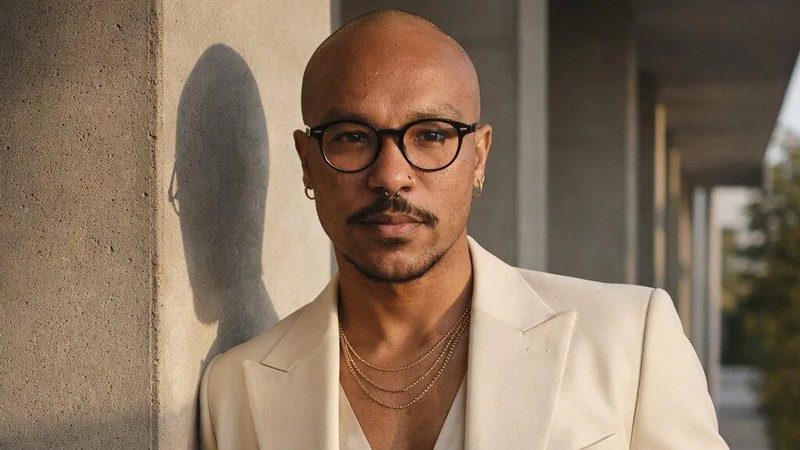
Garth Brown steps into the spotlight with his debut EP “Let There Be Light”, marking a shift from years of industry work and collaboration into a solo body of work shaped by reflection, discipline and personal truth.
Speaking to “Independent Media Lifestyle”, he said, “Being an artist requires a level of vulnerability that can be both beautiful and terrifying.”
He added, “This EP is the first time that I am sharing a full body of work that truly reflects my own story and spiritual journey. For years, I stood behind the scenes, working in the corporate side of the music industry while quietly carrying these songs inside me.”
Brown is best known as the voice behind Jaguar Paw’s house track “Inhliziyo Yam”, a song that introduced him to a wide audience. After that success, he did not immediately pursue a solo career.
Instead, he spent years working in A&R and music marketing across the African music industry. That period placed him in roles focused on shaping other artists, building campaigns and supporting releases rather than leading his own.
He described “Let There Be Light” as a project that has been forming over time rather than arriving suddenly. When asked about the defining moment that pushed him to finally release it, he explained that the decision was less about a single event and more about timing and readiness.
He said that the music has always felt like a calling that never stopped. He noted that there were opportunities after the early success of “Inhliziyo Yam” around 2012, when labels showed interest in him stepping forward as an artist.
However, he was not prepared at that stage.
He explained, “I often say it is a calling for a reason, because it never stops calling. There were opportunities as far back as 2012, after ‘Inhliziyo Yami’, to step into this fully. Labels were interested, doors were open. But I was not ready, not in terms of talent, but in terms of grounding.”
He added that time spent in industry roles gave him perspective and structure. He said that period was not a delay but development, allowing him to understand himself and the industry more clearly.
Brown said that the experiences he carried over the years slowly shaped the music into something more honest. The focus shifted from creating songs for release to expressing lived experience.
He explained that timing is about capacity rather than opportunity alone.
In his view, readiness comes when personal, creative, and spiritual alignment meet. He said, “This project came from a place of alignment, spiritually, creatively and personally. Once I reached that point, holding it back would have been dishonest.”
The EP also required him to confront vulnerability in a direct way. He said that the hardest part was not expressing emotion but removing the filter that comes from working in the corporate side of the music industry.
He explained that those roles teach control, structure and presentation, which can interfere with personal expression when making music rooted in lived experience.
He said, “The hardest part was not expressing emotion; it was removing the filter. This is a deeply personal project, shaped by things that I have experienced but did not always have the language to articulate in conversation or online.
“The music became the outlet, a way of processing, of translating what I was carrying into something tangible.”
He adds that music became a way of releasing what he could not say directly.
Brown noted that honesty in music creates discomfort because it removes the ability to hide behind presentation or performance. However, he believes this is where connection happens.
He said that people respond less to perfection and more to truth. The EP reflects this approach through direct storytelling and personal reflection without excess framing or explanation.
He also distinguishes between being part of a successful song and owning a full artistic identity. He said that his work on “Inhliziyo Yam” was meaningful but collaborative in nature, while this EP represents full responsibility for his own narrative.
He explained, “Being part of a hit record is powerful, but it is a moment. Owning your artistry is a responsibility. With ‘Inhliziyo Yami’, I contributed to something that resonated widely, but it was not built from my full perspective. With this EP, every decision carries my name, the sound, the message, the intention.”
He added that authorship means being accountable for how audiences understand his work over time.
Brown reflected on how his years in music marketing and A&R have shaped his approach to releasing music. He said that those experiences taught him how narratives are built and how audiences engage with music over time.
More importantly, he said that it showed him the importance of community and consistency rather than short lived attention.
He explained that careers built only on moments often fade, while those built on connection tend to last.
He said, “In the corporate space, you see very quickly that careers built on moments fade just as quickly. What lasts is connection, people who genuinely invest in the journey, not just the result.” This perspective influences how he now approaches his own releases.
Rather than chasing immediate impact, Brown said that he is focused on building a long-term body of work. Each release, performance, and piece of communication forms part of a larger story.
He views the EP as a starting point rather than a peak. He said that he is committed to developing his artistry over time and allowing the music to grow with him.
He added that he does not take lightly the fact that listeners are engaging with his journey as it unfolds.