WHEN the Indian government released the first set of core infrastructure figures under a new 2022–2023 base year, the 5% year-on-year rise recorded in June 2026 immediately stood out. It was the fastest monthly expansion in five months and lifted the April–June quarterly performance to 3.6%.
Behind the headline lay a deliberate methodological decision by the Indian government to modernise the index by adding iron ore and updating weights to reflect the contemporary structure of the Indian economy.
For South Africa, whose mining sector remains a cornerstone of export earnings, the data carry both commercial opportunity and a cautionary message about logistics and policy consistency.
Sectoral detail in the report reveals the sources of strength and weakness for India. Iron ore production jumped 43.9% from a revised 19% in May. Cement and electricity each grew 9.8%. Steel production advanced to 4.6% and coal recovered to 1.4% growth after a previous-month contraction. Offsetting these gains were continued declines in crude oil, natural gas, refinery products and fertilisers, ranging from 3.3% to 7.4%.
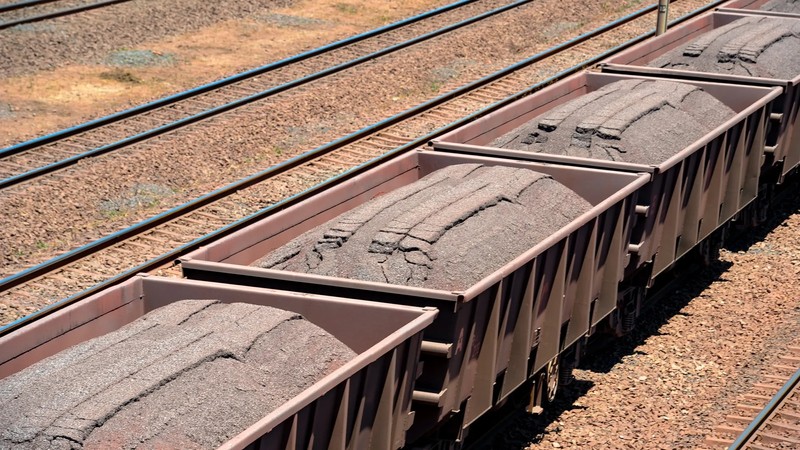
The iron ore surge is the single most relevant figure for South African producers. India is expanding its steelmaking capacity to meet domestic infrastructure and construction demand, and South Africa is India’s major, and in some segments the leading, buyer of our iron and coal.
When that expansion accelerates, the call on seaborne iron ore intensifies. South Africa, as one of the higher-grade suppliers, is well positioned to benefit provided the ore can actually reach the coast. Persistent constraints on the rail network have limited export volumes in recent years even when prices and demand were supportive.
The Indian data therefore sharpen the commercial case for resolving those bottlenecks and for exploring offtake or logistics partnerships that lock in volumes over multi-year horizons.
India’s electricity generation growth of nearly 10% offers a parallel lesson. Reliable power underpins industrial activity of every growing nation; India’s ability to expand generation while managing its own constraints underlines the economic premium attached to consistent supply.
South Africa has made progress in reducing the frequency of load shedding, yet the longer-term requirement for additional capacity, grid reinforcement and diversified sources remains clear.
Observing how India has combined public capital expenditure with private investment and clearer regulatory signals can inform local planning without implying that every Indian approach is directly transferable.
The statistical revision itself deserves attention. By updating the base year and expanding the sector coverage, India has improved the signal quality available to both domestic planners and international investors.
Accurate measurement reduces uncertainty and helps prioritise scarce capital. South African institutions responsible for tracking infrastructure and industrial performance can take note: transparent, contemporary data are themselves a form of economic infrastructure.
In the wider BRICS setting the numbers reinforce the case for deeper practical cooperation. Shared challenges in logistics, energy and resource processing create natural areas for joint ventures, technology exchange and coordinated investment.
India’s infrastructure rebound, led by mining and construction inputs, is therefore more than a domestic story. It is a demand signal that South African exporters and project developers would do well to monitor closely while simultaneously addressing the domestic constraints that prevent full participation in that demand.
The June figures do not guarantee uninterrupted growth. Energy-related sectors remain soft and global commodity prices can turn. Yet the overall direction is clear: when the construction and mining complex expands, the core industrial index follows.
South Africa’s opportunity lies in ensuring that its own producers and logistics systems are ready to meet the call when that expansion continues.
* Phapano Phasha is the chairperson of The Centre for Alternative Political and Economic Thought.
** The views expressed here do not reflect those of the Sunday Independent, IOL, or Independent Media.


