When Fifa expanded the World Cup to 48 teams, the official narrative was one of unity, inclusivity, and a celebration of the world’s game.
Yet, as the curtain fell on a tumultuous tournament across North America, the 2026 edition will be remembered less for its tactical innovations and the form of the world’s greatest papers, but more for how politics unapologetically invaded the pitch.
From the opening week, geopolitical tension overshadowed the sport. The Iranian national team found themselves at the centre of a diplomatic nightmare when domestic political strain and tightened foreign policy led to severe travel restrictions.
The team was not allowed to remain on American soil between fixtures and had to travel back to their Mexico base soon after playing their matches. Yet, they handled the situation with such grace and humility, endearing themselves to the football world.
The administrative circus was not limited to players. Africa’s top-ranked referee, Somalia’s Omar Artan, widely tipped to handle key knockout matches, was denied entry into the US.
Artan was barred from entering after US Customs and Border Protection deemed him “inadmissible” due to vetting and national security concerns. Despite possessing a valid visa and a diplomatic passport, he was turned away at Miami International.
Perhaps the most astonishing moment of political intervention occurred away from the border offices and inside the football authorities’ disciplinary corridors.
Key US striker Folarin Balogun received a straight red card during their round-of-32 clash against Bosnia and Herzegovina, and was set to miss their round-of-16 clash against Belgium.
What then followed was an unprecedented display of executive pressure, as former US president Donald Trump publicly lobbied and pulled political levers for Fifa to review and eventually suspend the striker’s ban, to the dismay of the Belgium side.
It was an astonishing move that shattered Fifa’s long-standing rule against governmental interference. The decision left teams, pundits and fans stunned and raised serious questions about the integrity of the tournament.
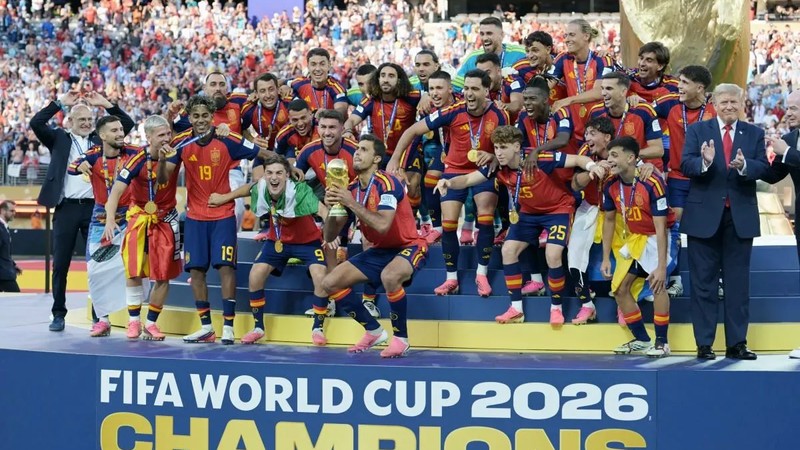
By the time the final arrived at MetLife Stadium, the political undercurrents had shifted from backstage lobbying to a global cultural movement. The decider between Argentina and Spain became a proxy battle for global ideology.
Many neutral supporters across the globe found themselves united behind Spain, not merely out of appreciation for their sublime, possession-based football, but in direct protest against the Argentinian administration.
Argentina’s far-right government, led by president Javier Milei, had drawn severe international criticism for its staunch alignment with Israel amidst ongoing global conflicts, such as the genocide of the Palestinian people.
For millions of fans watching around the world, football offered a rare, visible platform to voice moral disapproval. Supporting Spain became an act of solidarity against a political regime that many viewed as divisive and destructive.
When Spain lifted the trophy, the roar of approval that echoed around the stadium felt less like a celebration of Spanish supremacy and more like a collective sigh of relief from a global audience desperate for a victory over dark political realities.
The 2026 World Cup made one truth undeniably clear: the romantic notion that sport and politics can be kept separate is officially dead. Football does not exist in a vacuum. It is a mirror held up to our fractured world, reflecting the power struggles, prejudices, and passions of the society that built it.
As the dust settles after this chaotic showpiece, Fifa must confront a stark reality: when you open football’s biggest stage to the world, you cannot decide who is allowed to participate and who is not.


