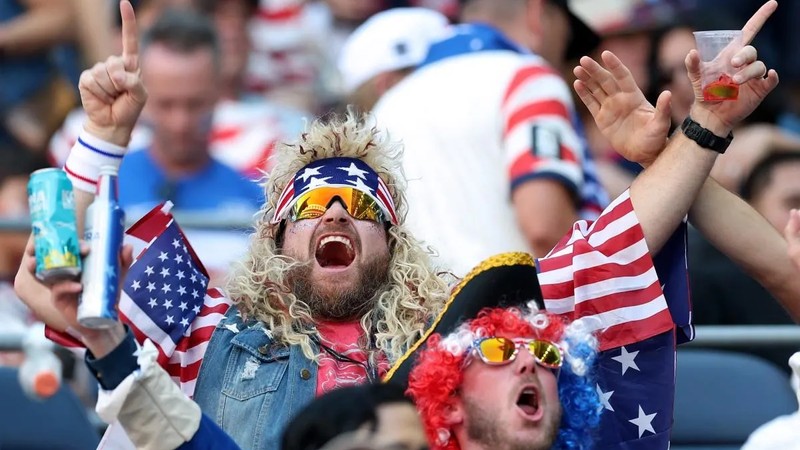
The FIFA World Cup has always been sold as football’s greatest celebration.
It is a month where politics, borders and conflict briefly fade into the background as the world’s game unites billions of people through a shared love of football.
But this tournament in Donald Trump’s America has become the opposite.
Instead of being remembered for breathtaking goals, unforgettable upsets and moments of sporting brilliance, the 2026 FIFA World Cup is rapidly becoming defined by political interference, immigration barriers and the unmistakable shift towards the Americanisation of football which places TV revenue above fan enjoyment.
If football belongs to the fans, FIFA has spent the past month proving they are no longer the priority.
Nothing illustrates that more starkly than the extraordinary intervention surrounding United States striker Folarin Balogun.
After receiving a red card against Bosnia and Herzegovina, Balogun faced the standard automatic suspension. Then came the astonishing twist. Following an appeal and after US President Donald Trump publicly urged FIFA president Gianni Infantino to review the decision and the suspension was overturned.
Hours later, FIFA insisted its judicial bodies were independent and denied political interference.
The optics could hardly have been worse.
Regardless of actual political pressure, FIFA’s handling of this controversy damaged its credibility. When fans believe rules are bent for a powerful host nation, the competition’s integrity is compromised.
There was, however, a delicious piece of footballing justice when a rampant Belgian team demolished the USA 4-1 in the early hours of Tuesday morning.
No presidential phone call could overturn that result.
Yet Balogun was only one chapter in a tournament that increasingly felt designed to exclude many of the very people who make the World Cup special.
For decades, FIFA has celebrated football as the world’s universal language.
This year, thousands of supporters discovered that language stopped at the US border.
Fans from qualifying nations found themselves trapped in visa backlogs, caught by travel restrictions or denied entry altogether. Somalia’s award winning referee Omar Abdulkadir Artan never even reached the tournament after US authorities refused him entry over alleged security concerns. Ghanaian journalists were denied visas. Iraqi supporters who had waited decades to see their country return to the World Cup watched instead watch it from home – denied entry to the US.
At the 2026 World Cup, football became another casualty of geopolitics.
Supporters should never have to wonder whether their nationality makes them less welcome at football’s biggest festival.
Then there are the hydration breaks.
Originally introduced as a sensible safety measure in extreme temperatures, they have evolved into something altogether different.
Three minute stoppages in climate controlled stadiums conveniently create commercial inventory for broadcasters. Television audiences are served advertising breaks while players wait to restart matches they are already prepared to continue.
It smacks of the “tactical timeouts” usually seen in basketball or American football.
Football was never designed to fit neatly around advertising slots but this tournament increasingly resembles an American television product, where the natural rhythm of the game appears secondary to maximising commercial opportunities.
Unlike American football, baseball or basketball, football’s uninterrupted flow is what makes this game, we all love, the world’s most popular sport.
FIFA insists football belongs to everyone but their actions increasingly suggest it belongs first to sponsors, broadcasters and those with political influence.
The governing body has spent years talking about growing the game but this growth (in revenue) should never come at the expense of its soul.
The tournament that promised to unite the world instead reminded millions that politics can still decide who gets through the gates, commercial television can dictate when play stops, and influence appears capable of reaching places where sporting rules should stand alone.
The beautiful game deserves better.
More importantly, so does its fans.
*** Lee Rondganger is the Deputy Editor of IOL.
IOL


