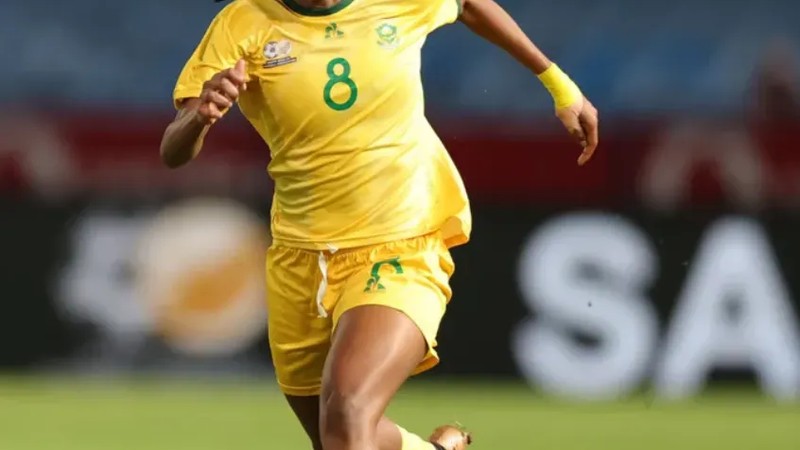
Football is becoming a catalyst for growth
The Women’s Africa Cup of Nations is more than a football tournament. It is a showcase of how women’s sport is transforming across the continent.
Over the past decade, investment in women’s football has increased significantly. National teams are becoming more competitive, attendance is rising and African players are securing contracts with some of Europe’s biggest clubs. The success of teams such as Nigeria, South Africa and Morocco has demonstrated that the continent can compete on the global stage.
Hosting WAFCON provides an opportunity to build on that momentum. Beyond the matches, the tournament generates tourism, supports local businesses and gives young girls across Africa visible role models. It also reinforces the message that women’s sport deserves the same attention and investment as the men’s game.
For Africa, these tournaments are increasingly becoming platforms for economic activity and cultural exchange, not just sporting competition.
A pipeline connecting more than gas
While football brings people together, the Nigeria-Morocco Gas Pipeline aims to connect economies.
The proposed 6,000-kilometre pipeline will transport Nigerian natural gas along Africa’s Atlantic coast, passing through 13 countries before reaching Morocco, with the long-term goal of linking to European markets. The recent approval by participating countries marks another important milestone for a project that has been years in the making.
Its importance lies not only in energy exports but also in regional development.
Reliable energy remains one of Africa’s biggest barriers to industrialisation. Millions of households and businesses still face unreliable electricity, limiting manufacturing, investment and job creation. By expanding access to natural gas, the pipeline could support power generation, strengthen industries and encourage greater economic cooperation among participating countries.
Like the East African railway projects or the Trans-African Highway network, the pipeline represents an effort to make Africa more connected from within rather than relying primarily on overseas markets.
A continent looking inward
These two developments reflect an important shift in Africa’s development story.
For decades, many African economies have depended heavily on exporting raw materials while importing finished goods. Today, there is growing recognition that long-term growth will depend on stronger regional trade, shared infrastructure and greater collaboration between African countries.
The African Continental Free Trade Area (AfCFTA) is built on this idea. Better transport links, stronger energy networks and greater movement of people all make it easier for businesses to trade across borders. Major sporting events such as WAFCON contribute to this vision by bringing together supporters, media, businesses and governments from across the continent, strengthening relationships beyond the competition itself.
More than a host nation
Morocco is the venue for both these developments, but the story is ultimately about Africa.
The success of WAFCON will be measured not only by the quality of football but by its ability to inspire the next generation of female athletes and continue raising the profile of women’s sport across the continent.
Similarly, the success of the Nigeria-Morocco Gas Pipeline will not depend solely on engineering. It will depend on sustained political cooperation, long-term investment and a shared commitment to regional development.
Taken together, they illustrate a continent investing in its future through different but complementary paths. One builds connections through sport, the other through infrastructure. Both point towards a more integrated Africa where cooperation, rather than competition, increasingly drives progress.
As Africa continues to expand its influence on the global stage, these are the kinds of initiatives that matter. They remind us that the continent’s future will not be shaped by individual countries acting alone, but by partnerships that create opportunities across borders.
Written by:
*Sesona Mdlokovana
Associate at BRICS+ Consulting Group
Africa Specialist
**The Views expressed do not necessarily reflect the views of Independent Media or IOL.
** MORE ARTICLES ON OUR WEBSITE https://bricscg.com/
** Follow @brics_daily on Twitter for daily BRICS+ updates and instagram @brics_daily


