Khaba Mkhize, the first black KwaZulu-Natal SABC regional manager was not just a renowned journalist, but also a tireless facilitator of peace talks between the IFP and ANC to end deadly black-on-black political violence.
This apartheid-sponsored violence claimed many lives in KwaZulu-Natal Midlands and the province between the late 80s and early 90s.
Former premier Dr Zweli Mkhize described the late newsman as the one who brought political foes around the table to iron out their differences.
Khaba was popular in the Midlands for co-founding the Pietermaritzburg-based English weekly newspaper Echo, the Witness supplement, which targeted black readers by covering matters of interest to them.
Zweli spoke to the Independent on Saturday yesterday morning ahead of delivering a memorial lecture at the Umhlanga KZN Sharks Board, in honour of the man he regarded as his big brother.
Zweli said although Khaba, who died on July 24, 2016, at the age of 70, was not a political party member, he was a well-trusted political activist.
“He initiated the talks between the fighting groups in the ANC and the IFP,” he said.
When Khaba started the talks, the conflict had claimed many lives.
“He went to the community, pulled those leaders together, and encouraged them to play football and start talking to each other,” he said.
Zweli said he came back from exile to find Khaba-led peace talks already in motion.
“He is a man celebrated for making peace or creating community stability by breaking no-go zones and fostering political tolerance by spreading the culture or philosophy of ubuntu, which says, ‘You are a human just as I am, and I am a human because of you,” said Zweli.
He said Khaba was never afraid to dare the apartheid regime by writing stories about activists who were targeted by the police special branch.
Zweli was first introduced to Khaba when he was a young medical student at the University of KwaZulu-Natal.
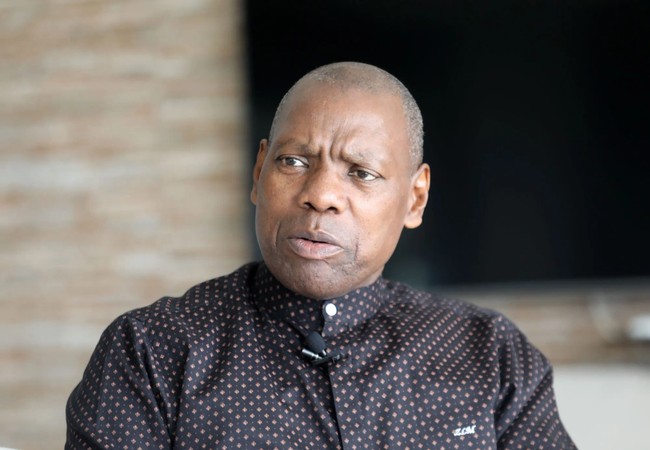
Dr Zweli Mlkhize recalled how late first SABC KwaZulu-Natal regional manager Khaba Mkhize initiated peace talk between the ANC and IFP to end political killings in KwaZulu-Natal Midlands in the early 90s.
Zweli would spend time with anti-apartheid radical and militant students of the Federal Theological Seminary of Southern Africa (Fedsem) in Imbali township, Pietermaritzburg, which Khaba used to write about.
He said Khaba also often wrote about David Cecil Oxford Matiwane from Zweli’s home village of Willowfontaine outside Imbali township, who staged lone protests against the oppressive system in the Pietermaritzburg CBD.
Matiwane was an associate of Harry Gwala as they were both members of the Communist Party.
Zweli said when Matiwane died in 1982, Khaba became the programme director of his funeral.
“For example, when the tensions were high, a well-known activist in this town was called Babu Matiwane; he wrote the stories about him.
“When Matiwane passed away, many people were scared that being seen associated with him would lead to them being followed by the special branch or victimised, but he (Khaba) directed his funeral,” said Zweli.
He said Khaba, who was also a playwright, promoted traditional music, which made artists realise their role in society.
“What you may not know is the role he played behind the scenes when some of the younger maskandi music fellows had conflicts among each other due to being young and competitive.
“He, together with the late Ukhozi FM traditional-music DJ Bhodloza Nzimande, worked behind the scenes to create a culture of understanding and tolerance among younger artists and also mentored them,” said Zweli.
Zweli said because of their family closeness, based on the similar surname, he referred to Khaba as a big brother.
“As a big brother, we would seek advice from him whenever there were issues to deal with, and he would guide us,” said Zweli.
Professionally, they constantly worked together because the senior journalist was one of the most popular and outstanding, and his seniority, respect, and experience spread news coverage to township communities.
“Townships were never taken seriously, but it was because of people like him who brought in balanced reporting on stories that affected the majority of the people in townships and villages.
“That was very important because when the whole area became unstable, only people who could go find out the source of the conflict, where the conflict was, and what stories were affecting people and those participating in the political conflict—he was the expert on that as he could tell what was happening,” said Zweli.
He said Khaba assisted the residents of Pietermaritzburg to understand their city better.
“He lived that experience, worked in that area, interacted with the people and understood their day-to-day struggle.
“That was one of his major contributions in journalism: keeping the Pietermaritzburg and KZN community informed with accurate information because he was not second-guessing,” said Zweli.
After years of working for the Witness, Khaba became the founding editor of the Echo in 1979, the community newspaper he founded in 1979 out of his consciousness of the challenges facing black people at the time.
“When he became the editor, he used his skills to prepare the stories that made sense to the communities, and everybody looked forward to Tuesday for the Echo supplement because of Khaba Mkhize,” Zweli said.
Upon joining the SABC, Mkhize became the first black regional manager, taking a position historically reserved for white people.
“He brought in a balanced understanding of what the posture of a broadcaster serving the people should be.
“He was able to lift the listenership that Ukhozi, for example, had because he understood the cultural aspect, particularly the music, which helped the SABC to be stronger particularly on a vernacular side,” said Zweli.
Because Khaba worked before the social-media era, which now widely dominates the media space, Zweli called on the traditional media to adapt and soldier on.
“Advancement in technology is something that we must just embrace, and it also means that traditional media needs to find ways to accommodate the social media space.
“Either way, whether it is traditional or social media, it is still about how we spread the values of ubuntu, peace and tolerance, nation building, social cohesion.
“The traditional media needs to find a way to embrace social media,” said Zweli.
For most people, the thought of paddling more than 700km through the dense, unforgiving forests of Central Africa, with crocodiles, disease and isolation among the potential dangers, would be enough to put an expedition firmly out of the question.For British-Welsh adventurer Ash Dykes, however, it is precisely the kind of challenge that makes life worth living.The explorer has plunged into one of the world's most remote wildernesses, embarking on a […]