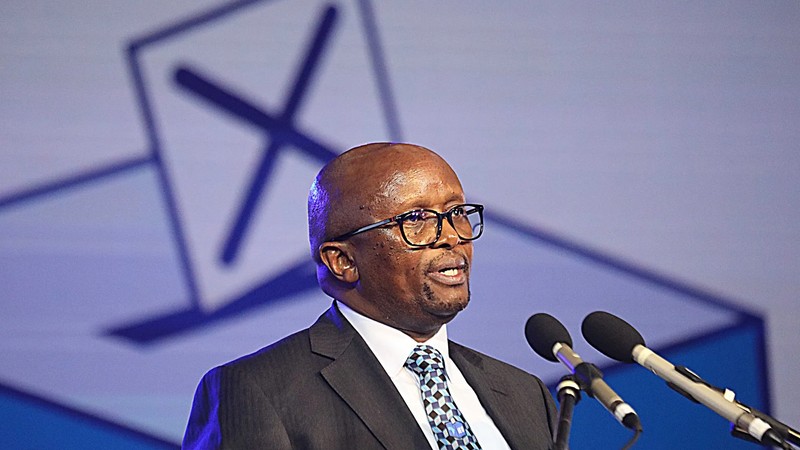
Electoral Commission of SA (IEC) chairperson Mosotho Moepya and his nephew are embroiled in a nasty legal tussle over serious allegations of being an adulterer, a rape apologist, and covering up for rapists and abusers.
Moepya hauled his nephew, Sylvester Mashilo Mokubedi, to the Gauteng High Court, Johannesburg, in a bid to stop him from making defamatory posts about him. Mokubedi’s late mother was married to Moepya’s brother (his stepfather) and was buried in August.
Moepya had taken issue with Facebook posts claiming he is protecting a family of abusers and rapists, and that he should tell his wife why he had condoms hidden in the boot of his Mercedes-Benz.
In the posts, Mokubedi also named the two men, who are members of the Moepya family, he accused of attempted rape and domestic violence.
The IEC chairperson, whose terms ends this month and is among eight candidates recommended to fill three commission vacancies, succeeded when Judge Mokate Noko ruled in his favour last week.
Judge Noko issued a declarator in Moepya’s favour that statements published by Mokubedi on his Facebook account over four days in August and last month were defamatory.
Mokubedi was ordered to permanently delete the said statements from his Facebook account and not to publish or cause to be published any further defamatory statements concerning Moepya.
Additionally, Judge Noko ordered Mokubedi to unreservedly publish an apology on his Facebook account and send a copy of the apology to the applicant, IEC, President Cyril Ramaphosa, and the political parties he tagged on his posts within 24 hours of service of the judge’s order.
Mokubedi was also ordered to pay costs on a party and party scale, including the costs of counsel on scale B.
However, he has filed two applications for leave to appeal against Judge Noko’s judgment and another to stay the execution and enforcement of the judgment and order.
In the application for leave to appeal, Mokubedi states that the judge erred in multiple findings of fact and law in concluding that the statements he published were defamatory and unlawful, and failed to properly consider the context and public-interest nature of the publication.
He said Judge Noko erred in failing to consider or to develop the common law of defamation in accordance with the Constitution by recognising that extreme emotional trauma, grief, or provocation may negate the element of animus injuriandi (intention to injure) required for defamation.
“At the time of publication of the impugned statements, the respondent (Mokubedi) was in a period of profound emotional distress, mourning the death of his mother and being excluded from participating in her funeral rituals,” reads Mokubedi’s application for leave to appeal.
He added that the statements were made in a moment of acute sorrow, grief, and anger – circumstances analogous to the mitigating doctrines of provocation and temporary incapacity recognised in criminal jurisprudence.
According to Mokubedi, his exclusion from participating in his mother’s burial rites, coupled with subsequent provocation and legal correspondence from Moepya, perpetuated a state of psychological distress that materially impaired his capacity for calm, rational judgment through to at least September 18.
He said evidence demonstrates a continuum of acute emotional trauma and grief extending beyond the funeral itself and that common law should, therefore, recognise that animus injuriandi may remain absent throughout a continuous period of trauma, not merely at its initial onset.
In his stay application, Mokubedi argued that he has a bona fide and arguable appeal with reasonable prospects of success and that it raises constitutional and novel common law issues of significant importance, including the recognition of diminished intent in defamation where emotional trauma is present.
“If the stay is not granted, I will suffer irreparable harm in that the order requires me to publish an unreserved apology within 24 hours to multiple institutions, which will cause permanent reputational and psychological harm. Should my appeal succeed, the harm caused by publication of the apology cannot be undone,” he said.
In court papers, Moepya expressed his displeasure at being referred to as a rape apologist, protecting and covering up for abusers and rapists.
He described the posts as akin to portraying him as complicit in rape, either by protecting or by covering up for rapists, and unethical, immoral, and behaving in a manner that is unlawful or intended, or with the effect of aiding unlawfulness.
Moepya said the post on the condom, which was allegedly hidden in the boot of his car, would appear to a reasonable reader that he is dishonest to his wife, a cheat, and an adulterer.
loyiso.sidimba@inl.co.za


