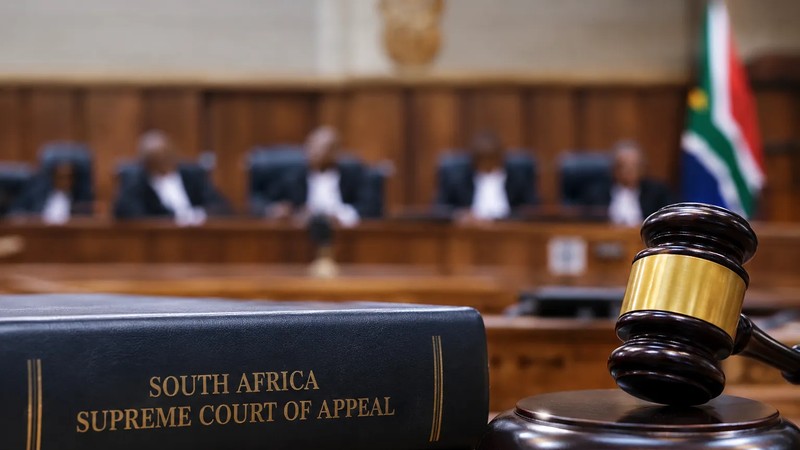
The Supreme Court of Appeal (SCA) has dismissed an appeal by a businessman who was found to have committed hate speech after repeatedly using the K-word in communications with a business associate.
The SCA upheld the Equality Court’s finding that Willem Hendrik Ackerman’s, use of the racial slur amounted to hate speech in terms of the Promotion of Equality and Prevention of Unfair Discrimination Act.
Ackerman was ordered to pay R500,000 to the Ahmed Kathrada Foundation, issue a public apology and undergo 50 hours of racial sensitisation training.
He was also ordered to pay the legal costs of Emmanuel Amaning and Garth Wellman, including the costs of three counsel.
K-word used repeatedly
The case stemmed from several racially charged statements Ackerman made between January 2018 and October 2021.
Ackerman was a former client of Caleo Capital, an investment management company owned by Amaning and Wellman.
During a business meeting in January 2018, Ackerman allegedly said: “the kffirs running this country will just keep fcking it up as they have done in the rest of Africa.”
In October that year, he referred to Nicholas Liebmann, a white South African of Jewish descent and a Caleo partner, as “that f*cking Jew who only wants to enrich himself in every deal”.
Then, following a robbery at his home in August 2019, Ackerman sent Wellman a WhatsApp message saying he would “man alone kill every k*ffir that cross my path. So, God help me”.
The following day, Ackerman said he had deleted the message because he had been “in an extremely emotional state”.
In October 2021, while discussing the possible impact of a NUMSA strike on his business, Ackerman allegedly said: “My k*ffirs know their place”.
The Equality Court found that Ackerman had made the communications and that they constituted hate speech.
‘Inescapably racist’
Ackerman challenged the findings, arguing, among other things, that the WhatsApp messages had not been properly authenticated.
He also argued that the K-word had been used in a religious context to refer to a non-believer and relied on his rights to privacy and freedom of expression.
The SCA rejected these arguments.
It held that the K-word inherently refers to race and targets black or African people. The court described the word as “inescapably racist” and said it has been recognised as derogatory, harmful and capable of promoting hatred.
The court also rejected the argument that the comments were protected because they were made in private conversations between two white men.
Business conversations not protected by privacy
The SCA found that privacy is not an absolute or binary right and exists on a spectrum.
The court said Ackerman’s communications with Wellman occurred in the context of their business relationship and were not part of the “inner sanctum” of personal or family life.
The fact that the conversations were private therefore did not place them beyond the reach of the Equality Act.
The court also found that the identity of the person who hears a racial slur does not determine whether the communication amounts to hate speech.
It said Ackerman’s conduct assumed that Wellman would be “au fait with casual racism against his fellow black citizens”.
The SCA further upheld the finding that Ackerman’s conduct amounted to harassment, describing it as unwanted, persistent and serious.
Half a million and apology upheld
The SCA found no basis to interfere with the remedies imposed by the Equality Court.
It upheld the order that Ackerman pay R500,000 to the Ahmed Kathrada Foundation, issue a public apology and complete 50 hours of racial sensitisation training.
The court said the training was appropriate, particularly given the duration and persistence of the racist comments and Ackerman’s apparent lack of appreciation of the harm caused by racial prejudice.
The SCA dismissed Ackerman’s appeal with costs, including the costs of two counsel.
sinenhlanhla.masilela@iol.co.za
IOL News
Get your news on the go. Download the latest IOL App for Android and IOS now.


