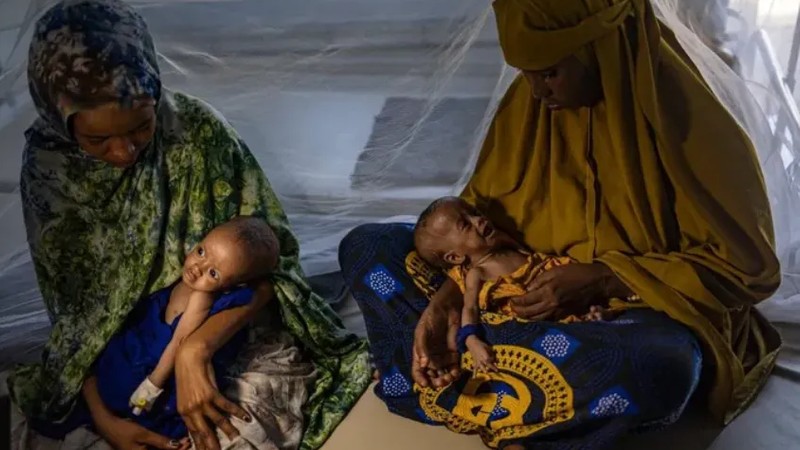
A War Measured in Superlatives Nobody Wants
The scale is difficult to overstate. Since fighting erupted between the Sudanese Armed Forces and the Rapid Support Forces in April 2023, roughly 14 million people have been displaced, including some 7.1 million internally and 4.4 million who crossed into Chad, Egypt, South Sudan and beyond , figures that make Sudan the world’s largest displacement crisis, ahead of Syria and Ukraine at their respective peaks. UN Human Rights Chief Volker Türk this week pointed specifically to strikes on “markets, hospitals and fuel stations,” citing a drone attack on a kindergarten and hospital in South Kordofan that killed 114 people, including 60 children, and a separate assault on a teaching hospital that killed at least 70. The UN’s $2.87 billion humanitarian response plan for Sudan is only 41% funded, even as needs keep climbing.
The Collapse MSF Is Watching in Real Time
MSF’s warning, delivered directly to world leaders gathered at the UN General Assembly, is not speculative, it is describing a system unravelling month by month. Roughly 37% of Sudan’s health facilities are now out of service. In central Darfur, MSF-supported facilities saw patient admissions rise 22.5% between January and April 2026 compared with the same period a year earlier, even as 45 healthcare centres in the same region lost their funding in May alone. In Tawila, North Darfur, MSF runs the only 200-bed hospital serving up to 600,000 displaced people and remains the sole organisation capable of running large-scale epidemic control, at precisely the moment malaria and malnutrition cases are climbing ahead of the rainy season’s peak.
The charity is explicit about the cause: the closure of USAID last year, whose Sudan grants expired in June, combined with a 35.8% year-on-year drop in global aid funding, has pushed patients who once had other options onto a shrinking number of remaining clinics, including MSF’s own, which the organisation notes are privately funded and now absorbing pressure meant for a much larger system. Attacks on healthcare workers compound the collapse: Sudan alone accounted for 82% of all recorded global deaths from attacks on medical facilities in 2025.
Sudan’s Familiar, Unwanted Company
Sudan’s trajectory echoes two precedents the international community would rather not repeat. Yemen’s health system suffered an almost identical funding-driven unravelling after 2018, when donor fatigue and geopolitical distraction let cholera and malnutrition metastasise inside hospitals that had simply run out of money to operate, a slow collapse driven less by any single battle than by the world’s attention moving elsewhere. Syria offers the harder parallel: a Security Council repeatedly unable to act decisively because of great-power vetoes, allowing a conflict to grind on for over a decade while humanitarian carve-outs became routine rather than exceptional. Sudan now shows the same pattern , Russia has already signalled resistance to expanding the Darfur arms embargo to cover the whole country, exactly the kind of council paralysis that let Syria’s war outlast three US presidencies.
Attention Without Resourcing Is Not a Strategy
What distinguishes Sudan’s crisis from a purely military failure is how avoidable the healthcare collapse specifically is. This is not a system undone by an impossible medical challenge; it is one being starved by a funding shortfall that governments could close if they chose to. MSF’s ask is narrow and specific, sustained, flexible funding to keep existing facilities open rather than a grand diplomatic breakthrough , precisely because the healthcare piece of this crisis is one of the few parts still within reach of a fix that does not depend on ending the war first. Ceasefire calls matter, and Secretary-General António Guterres is right to keep repeating his. But if Sudan’s hospitals close before a ceasefire ever arrives, the international community will have managed to lose the argument it was never actually contesting: keeping people alive while the diplomats keep talking.
Written by:
*Dr Iqbal Survé
Past chairman of the BRICS Business Council and co-chairman of the BRICS Media Forum and the BRNN
*Sesona Mdlokovana
Associate at BRICS+ Consulting Group
Africa Specialist
**The Views expressed do not necessarily reflect the views of Independent Media or IOL.
** MORE ARTICLES ON OUR WEBSITE https://bricscg.com/
** Follow @brics_daily on Twitter for daily BRICS+ updates and instagram @brics_daily


