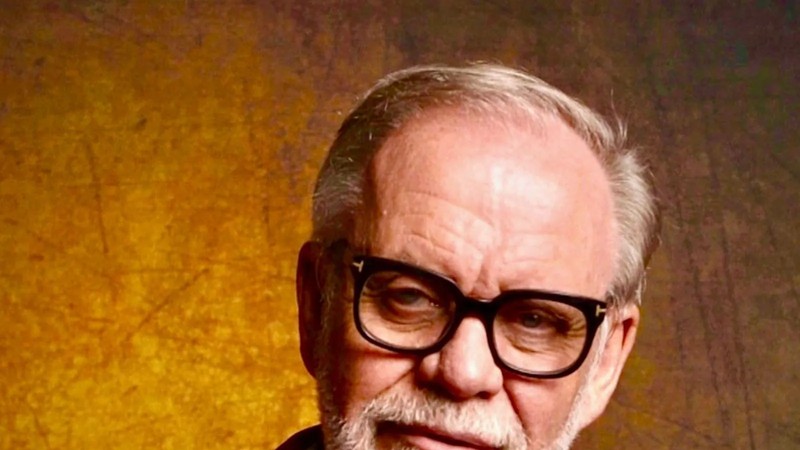
By Carl Niehaus
As I sit here at the Economic Freedom Fighters registration table at the Rosebank Primary School in Rosebank, writing these words while busy registering new voters and assisting those who want to make sure that they are properly registered, I am overcome. This is one of the voting stations and voter registration points in Ward 117, my home ward in my Rosebank constituency in Sub-Region B of Johannesburg.
Watching young South Africans and those who have never before claimed their democratic rights step forward to register fills me with deep emotion. The weight of history presses upon me with a force that brings tears to my eyes and a tightening in my chest. This is not an ordinary Sunday. This is the final day of the second and final voter registration weekend before the local government elections of 4 November 2026. Yesterday and today, the first and second of August, the people of South Africa once again take into their hands the hard-won instrument of their own liberation. And I am here, at this table, in this voting district, because there is nowhere else in the world I would rather be.
I joined the liberation struggle in 1979 at the age of nineteen, when I became a member of the People’s Liberation Army, Umkhonto we Sizwe (MK). Even before that formal step, from the age of sixteen the fire of resistance had already taken hold of me. I have carried that fire through decades of underground work, imprisonment, hardship, and the long, grinding battle for freedom. I intend to carry it still until my last breath, whenever that may be. There is no greater honour, and no higher duty, than to ensure that the vote for which so many died is not only protected, but exercised with purpose, with clarity, and with revolutionary determination.
We must never allow ourselves to forget the scale of the sacrifice that made this moment possible. For centuries our people fought colonialism, racism, and the systematic exclusion of the black majority from the democratic process. When the Union of South Africa was formed in 1910, the majority of black South Africans were deliberately locked out of the new political order. The land of the ancestors of black South Africans was stolen and seized literally at gunpoint. Dignity was stripped away by law and by the sjambok. Generation after generation rose up in wars of resistance, in the Defiance Campaign, in the underground, in the streets of Soweto during the youth uprisings of 1976, in the factories, the hostels and the townships demanding the simple, profound right to be counted as human beings and as citizens of their own country.
Think of Solomon Mahlangu, only twenty-three years old, who walked to the gallows on 6 April 1979 declaring that his blood would nourish the tree that would one day bear the fruits of freedom. Think of Griffiths Mxenge and Victoria Mxenge, lawyers and activists whose lives were cut short by the assassins of the apartheid regime because they dared to defend the people with courage and integrity. Think of Mama Winnie Madikizela-Mandela, who endured decades of banning orders, detention without trial, torture, isolation and relentless persecution, yet never surrendered the fight for the complete liberation of her people. Think of Comrade Chris Hani, whose assassination in 1993 sought to extinguish the hope of a just future, and of Comrade Harry Gwala, the Lion of the Midlands, whose uncompromising commitment to the working class and the oppressed remains an everlasting inspiration. These names stand for thousands upon thousands known and unknown – who gave their youth, their freedom, their families and their very lives so that every South African could one day hold a ballot in their hand.
That ballot is now ours. Yet for three decades it has been squandered. The betrayal of the former liberation movement, the African National Congress, is truly unconscionable. First as the majority government, and now as the largest party in the farcical so-called Government of National Unity (“GNU”), the promise of liberation has been betrayed. Economic power remains concentrated in the hands of a tiny minority. Service delivery has collapsed in municipality after municipality across the length and breadth of this country. Unemployment, especially among the youth, has become a national emergency of catastrophic proportions. Inequality yawns like a chasm between the few who live in comfort and the majority who struggle daily for survival. Poverty continues to grind the black and African majority into dust. Young people look down a long, dark tunnel of joblessness and despair and see no light at the end. This is not the freedom our heroes died for. This is not the South Africa for which Solomon Mahlangu, the Mxenges, Mama Winnie, Chris Hani, Harry Gwala and so many others paid the ultimate price.
That is why this moment matters so profoundly. The local government elections on 4 November 2026 must become a watershed. This must be the moment when the people reclaim the instruments of power closest to their daily lives the municipalities that should deliver water, electricity, sanitation, roads, housing and dignity and turn them into engines of genuine transformation and economic justice.
I know that some are surprised by my dedication to be here the whole day at the Rosebank Primary School voting district and voter registration station, working as a party agent of the Economic Freedom Fighters. They ask why a Member of Parliament, a former national spokesperson, a person who has spent decades in the thick of political struggle, chooses to sit for hours at a registration table checking forms, assisting new voters, and ensuring that every detail is correct. Let me answer them clearly. This work is not a side duty for me. It is the most important work that I can do as a South African, as a concerned South African citizen, as a liberation veteran, and as a member of the Economic Freedom Fighters. During the first voter registration weekend, held on 20 and 21 June 2026, I was ill. It pained me deeply that I could not be present at this very station in my home ward. Every hour I was forced to spend away from the people in hospital felt like a failure of duty. Now that I am able to be here on these final two days of registration, writing these very words between assisting voters, I will not waste a single moment.
Every time a young person registers for the first time, every time an unregistered voter steps forward and claims their place on the voters’ roll, something moves inside me. It is as if the spirits of Mahlangu, the Mxenges, Mama Winnie, Hani, Gwala and all the unnamed heroes stand beside us, nodding in solemn approval. This is the struggle I have fought since I was sixteen years old. This is the struggle I joined formally in 1979 at the age of nineteen. This is the culmination of that lifelong commitment. There can be nothing more important, no greater duty, and indeed no greater honour for me than to sit at the voter registration table of the Economic Freedom Fighters and help ensure that every eligible South African is properly registered and able to cast their democratic vote.
The Economic Freedom Fighters remains the only true revolutionary party that has not sold out the generational mission of our people. We are continuing the unfinished struggle for full economic freedom in our lifetime, for the return of the land, for the placement of economic power in the hands of the black and especially the African majority, and for a South Africa that takes its rightful place as a free and just nation on the African continent. In that same spirit we remain unapologetically committed to Pan-Africanism, to the unity of the African people, to a united Africa with a united African economy, and to a deep and abiding love for our motherland of Africa. Our struggle has never been, and will never be, a narrow nationalist project confined within the borders drawn by colonial powers. It is part of the broader, historic struggle of the African people for dignity, sovereignty, and collective prosperity. When we fight for economic freedom in South Africa, we fight also for the economic freedom of the continent. When we demand that the land and the mineral wealth of this country return to the people, we do so in the understanding that Africa’s resources must ultimately serve Africa’s people, not foreign corporations and local elites who have sold their birthright.
The Economic Freedom Fighters Local Government Elections Manifesto speaks directly to the crisis that confronts our people in their daily lives. It is practical. It is focused. It prioritises the rebuilding of collapsed municipalities through an uncompromising commitment to service delivery. It calls for the insourcing of essential services rather than the enrichment of tender-preneurs who have looted the public purse for decades. It commits to reliable electricity and clean drinking water, free of charge for SASSA recipients and the unemployed. It prioritises land audits and the redistribution of land at local level. It places youth employment, gender parity, the eradication of corruption, and the proper funding of local government at the centre of its programme. It is a manifesto bent on delivering to the people what successive governments have failed to deliver. It is a manifesto that understands that without functioning local government there can be no meaningful economic emancipation, no restoration of dignity, and no future worth speaking of for the millions of young South Africans who today face a lifetime of unemployment and exclusion.
So I make this appeal with every fibre of my being, from this EFF voter registration table at Rosebank Primary School in my home ward, on this second day of the final voter registration weekend. If you are eligible to vote, register. If you are already registered, check that your details are correct and that you are registered in the voting district where you actually live. Especially you, the young people of this country do not become despondent and overcome by the long, dark tunnel of unemployment and ongoing economic exploitation. Walk into the registration station. Claim your power. On 4 November 2026, use that power without hesitation and without fear. Make these elections the moment when the betrayals of the past are answered, when service delivery is restored, when the land question begins to be resolved at the local level, and when the people become the true captains of their own future.
This is not a privilege. It is a right bought with the blood of our heroes. It is a duty owed to the heroic dead and to the hopeful living. It is the honour of our generation. It is the continuation of a struggle that began long before any of us were born and that will continue long after we are gone until economic power rests firmly in the hands of the majority, until Africa stands united and prosperous, and until the dignity of every African child is fully restored.
A Luta Continua! The struggle continues at the registration table, at the ballot box, and in every corner of this beautiful, wounded, and still unfinished nation. Register. Vote. Transform. And never, ever forget those who made it possible for us to do so.
*Ambassador Carl Niehaus is a Member of Parliament for the Economic Freedom Fighters, the EFF’s permanent representative on the Portfolio Committee on Defence and Military Veterans and the Joint Standing Committee on Defence, and a military veteran himself.
** The views expressed do not necessarily reflect the views of IOL
IOL News


